Featuring:Patrick D’Arcy, Neansaí Ní Choisdealbha, Kyle Carey and Noriana Kennedy
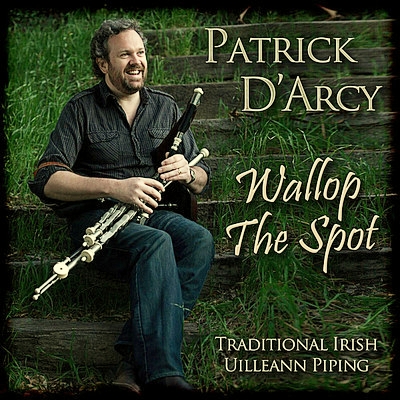
Introducing Piper Patrick D’Arcy
For some musicians and listeners, simplicity is everything. Patrick D’Arcy sets an example of how one instrument can give out so many layers to observe, savor and glorify. His simplistic use of the uilleann pipes, unadorned by other instruments sort of magnifies that soul of the instrument making its core radiate.
Most of us usually take the drones for granted as our attention is focused on the play of notes and also interplay of other instruments. Patrick makes every angle of sound posses that bulk and electricity. I am amazed how beautiful the drones can be when your ears don’t process too much information.
It might surprise you to know that this passionate piper studied classical guitar at the Royal Irish Academy of Music. Why did he give up guitar and chose the uilleann pipes? That is what I will find out one day! He just released a traditional album called Wallop The Spot composed of 13 tracks. You can buy the album here: http://patrickdarcy.bandcamp.com/
***
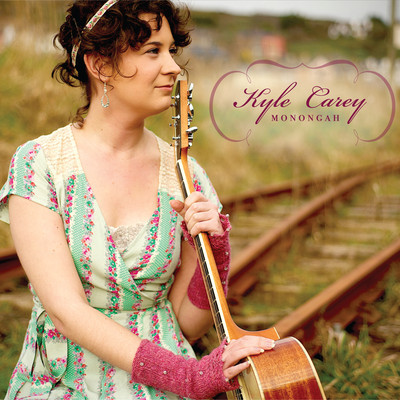
The breezy music of Kyle Carey
Real life is HARD. But Kyle Carey does a good job of transporting us into lazy afternoons, visions of orange blossoms and fireflies at dusk. Her various styles(Bluegrass, Irish and New Age) create a satisfying experience that leave you with a feeling you get after a good nap-fresh and clear headed. There are gentle guitars and lurking banjos in the sea of fiddles and vocal harmonies. Her voice has this silky feel reminiscent of Alison Krauss and Grada. To be able to escape for a moment into the music that channels the power of kindness and childhood innocence is really worth your time…maybe an hour a day would be good for you.
If you love original music that will stand the test of time then Kyle Carey’s Monongah is for you. Buy her albums here: http://www.kyleannecarey.com/
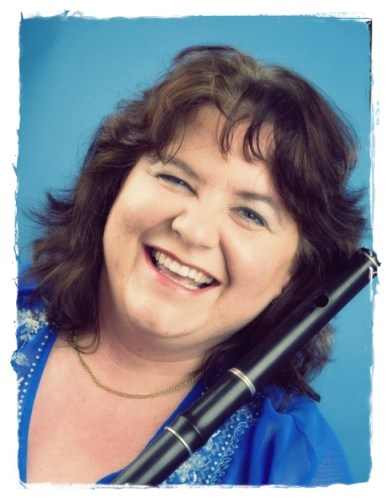
Neansaí Ní Choisdealbha is a head radio presenter at RTÉ Raidió na Gaeltachta. If you want to know the phonetic way to say her name it’s “Nancy”. I listened to her recorded shows and they are truly informative and exciting. They are geared towards the traditional music audience. Her approach to hosting is relaxed and once in a while she inserts anecdotes. There’s never a dull moment. Throughout her career, she moved between Galway which is her hometown and the United States, back and forth. Her favorite quote is: I can resist everything but temptation! Don’t we all? Especially if the temptation are those beautiful Irish tunes!
A few months ago, I feature a video by Galway based singer who is working on her album with her band Wildflowers. According to her recent post to her website:
We made a merry start to recording the new Wildflowers CD last weekend. Myself, Nicola Joyce, Noelie McDonnell and Gerry Paul spent the weekend at Larry Kelly’s beautiful Finnish log-cabin home in Tuam, Co. Galway. We put down new versions of ‘Dear My Maker’ and ‘Poor Ellen Smith’ along with three other brand new tracks. We’ll give it another blast next month to finish it off…all going well the CD will be fit for filling stockings in December! Big thanks to Liam Caffrey, our patient and gifted engineer and of course Larry and Olivia for the generous loan of their fabulous home, the gourmet menu and constant feed of happy vibes.
I know there are friends who are excited to hear something by this amazing singer/songwriter with a unique voice that can deliver a full range of emotions.
Also in this edition: Lori Watson and Rule Of Three and Kernowpods
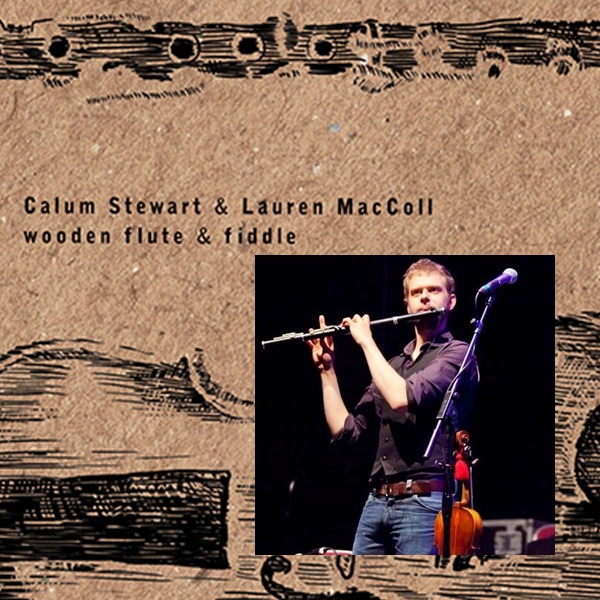
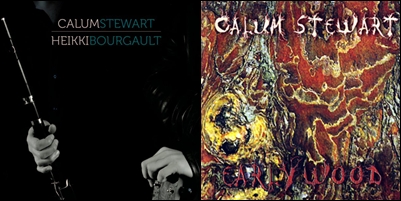
Calum Stewart and the cover art of the new album.
Between working with the London Philharmonic orchestra, recording for the next “Lord of the Rings” film, “Hobbit Movie” and completing being part of Jamie Smith’s Mabon’s Windblown, Calum Stewart took the time to talk to us about his career and how it all started.
Greetings! It is a lovely the month of October Celtic music followers. Our guest for this week is flutist Calum Stewart. He made a lot of collaboration with other bands. The new album Wooden Flute and Fiddle is out in the market! It is a collaboration with fiddler Lauren McColl and other musicians. If you don’t have a copy of the album yet, I want to tell you it is an amazing thing to have as part of your traditional music collection. Like what I mentioned in my last article about the album: This is an album that every traditional music listeners will want in his or her collection. This is due to the huge effort that the two and the rest of the session musicians placed on this album. There are slow and fast tunes. Expect variety in instruments and grand artistry that only musicians of their caliber can provide. And even if you are not really into Scottish or Irish trad music, you will still warm up to this one for its melodic and relaxing merit. Love it love it!
All musicians started with something that they consider memorable. I helped him trace back on how it all started-with the release of his debut album Earlywood.
Can you tell us a little background as to why is the debut album Early Wood?
“Earlywood” is my first solo album, and reflects my home tradition of the north of Scotland, with many tunes from Morayshire. There are also several compositions, which sit side by side the older repertoire, all arranged for Wooden Flute, Fiddle and Piano: my main interest has always been finding strong repertoire, interesting arrangements and powerful sounds, in acoustic settings. The title “Earlywood” refers to the inner growth circles inside trees. The “Earlywood” stage is the time when the tree grows the most… “Latewood” is the other time, and perhaps when the tree takes stock, during winter. Earlywood seemed a good title, because it was my first solo recording.
Since recording “Earlywood” and touring with my trio, I’ve had the opportunity to continue work with Lauren MacColl (Fiddle), with whom I’m releasing a new album with now (featuring Eamon Doorley of Danu, and Andy May). ( Go to www.laurenmaccoll.co.uk/shop )
I’ve also been working closely and touring with Breton guitarist Heikki Bourgault; we released our first duo album last year, with plans for a second one in 2013 (visit www.calumheikki.com for details).
Jamie Smith’s MABON has released Windblown. What can we expect from your musical contribution in this album?
I am featured as a guest on several of the tracks of their new album “Windblown”. Although I can’t play as a core member of JSM and Mánran now, because of my own project commitments, I really enjoy working with them when the occasion arises, guesting on recordings or sometimes at concerts / festivals. We are all very good friends and keep in touch about our own separate projects, and enjoy meeting when our projects cross paths, playing at the same festival!
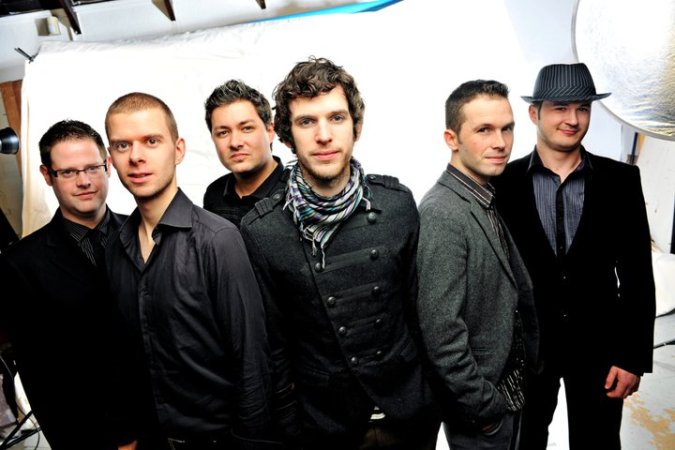
Early promo pic of Jamie Smith’s Mabon
You are known to play hide and seek between time zones with multiple natures: you are in demand as a musician! How’s the experience of working with different artists and how this shaped your artistry?
Working and collaborating with different artists from different genres is really important, enabling one to have a more open perspective. I’ve had the opportunity to work with some really inspiring people and they’ve really shaped my approach. However I also think it’s good to concentrate and develop one’s own musicality, ones own musical journey. Whilst you may encounter many influences along the way, fundamentally you must find your own voice.
Your musical development was traditional since you are originally from the North of Scotland and brought up with the traditional music of your native Morayshire. How do people in your hometown respond to your international success?
I always really look forward to playing on home turf, and it’s great to catch up with those musicians whom I played with when I was growing up. I try and “re-charge my batteries” when I’m back in Moray, usually remembering old tunes, learning some new ones or writing some, and most importantly remembering why I enjoy playing music in the first place! I still have family in my home village, although I don’t live there anymore – so I really enjoy going back there.
I realized that although your name is synonymous with the wooden flute, you are also and expert in playing the uilleann pipes and whistle. What are the other instruments that you play?
I concentrate on the Wooden Flute although I do play Uilleann pipes too, and really enjoy the different voice this instrument has. However the Wooden Flute takes up almost all of my concentration. Although there are different qualities in the pipes and the whistle, and sometimes they are useful – the Wooden Flute is really my musical voice, so I prefer to concentrate on this. I have a very special old flute, which I use for all my musical projects – its a Rudall Carte & co, made in the 1930’s. Its made from cocus wood, and has been with me in every musical situation since I found her! I use wooden headjoints by Tobias Mancke with her. In addition I own a brilliant Wooden Flute by Peter Worrell which is based closely on my original. As I don’t like owning many flutes and changing flutes, I take my Rudall Carte & co. with me, wherever I go!
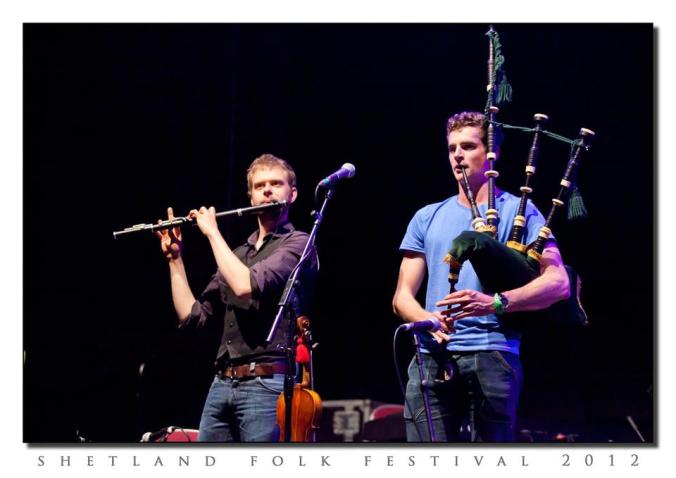
Ewen Henderson at Clickimin Centre.
What is the recording process in making an album?
Every recording I’ve been involved with has been different. Although usually after the initial concept or inspiration, there follows a period of collecting / writing / arranging, before either rehearsals or concerts and then recording. Sometimes it’s possible to play music for a long time in concerts, developing ideas before the studio, but sometimes the music takes shape in the studio – there are no rules!
After a big performance, how do you chill?
Usually, there is a lot of work to be done after a performance. I always try and meet the audience personally, making contact after the concert. Often there are interviews to do, CD signings and meetings – so it can be quite busy! After all this is over, and my flute is put away… I usually hang out with my band and quench my thirst.
What are other projects that you are working on?
This summer I’ve been working with the London Philharmonic orchestra, recording for the next “Lord of the Rings” film, “Hobbit Movie”. As well as that, I’ve recorded with fiddler Lauren MacColl, joined by Eamon Doorley (Danu / Julie Fowlis), and Andy May – this is available via: http://www.laurenmaccoll.co.uk/shop .
Otherwise, I’ve been guesting on recordings such as the new JSM album, and preparing new repertoire for a 2013 release with my duo.
What can fans expect to hear from the new album now that it is out?
Quite a traditional repertoire, coupled with some new offerings: based strongly on the interplay between the wooden flute and the fiddle
You are a huge influence to young people who are trying to learn traditional instruments. What can you advice them in how to make it like you
Play music that you believe in and always be yourself.
There you have it readers. Another exciting moment with Scottish musician Calum Stewart. I am looking forward to the “ Hobbits” soundtrack knowing he is part of the music. Also get your copies of the new album and drop by his website to say Hi. He is really down to earth and has an amazing sense of humor. I enjoyed this interview with Calum and it is really fun talking to artists and getting to know how they create their music. Have a great week ahead!
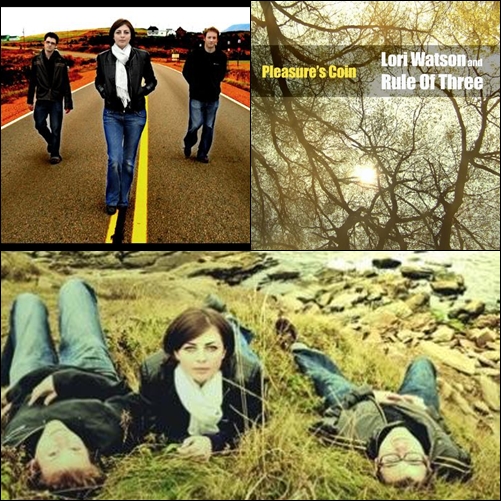
Sweetness! Lori Watson has a voice than can melt your heart like butter. But don’t let this sweetness fool you. This amazing musician plays music with such intensity and break neck speed. Her band is gaining a wide following all over with their fusion of traditional and contemporary style.
.
***
Kernowpods: War an gwyns – remix
Cornwall has her own thriving community of painters, photographers, musicians and people doing their own art. One of those who help define the Cornish cultural identity is Matthew(Matthi) Clarke. He is part of Sue and Phil Aston’s circle and they are doing a LOT of diverse things with music and visuals. This is one of the songs Matt uploaded in his podcast.
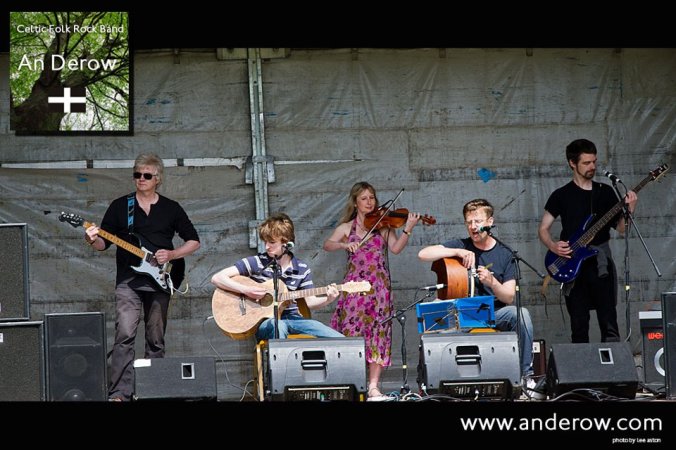
Phil Aston,Dan Aston, Sue Aston, Matthi Clarke and James Perkins-An Derow.
Thanks for reading folks. More album reviews coming up very soon.
Plus: The Stride Set, Brian Femming and the late Maeve Binchy
Learning of an instrument as a journey, rather than a destination..
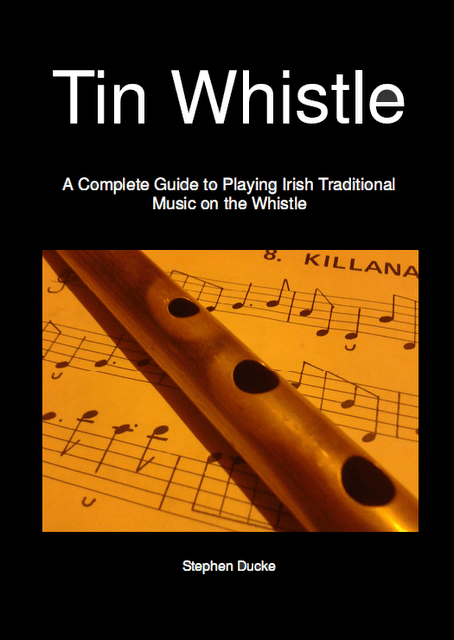
286 pages with illustrated examples and also audio materials accompanying this book should be a joy to those trying to learn the tin whistle.
I have a brief background in the recorder and it isn’t hard for me to understand the notation as well as terms that Stephen Ducke used in this book. I should tell you that even though you don’t have a musical background and have just picked up the instrument, this book is straightforward and free of any cumbersome words that might hamper the learner.
It will also give you a complete understanding why Irish music sounds that way. Learning through this book will reward you in twofold: playing the tin whistle and understanding Irish Celtic music. The rest is up to you to find out. I cached up with Steve and popped him few questions: .
I see that you are managing 9 blogs all and all. How do you find the energy to teach and blog at the same time??!!
The author: Stephen Ducke
Actually, my Blogger blogs are mostly collections of videos, and Irish traditional news stories found online (with links to the original articles) It’s a way for myself to keep abreast of the news, and there does seem to be a readership too. My principal site is Tradschool, and this is all my own work: In the blog I regularly post tune recordings on flute and whistle, band profiles and other information. There’s also a news section that I update when I can, although less so in summer for example, when there are more gigs and workshops and I’m not often at home…
You play other instruments apart from the whistle:concertina, uilleann pipes, fiddle, flute, guitar and bodhran. Man, do you even sleep? What are the challenges of playing the tin whistle for beginners?
I play the flute and whistle, and am lucky to have some colleagues who participate in sending me recordings for the website, so I am able to post concertina and fiddle tunes also, and sometimes uilleann pipes.
Please tell us more about this e-book tutorial that you are selling on your site right now.
The tutorial came from my teaching of flute and whistle, in Ireland but especially over the past 10 years in France. Many of the questions my French students have about the music and the instrument were not the type of question I was used to answering in Ireland – technical questions about the music, style and interpretation, for example. As a teacher, I feel a responsibility to at least try to answer the student’s questions, and this called for a lot of reflection on my part, and a closer examination of the music than I was used to; I realized how many things I had been taking for granted as an Irish player.
The tutorial’s format will be familiar to anyone who has taken my workshops – I adapt what I like to call a “layered” approach to playing the music, beginning with the rhythm and adding each new element little by little. I believe that, as an orally-transmitted folk music, Irish traditional music is necessarily based on a simple system, and to properly appreciate and play this music, an understanding of the system is necessary.
I feel that this tutorial is different in that I try to bring the student to an understanding of the musical style, not so he can imitate the recordings provided, but so that he can go o to interpret new tunes and form his own style and repertoire. Where I feel many other tutorials miss out is that they provide repertoire, and descriptions of ornamentation, but very little explanation of how it all goes together. I try to examine the logic behind the music, so the student can feel confident in his understanding of the style, and confident enough to make his own choices in style or interpretation.
If I am in my 60s, do you think it is too late to master the instrument?
It depends what you mean by “master” – at 37, I’ve been playing the whistle almost 30 years and don’t feel I’ve mastered it yet; however the journey to where I am today has been immensely rewarding and gratifying. At sixty, it’s definitely not too late to start, and it’s not too late to take pleasure in playing this wonderful music. I prefer to look at the learning of an instrument as a journey, rather than a destination…
Video of the day: Beginner Bodhrán: FREE Lesson No.1 of 2 from OAIM.ie with Brian Fleming
It is nice to be enlightened from various sources. Even though you are not going to be a serious musician, looking at these tutorials can enhance your appreciation of the music. I think that knowledge and esthetics go together. You can’t enjoy something you don’t understand right?
***
Today in pictures: The Stride Set
Meabh O’Hare (fiddle) Jani Lang (fiddle) Patricia Clark (fiddle) Michael McCague (bouzouki) Josie Harrington (guitar/vocals) Kevin Jones (drums)
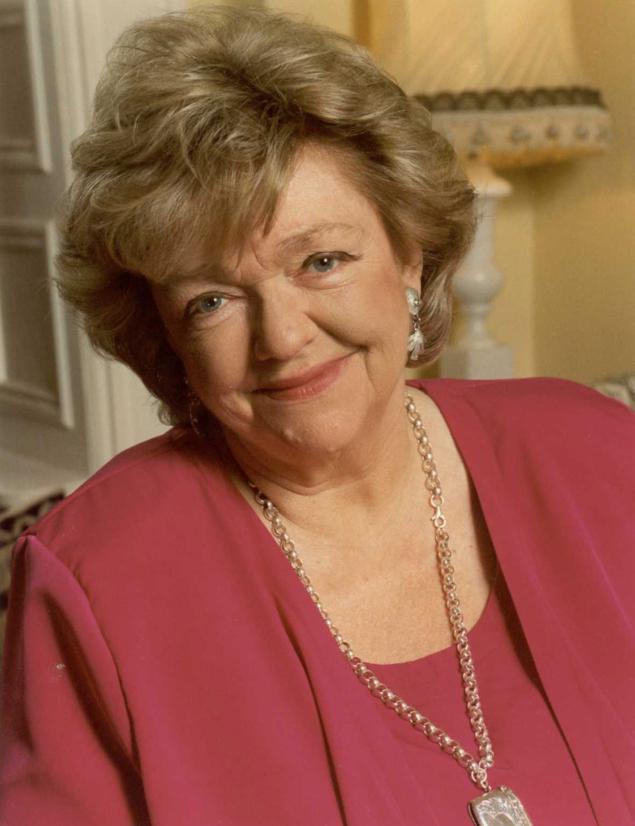
An undated handout image provided by Christine Green Authors’ Agent in London, Irish novelist and playwright Maeve Binchy passed away after a short illness at the age of 72 on 30 July 2012. Photo credit: EPA/Liam White
Her book Circle of Friends introduced everyone to Ireland in the 50s. I like the fluidity of her prose. She can be subtle but also funny. Books like Tara Road, The Lilac Bus, The Glass Lake among others, stayed with me and I can still remember how the characters are. I think all Irish people have the gift whither it is musical, visual or literary. Their passion speaks in volumes and it can me be contagious. She will always stay in our hearts.
The low whistle introduced me to the world of Celtic music.
Two instruments that introduced me to Celtic music : Low whistle and uilleann pipes. After that phase everything started happening and now I am here! Every now and then, I get recommendations from friends who are professional recording artists. They would tip me saying ‘ hey this is cool, listen to this track/video”. Just to give you an idea that I am not the only one looking for something interesting out there.
Yesterday I had a great conversation with Jeff Ksiazek of áthas about doing an interview for this site. I thank my friend, the harpist/singer Scott Hoye for the opportunity of not just meeting some of his friends but also for this amazing video.
Cormac Breatnach is an amazing low whistle player isn’t he? Hearing him speak in musical Gaelic made me regret about my slow progress with the language. Like I said low whistle is one of the instruments that introduced me to Celtic music. Listening to this track has its rewarding moments in term of nostalgia and the enjoyment of seeing someone play with such passion.
The orange cover artwork shows the silhouette of a bare tree with birds on its branches. One should be aware that experience and wisdom can bring about something excellent. I had the pleasure listening to Fine Friends by Sliotar. A band interview is coming out soon.
The few chords of the opening track remind you that Sliotar can pack a wallop. Stick the Kettle On is an instrumental tune with captivating grooves. The uilleann pipes of Ray MacCormac remind you that pipes replace electric guitars here. A quarter to two minutes of this song will send you pogo dancing with gusto.
All Too Real showcases the band’s songwriting style that has that adult alternative twist. Even JP Kallo’s singing style fits the format. For those who like their Irish music more contemporary and radio friendly this is a fine example.
All Around Lough Gillis another instrumental tune showcasing the tin whistle. The drumming of Des Gorevan maintains its crunch all throughout the album without being too over powering. It took me several listens to this track alone to note that we are dealing with complicated drum styles here. Listening to music is like detective work. You don’t see pieces of evidence unless you look further and really pay attention.
May Morning Dew is sung without accompaniment. The strong sometimes gruff vocals maintain that expressiveness. The lyrics and the reverb created by either the room size or mixing have that compelling combination.
One Chance is a personal favorite. I like the sunny melody here. JP sings ‘Another Monday morning, coffee keeps you going, running late for work’ I think the Sliotar should expand on this direction more. I hear keyboards. I hear that nice editing effect applied to the last part of the chorus. Whoever did the sound engineering here has done an excellent job. I give this a high- five!
Rays Heel catches you by surprise with its unpredictable arrangement. It begins with that stately tempo, which calls to mind an idle walk , then around 2:50, it explodes into that fast jig that again gets you on your feet.
I could not stop smiling to Rock-A-Bye Baby. It has that ingratiating appeal in its simplicity and intimacy, stripped of the drums. A perfect song to listen to when you are depressed and you want comfort. ‘Rock-a-bye baby..rain falls from the autumn sky..another wind blows hard and cold..let me keep you warm’ …Catchy!
Tinkering on the Bridge begins with the uilleann pipes and builds up into that foot tapping jig. It changes tempo at 2:05. The energy of this track really makes you rock your body.
Take it As it Is follows the vibe of track 7 but with the drums. This is one hell of a tear jerker.
Whiskey in the Sauna makes me imagine that I am catching butterflies with my fingers or doing a kung fu/ Arabic dance steps on a Saturday night after meeting kindred spirits. Have you tried drinking whiskey in the sauna?
The album closes with the solo vocal track Fine Friends. It reminds you that after the laughter, everyone must part ways.
The album Fine Friends, also tells us that after listening to all the tracks, you will surely come back for more.This album deserves more listens because like good friends, the songs provide company that are enriching in all aspects.
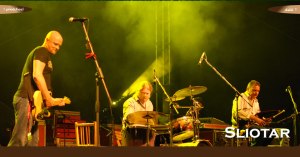
About Sliotar
Sliotar is a three piece band based in Dublin playing modern folk music.
The roots of the tunes they play come from the music of Ireland,
but in the past few years the group is relying more and more on original
compositions. Sliotars fourth album, Cirque de Sliotar, has finally captured
the modern sound that has been in development and has been an obvious
at their live shows. Sliotar has been around now over twelve years,
eight with the current line up, and they have one of the longest running
residencies in Dublin in the Porterhouse. Also in the past few years
Sliotar have changed their way of touring, resulting the band travelling
all around Europe and even further. And still the Sliotars best asset is
the live show. Around 200 concerts every year keeps the band tight and
the energy of their live show is something that can only be experienced
and is not for the faint hearted.


 Celtic Music Fan