
For many listeners, Celtic music reached its commercial peak somewhere in the mid to late 1990s, when Riverdance captured the world’s imagination after its unforgettable interval performance at the Eurovision Song Contest in 1994. That brief seven-minute performance became far more than entertainment. It was a cultural moment that introduced millions of people to the energy, beauty, and sophistication of Irish music and dance. What followed was extraordinary. Riverdance evolved into a global phenomenon, Celtic-themed albums climbed the charts, and record stores suddenly dedicated entire sections to music from Ireland, Scotland, Brittany, and other Celtic regions.
To many observers, it appeared as though Celtic music had arrived overnight.
The truth, however, is quite different.
The genre had already spent decades quietly building its audience. Long before packed arenas watched synchronized dancers thunder across the stage, musicians had been laying the foundation for what would become an international renaissance. The commercial success of the 1990s was not the birth of Celtic music but rather the culmination of years of artistic dedication.
The 1970s proved to be one of the defining decades for the modern Celtic revival. Groups like Clannad transformed traditional Irish melodies into atmospheric works that blended folk instrumentation with contemporary arrangements. Their music retained deep respect for Gaelic heritage while embracing modern recording techniques, making ancient songs feel timeless rather than antiquated.
Alongside them stood The Chieftains, whose mastery of traditional Irish instrumental music earned admiration from audiences and fellow musicians across the globe. Their collaborations stretched across genres and generations, proving that Irish traditional music could comfortably stand beside classical, country, rock, and even popular music without sacrificing its identity.
Across Scotland, artists such as Capercaillie carried Scottish Gaelic music into the modern era. Under the unmistakable voice of Karen Matheson, the group balanced centuries-old songs with polished contemporary production, introducing countless listeners to a language and musical tradition they had never encountered before.
Elsewhere, performers like Connie Dover explored the rich musical connections between Celtic traditions, early music, and American folk heritage. Her recordings possessed an intimacy and elegance that rewarded careful listening, demonstrating that Celtic music was as much about storytelling and atmosphere as it was about lively reels and jigs.
Then there was Loreena McKennitt, whose artistic vision expanded the definition of Celtic music itself. Drawing inspiration from Ireland, Scotland, Brittany, the Middle East, and medieval Europe, she created recordings that felt both historical and timeless. Albums such as The Visit, The Book of Secrets, and An Ancient Muse invited listeners into landscapes where poetry, mythology, and history intertwined. Rather than chasing commercial trends, McKennitt built an enduring catalogue whose appeal continues decades after its release.
By the late 1980s and throughout the 1990s, another remarkable voice emerged from Clannad itself. Moya Brennan stepped into a successful solo career, carrying with her the unmistakable ethereal quality that had become synonymous with modern Celtic music. Her solo recordings combined spirituality, folk traditions, and gentle contemporary production into music that offered comfort in an increasingly fast-paced world. She became one of the defining voices of the genre, inspiring countless singers who followed.
It would be impossible to discuss this era without acknowledging the extraordinary impact of Enya. Although her music often occupies a category of its own, her roots in the Celtic tradition are undeniable. Working alongside producer Nicky Ryan and lyricist Roma Ryan, Enya created a distinctive musical language built from layered vocals, synthesizers, orchestral textures, and melodies inspired by Irish musical heritage. Albums like Watermark, Shepherd Moons, The Memory of Trees, and A Day Without Rain reached audiences far beyond the traditional folk community, introducing millions of listeners to sounds that ultimately led many of them toward Celtic music itself.
The popularity of these artists helped create what many remember as the golden commercial era of Celtic music. Record labels invested heavily in new releases, radio stations occasionally embraced the genre, television specials became common, and concert halls around the world welcomed performers whose repertoire had once been considered too specialized for mainstream audiences.
Yet musical fashions rarely stand still.
As the new millennium arrived, popular music shifted dramatically. Contemporary R&B, teen pop, hip-hop, electronic dance music, and later digital streaming reshaped the commercial landscape. Radio formats narrowed their playlists, emphasizing younger pop audiences and increasingly short commercial cycles. Celtic music gradually disappeared from mainstream rotation.
Some interpreted this change as the decline of the genre.
It was not.
What faded was the commercial craze, not the music itself.
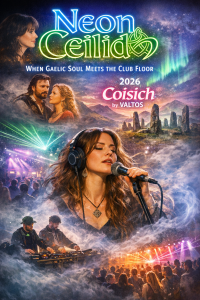
Celtic music simply returned to the place where it had always been strongest: a devoted community of listeners who valued artistry over chart positions. Festivals continued to flourish throughout Ireland, Scotland, Wales, Brittany, Canada, and the United States. Independent labels remained active. New generations of musicians emerged, including groups such as Altan, Solas, Lúnasa, Dervish, Julie Fowlis, Cara Dillon, and later artists who blended traditional sounds with contemporary influences while remaining deeply connected to their heritage. More recently, acts such as Valtos have demonstrated that Celtic traditions can comfortably coexist with modern electronic production, proving once again that the genre continues to evolve without losing its identity.
The internet also transformed the way audiences discovered Celtic music. Instead of depending on commercial radio, listeners found artists through online communities, streaming services, independent blogs, and social media. The audience may have become smaller than during the 1990s boom, but it also became more global and more dedicated.
Perhaps that is why nostalgia carries such power for those of us who lived through that remarkable era.
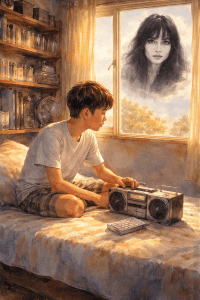
There are evenings when nothing feels quite right until an old compact disc slides into the player. The opening notes of a Loreena McKennitt recording, the soaring harmonies of Capercaillie, or the quiet grace of Connie Dover immediately transport us somewhere beyond the distractions of modern life. The years seem to disappear, and for a little while we reconnect with a quieter version of ourselves.
These recordings are more than memories.
They become companions.
This year brought particularly sad news with the passing of Moya Brennan, one of the most beloved voices in Celtic music. Although her physical presence is gone, the warmth, sincerity, and faith that shaped her recordings remain untouched. Every time her voice fills a room, she continues the conversation she began decades ago with listeners around the world.
I find myself returning to her music more often now. In a world overflowing with constant notifications, endless headlines, and relentless noise, her songs offer something increasingly rare: stillness. They slow the pace of the day and remind us that music does not have to demand attention to make a lasting impression.
Perhaps that is the enduring strength of Celtic music.
It has never depended solely on commercial success, radio playlists, or chart positions. Its roots reach far deeper than popular trends. It carries languages, landscapes, histories, and generations of stories. It survives because every generation discovers listeners searching for beauty, reflection, and a sense of belonging.
The commercial wave of the 1990s may never return in quite the same form, and that is perfectly acceptable. Great music does not need to dominate the charts to matter. Celtic music has already outlived countless musical fashions, and there is every reason to believe it will continue doing so for generations to come.
Whenever nostalgia calls, I simply return to those familiar albums, close my eyes, and listen. The horizon of the past may seem distant, but it is never truly out of reach. It lives in every melody, every harmony, every ancient story carried forward by song. And as long as these recordings continue to find willing ears, the spirit of Celtic music remains very much alive.
 Celtic Music Fan