I have to admit, writing about the new musical venture of Cathy Maguire was a challenge. How do you start writing about something totally different from what you are used to? I reviewed bands, I blogged about musicians and their albums,or even wrote about musicals but posting about a TV show was a challenge. But then again this is no ordinary TV show. It is about music and the Irish musicians that perform them.So where do I start? Of course, the music. The music will guide you through.
Sunnyside Sessions is an exciting venture that Irish singer-songwriter launched recently and it showcases talents based in the East Coast United States-the expats. Now I remember posting a video of HamsandwicH on my Facebook status and that’s why the show’s title sounds familiar. I saw them perform in the Sunnyside Sessions with the rest of the talented people. My first impression: great location and set design.
I exchanged emails with Cathy Maguire and I discovered more about why everyone should check out Sunnyside Sessions. Here’s an excerpt from Irish Echo written by Sean Devlin:
Cathy Maguire is no stranger to new opportunities. In possession of a career decorated with accomplishments, including television appearances and multiple album releases, she has rubbed elbows with some of the best talent the country music industry has to offer. With “The Sunnyside Sessions,” she’s been branching out into a new TV venture, and embracing all the stops along the way.
With many amazing performers I am sure Sunnyside Sessions will continue to attrack audiences eom different demographics. Here’s an info I got from the press release as to what this show is all about:
I think this is a fascinating show that everyone should support. We need more artists like hose that appeared in her show. May the force be with her!
I wrote an entry about this Irish song and dance phenomena Titanicdance a few days ago. Now, Producer, Creative Director and Lead Dancer Raymond Sweeney, took time to answer this interview. I am currently
listening to the soundtrack while transcribing our online conversation. You have to see this show. This is the best thing that happened to the stage since Riverdance and Celtic Tiger. Please don’t forget to visit their Indiegogo campaign and hopefull take part as one of the show’s backers. This is music and dance arrange in a way that will captivate both young and old fans of Celtic music.
1. Hi Raymond, you are from Donegal which is known as a place that gave birth to global artists.What’s the story behind Titanicdance?
It was in 2012 on the 100th year anniversary of the tragic events of the Titanic that I came up with the idea to do the show. Creating my own production was something I always dreamed of doing so I got a team together and started choreographing the show with Louise Hayden & James Keegan in a little prefab in my dad’s work yard. It took many long hours of hard work, determination and a lot of patience but it was all worth it as the end result exceeded our expectations.
2. You joined Michael Flatley’s Lord of the Dance at 16. What were the challenges of being in a big and famous troupe at a young age?
Being from a small village in Donegal and heading into the unknown was exciting but scary at such a young age. It was a huge challenge trying to meet the standard required for such a large production and as well as the dancing there was a lot to learn about performing on stage. The other thing I found challenging was being away from home at such a young age and getting used to my new independence. It was a great experience.
3. I think Titanicdance will strike a universal chord as the story (Titanic) itself is still a phenomenal success brought about by books and of course Hollywood.
This is so true and is the reason why we think we have something special.
4. What’s the training ritual of your dancers before a big event?
Well it takes many weeks/months preparing for a big show as first and foremost fitness is very important as well as learning routines etc.. The choreography of Titanicdance is of a very high standard and therefore plenty of training is required to get it perfect for show time.
5. How do you handle the responsibilities of leading 30 top Irish dancers?
I’m fortunate enough to have the experience of being a cast member and touring in a big dance production for over 15 years and therefore I know how to find the right balance to treat cast members in a firm but fair way in order to get the best results. I have a lot of friends that I have work along side and toured with previously and that are now in my cast, now being Creative Director and having to direct them and call the shots isn’t always easy but I do it in a manor that they still so me respect.
6. How is it like working with producer David McLaughlin? You must be great pals right now.
David and the whole team have been great. Everyone really believes in this production and works endlessly to make sure it will become a huge success. I have a great relationship with David and it is growing stronger and stronger..!!
7. What do you hope to achieve this Titanicdance?
I hope to achieve everything possible with Titanicdance. It’s always been my dream to have a touring show and I am so honored to be in the position I’m in at the moment and I will continue to strive to meet my goals because I believe this show can be a huge success.
8. Your message to the readers?
Titanicdance has it all. Live Irish Music, Song and Dance and a story line that will have you on the edge of your seat and possibly in tears. Audiences across the globe deserve to see this production and I will do my best to make that happen. You will not be disappointed.
—
Kind Regards,
Raymond Sweeney
Watch out for my review of the Titanicdance music soon! Big thanks to my friend Anita Daly of Daly Communications for arranging this interview.
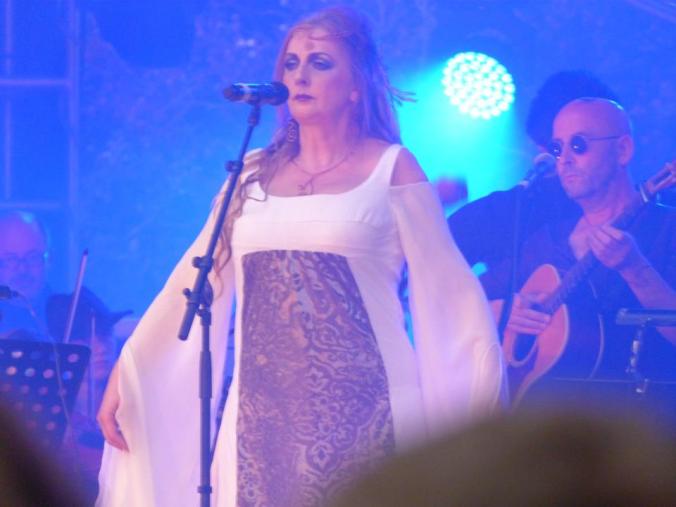
The First Lady of Celtic Music Moya Brennan appeared in Paimpont Bretagne along with Cormac de Barra and their band. It has not been indicated the performance has something to do with the Interceltique celebration but just look at her. She’s gorgeous!
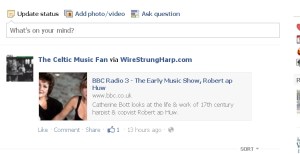
For those who aren’t part of The Celtic Music Fan via facebook, this is a good link. If you think you know all there is to know about Welsh music, wait until you listen to this radio show. The hosts gave informative materials and also played samples of the music throughout the show. Composer Robert ap Huw chronicled the music of his time and made his own odd tablature which became a source of debate and amazement among musicologists. I am attaching the link here. Facebook makes music blogging so easy..and yeah this neat screenshot app helps a lot.
I always tune in to Martin Bridgeman’s shows. He is our special guest and he tells us about his experiences working with the medium for years. Radio has been an integral part of our society and a force that shaped generations and still continues to. What’s very interesting about this piece is that it is actually an insider’s look at the history of radio in Ireland.
Radio Daze
Being a brief(ish) ramble through my radio career from Dublin to Kilkenny
By
Martin Bridgeman
Martin Bridgeman with Brian Cash of Dublin outfit, Halves at the festival hub at Left Bank.
Where to start? To sound like a cliché, I have simply loved music all of my life and heard a lot of it first on radio. I have an early memory of hearing the Beatles in their early prime when I was very young, so we’re talking early 60’s anyway. I would have grown up listening to pop records that my older cousins would have bought and played so many of the big pop and rock acts from then are implanted in my brain.
I entered my teens – where I believe your musical soul is forged – in the 1970’s, the era of Rock giants like Led Zeppelin, and the emerging glam stars like David Bowie and Marc Bolan, electronic pioneers like Tangerine Dream, Eno and Kraftwerk and the edgier folk players like John Martyn. I admired Paul McCartney’s early DIY phase, John Lennon’s searing honesty. Although Punk kind of passed me by (I didn’t share the anger) I can see how it shook up the prevailing trends and pared things back to the essentials of rock and roll. Through these artists I came to appreciate the roots of rock and roll, the early starters, the players, the singers, the legends that have now been appreciated for the trails that they blazed for the artists since to travel. I’m happy to say that our children have always been open to new music and have respect for what has passed before, which is all I can hope for in anyone starting out in music. Listen, then decide!
I found US bands like Talking Heads intriguing and love how they have all taken many musical journeys as artists and still keep us enthralled. Blondie straddled pop and new wave and Patti Smith followed her own artist’s path and instincts and continues to do so. Joni Mitchell, Kate Bush and Leonard Cohen were always in the background, never disappointing and proving how important an artistic manifesto is the key to making great, timeless music. All the time, Irish bands were making their presence felt, some more than others, to a point where we have an enormous wealth of talent relative to the size of our country (in my opinion).
Since then I hope I’ve been ever open to new music and my list of favourites continues to grow (as does the physical space in our home has to accommodate more and more music, books, magazines and mementoes). I’ve been blessed to have had many broadcasters, fellow musicians and a small number of true friends to lead me metaphorically by the hand, opening my horizons musically and continue to do so.
Radio
Until the later part of the 1970s Ireland had just one radio station. In a spirit of punk, and following from the popular movement 1960’s in England, pirate radio flourished across Ireland and, despite constant government harassment, made sufficient impact and held public appeal that it helped to create a new national music station playing music people wanted to hear. (Incidentally, it was an Irishman that helped set up Radio Caroline – Ronan O’Rahilly). That’s not to be overly critical though: the (single) national station had a public service, news, current affairs and broad arts remit so it was never going to be able to satisfy all tastes and was national in tone.
What the pirates did was to provide truly local broadcasting, offering new voices an opportunity to play their passions on the airwaves. Many bands had their first outings on legendary pirate radio stations such as Radio Dublin, ARD and Sunshine, the three main stations that took on the mainstream and won handsomely. Many rightfully esteemed national broadcasters in radio started out there…a thriving local radio network is still playing what people want locally.
Radio and Me – Part 1
My neighbour was the legendary DJ Pat James who started his broadcasting life on Radio Dublin. He gave me my first break on radio in 1978 and I still remember pushing in the heavy doors in Inchicore, Dublin every Friday to play my wilfully broad range of music, cycling back home late/early filled with all the energy I needed to get up for work the following morning and with a head full of ideas for next Friday. Thankfully Pat is back on the air in a unique slot on a Dublin-based Classic Rock Radio station called Nova (itself a name harking back to the golden age of pirate radio). His rocker soul is still very much intact
I was left the freedom to play what fired me and I never took notice of genres, regularly playing Steely Dan and the Bothy Band on the same night. I still do, now admittedly over two nights.
The Wilderness Years?
I spent most of the 1980’s playing music for fun (never for profit anyway), cover bands such as Calling Card, original bands such as Geoffrey’s First Affair , La Bata and the Sad Anoraks making me open to even more styles of music.
Radio and Me – Part 2
Time passed as it does, like a thief, stealing the years and finding me relocated from Dublin to Kilkenny, where love and family have kept me since 1993. I found myself hankering back to my Radio Dublin days as a new local station came into being in Carlow and Kilkenny, KCLR96FM. I approached the management and they seemed to think (a) I wasn’t completely delusional and (b) I was worth a try. Circumstances and luck combine in life and my particular combination in 2007 led me to the music shows I present there at present. Together, they speak to my interpretation of the word ‘eclectic’ I hope anyway.
The Eclectic Light Programme
The Eclectic Light Programme is a place where you can’t anticipate what styles of music will appear. That is deliberate and often left to chance. I feature a lot of what is new in Irish and International music without looking over my shoulder to see what other people think.
I have met some many talented people it gives me great hope for the future. There is a serious amount of talented young people in Carlow and Kilkenny and I’m happy to offer them a place to come in and share their passion about the music they make.
And in case you’re wondering about the title…It has multiple layers of pun-infested meaning.
“The”: I believe that many great bands have that as the first part of their namers, who am I to judge?
“Eclectic”: No style turned away.
“Light Programme”: Back when I was growing up, my radio hummed into life and displayed these exotic locations, including the BBC Light Programme.
So there it is, my Saturday night dip into the waters of what is good non-mainstream music. With puns in.
Essentially you could argue that the name means a taste of Irish, but in truth our folk traditions are so closely interlinked that you will regularly hear Scottish, English and Breton music too.
Being from Ireland you can take so many things about our traditional music and song for granted but I would have listened to the legendary Seán Ó’Riada and the Chieftains in the 60’s while listening to Irish rock bands such as Thin Lizzy and Horslips and great artists like Van Morrison and Rory Gallagher whose own take on the blues and R&B was washed through with sometimes subtle Celtic melody and phrasing. As for rock bands, I would have been brought back to the traditional players that had passed by largely unknown by comparison with the popularity enjoyed by today’s players; fiddlers like Michael Coleman, pipers like Séamus Ennis and singers like Joe Heaney and Margaret Barry were all revealed to me by the musicians of the 60’s and 70s, the Dubliners, Planxty and most by the group most important to me, the Bothy Band.
The explosion of recording in Ireland in the 70’s provided some of the most timeless Irish music, artists such as Mick Hanly, Andy Irvine and Paul Brady creating classic albums, as did the Chieftains as they moved out of Ireland, paving the way for a new generation of players and singers. What appealed to me as a listener and gig goer initially was the openness of the new generation of traditional players, breathing new life while respecting its roots. Each week brings me yet more evidence of how a living and breathing tradition is safe in the hands of those who play Irish music.
I also believe that your own experience must shine through and inform, your music which is why I would hold that the Pogues are as representative of their upbringing as the children of emigrants as are those who emigrated from Ireland. Theirs was a fiery brew of passion and sadness, (lazily caricatured as drink-fuelled) but passionate through and through. Dublin native Damien Dempsey is a young man filled with passion and shot through with the balladeer’s soul, while may fine musicians mine the rich heart of Irish music to create something new, respectful and heartfelt, Mícheál Ó’Súilleabhán and Iarla Ó’Lionáird being just two.
My musical travels take me to England, Scotland, Wales and Brittany as well as over and back to the United States where Irish music moulded itself in to folk and bluegrass. We share common stories, hopes fears and history, but joined together by the people’s music in all its forms. Englishman Chris Wood and Scotswoman Karine Polwart are two examples of singers with a fine sense of the political tradition and a willingness to move it on and are regularly played on the show. Every year the Kilkenny Arts Festival brings more musicians to us, bring a new perspective, country or tradition.
If there’s a defined shape to the programme, the first hour is largely instrumental music and lively, the second more reflective and quiet.
Again, I’m heartened by the amount of talented traditional musicians and singers, fiddler Rebecca McCarthy-Kent being one, Kilkenny pipers Mick Foley and John Tuohy keeping the flame burning and recent resident Nell Ní Chróinín bringing her wealth of traditional sean-nós singing to us.
So here I am , Saturday night on “The Eclectic Light Programme” and Sunday night on “Blas Glas”. Not so much a job as a joy…


 Celtic Music Fan