Rachel Hair: All Things Celtic Harp(Interview)

Plus: Somerset Folk Harp Festival, Athas’tour pic and schedules, Celtic vampire novel by Karen Victoria Smith and Delta Rae …so emotional and beautiful!
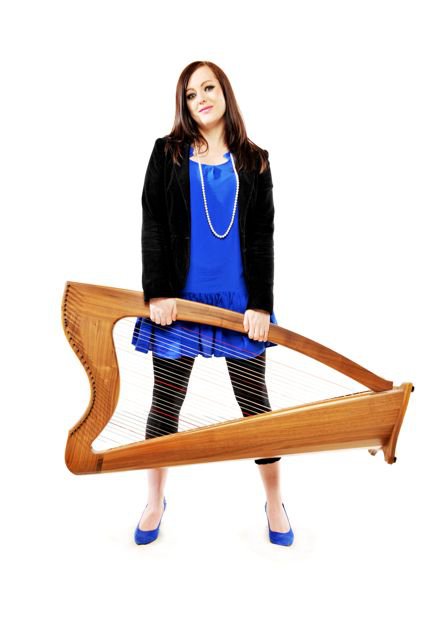
Scottish harpist Rachel Hair notes down her tips on how to get into this fascinating musical instrument: The Celtic harp!

It was through my discovery of harp music that got me  started in perusing the web for more resources. I think it was my interview with Scott Hoye and his invite to join the Celtic Harp facebook page  made this interview with Rachel Hair possible. The Rachel Hair trio brings something fresh to harp music. There’s unmistakable groove, atmosphere and optimism the first time you listen to any of their tracks. Interviewing Rachel deepened my respect and admiration for her music and her band. She is one of the great contributors to the forum lately while being out joining the Manx music festival. She kept everyone updated with pictures and links. I even got my Maeve Gilchrist through her recommendation. Everyone in the Celtic Harp community is very supportive of each other. Eric, Scott, Rachel, Corrina, Amy and the rest keep the community alive with their ideas and presence.

Rachel is very enthusiastic to share her thoughts with everyone. Especially those who are planning to study the instrument but might have doubts that hold them back.  I like her in-depth way of answering questions. I am sure you will enjoy this and add it to your bookmarks for reference.

How do you describe the Scottish folk scene these days ? What’s the trend in terms of playing, the instruments and also the general band image that the listeners are warming up to?
The Scottish folk scene has gone from strength to strength and over the past 10 years has had a real upsurge of talent and creativity. I think its one of the most creative folk scenes in the world. You have musicians who know their tradition well and can perform it fantastically but are also creating and adding to the tradition. More than ever musicians and bands are writing new music and presenting it in an ever creative and evolving fashion… its not just about playing tune after tune anymore. Bands are getting really into big arrangements and taking the listeners on a journey to what is becoming the new tradition in Scotland.
Theres a lot of cross genre music making too. I live in Glasgow, Scotland’s largest city, and a hub of creativity amongst musicians of all styles. Folk, jazz, indie, rock and classical musicians are not only mixing with each other socially but are musically creating new sounds together. The results of this are now being on seen on stage and festivals such as Celtic Connections are a great supportive platform of this allowing it to be brought to the public’s attention.
With friends.

Your tunes are always rhythmic and is also filled with arrangements that glow of atmosphere…how do you value atmosphere in songs? Others are more into technique and speed. Do you think it is essential in every Scottish and Irish recording to have a sense of atmosphere or ambience?

I like to create records and shows which take listeners on a journey, giving them opportunities to tap their feet along, dance but then also give them opportunities to reflect and feel the emotion of the music we create. One of the tunes we most enjoy performing as a trio is the haunting melody “Cancro Cru”. We really get emotionally involved in the tune and this is often felt by the audience and commented to us after.
I don’t think its necessarily essential that every recording gives a sense of this atmosphere but I do think its important that musicians and bands try to give an impression of what the atmosphere their live show creates, through their recordings.

You have been active these days especially during festivals. What are the things you learned being musician, in terms of traveling with ease? Tips you can give us? I remember what Scott Hoye said about harpists..it’s not like playing the fiddle where you can toss it and go. Harpists carry this huge instrument.

Preparation is the key! I often fly with my harp. Living on a large island (Britain!) means that any gig I do outside the country means a flight. I always phone up the airline in advance and let them know I’m taking a Celtic harp and ask them to make a mark on booking. I’m always very casual on the phone and make it clear that its not that bigger than a suitcase, weighs less than 20kg (normally less than my suitcase!) and that I fly all the time without difficulty.
It used to be that I could take it for free, but now you just have to accept that you have to pay for it. Most of the large airlines just see it as an extra piece of hold baggage and this can usually be paid for in advance which makes life easy.
Its always important to be sure that the car that will pick you up will have room for you, your suitcase and your harp. To be honest mine is actually quite small in its flight case so this is normally no problem.
I also have a protective fibre class flight case for my harp which is very easy to move around and protects it well. I tend to tape up the clasps on it too for safety too. I also put pieces of polystyrene pipe round my levers inside its cover, to protect them further.

What are your suggestions for both artists and enthusiasts about this type of music and making it grow? We have the technology and tools but what do you think are the things that each of us can do to improve and expand the scene.

I like to use social media to connect with people… through Facebook, twitter and youtube. Its a great way of keeping in touch with your fans and new people are discovering my music through these ways every day. It also gives me the chance to promote other music, that isn’t always mine. Bands and groups that I like that I think deserve to be heard. I like to post videos etc. of them to help their music grow and get to new people. Its definitely a worthwhile thing to get into….facebook, twitter and youtube and free to use so you’ve nothing to loose!

What tell young people who find harps fascinating and want to study it?
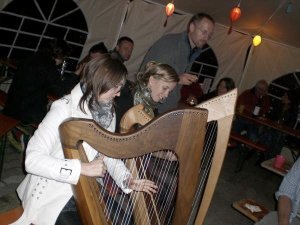
Rocking out the Scottish reels
— with Maeve Gilchrist.

Get yourself to one of the harp festivals and try it out for yourself! I’m on the organising committee for the Edinburgh International Harp Festival and it coming along to a festival like it really is a great way to discover harp music. You can join a beginners course and have a go, visit the harp exhibition which has all the top makers in Europe showing of their harps and you can go to some of the concerts. Harp festivals really are a great way of experiencing everything “harp”. You also get the chance to meet harp players young and old, of all levers from beginner-to professional. We’re all a very friendly bunch.

Who are people who influenced your growth as an artist through the years?

When I was at university in Glasgow, studying music, my harp teacher was Corrina Hewat. She was an incredibly encouraging teacher who really pushed me to discover my own style of playing. We don’t really play in the same way and I think that’s a testament to her as a teacher.
A lot of my friends are professional musicians, Jenn and Euan who play in my trio, Jamie Smith who plays in the group Jamie Smiths Mabon and Gaelic singer Joy Dunlop. We’re all very very head strong and passionate at what we do and we’re very good at encouraging each other to keep going and achieve our dreams and success in music.

What’s your biggest goal in life.

Well to be happy, and to be fulfilled both in my personal life and in my musical life. simple!

Rachel Hair – Harp
Jenn Butterworth – Guitar / Vocals
Euan Burton – Double Bass

Follow her band in facebook: https://www.facebook.com/rachelhairharp

http://www.rachelhair.com/

http://www.youtube.com/rachelhair

***

Somerset Folk Harp Festival

Everyone got a harpful for 4 days! People who are very enthusiastic about harp music(including yours truly) will keep this festival on the calendar. Some of the big names in the community attended: Chris Caswell presented Guerilla Music Theory. There’s also Breton dancing( this is really fun!) led by harpist Clotilde Trouillaud. For people who wanted to pick up a handy instrument enjoyed the tin whistle workshop. Maeve Gilchrist whom we presented in this site was also there teaching techniques.

Other notable musicians:

Peacocks Feathers: entertained with Irish & Scottish tunes & songs during the lunchtime concert in the Atrium.

Debbie Brewin-Wilson lead the 3-day Basically Beginning workshop.

Nicolas Carter on the first of his 3-day class on Paraguayan harp. He’ll also help out Tracy Gorman in the Paraguayan Dance class at 3:30pm.
There’s Billy Jackson in his workshop on Scottish Harp of the 17th century yesterday. Right now he’s teaching Composing in a Traditional Style. By the way I have one of his albums!
Thanks to Scott Hoye who is up to date. He’s the source of this news.
***

Today in Pictures: Athas on Tour

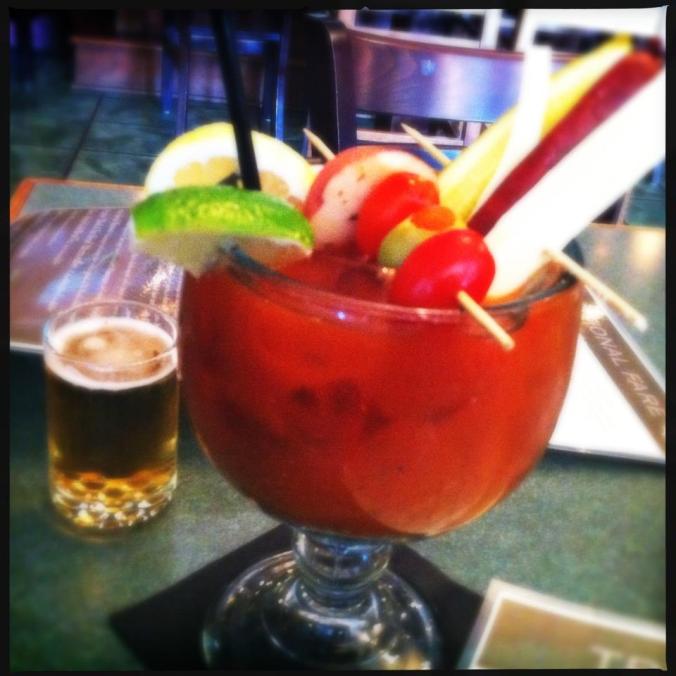
Amy thought she ordered the large Bloody Mary-Jeff Ksiazek

Between gigs, the band unwinds.
Follow the band’s tour schedule here: http://www.athasmusic.com/schedule/
***

Book curiosity:

Dark Dealings by Karen Victoria Smith
Synopsis: At thirteen, Micaela O’Brien was found wandering a pasture in Ireland, the sole survivor of a mid-air explosion. Now, as a successful investment banker, she will discover that Wall Street has fangs and claws. When international power brokers, creatures hiding in plain sight, threaten her and those she loves, will this heiress to a Druid legacy deny her power and let loved ones die again?A thrill ride of money, monsters and murder across the globe.
According to the author
: 2 DAYS left to get Dark Dealings for Kindle on sale for $1.49. 1/2 royalties 2 Kick #Cancer Overboard.BUY,read,review amazon.com/Dark-Dealings-… Read the novel described as Trueblood meets bluebloods with a 4.4/5 rating on Amazon. Price goes up August 1
Tataratat! The Gothic Celtic in me loves it! Twilight fans sorry but I think Karen Victoria Smith does more than Stephanie Meyer. Nothing is better than Vampires and Celts in one book.

***

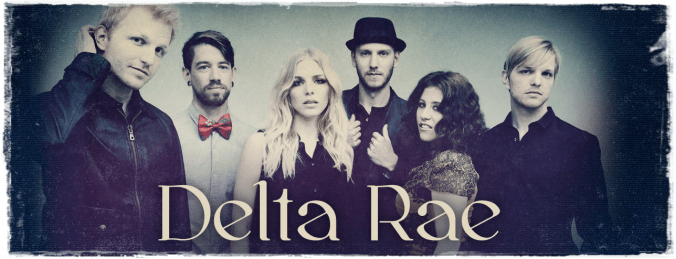
Our featured band Delta Rae

Take a look at this official video by Bluegrass fusion band from North Carolina  Delta Rae. I love the concept. It is both funny and creepy. The voice of Brittany Holljes has a powerful quality in a pop sense but with New Age delicacy. There are also male lead vocals occasionally. The music has a knockout rocking quality but with  the atmosphere of Sarah McLachlan. It is a band that will  appeal to fans of music categorized as folk/rock or country with chillout moments. My favorite track from the band is Holding On To Good because it is really explosive and glorious and the sound just floods through you. So beautiful! But wait till you hear Surrounded, a moving and mesmerizing track that builds up into a glorious release- a crashing wave of sound, angelic harmonies and earth ravaging meteor or emotions.

Members:

Ian Holljes (vocals/guitar)
Eric Holljes (vocals/keyboard/guitar)
Brittany Holljes (vocals/percussion)
Elizabeth Hopkins (vocals/percussion)
Mike McKee (drums)
Grant Emerson (bass)

Info:

http://www.deltarae.com/

Music: http://www.myspace.com/deltaraemusic/music
Got Harp Blisters?

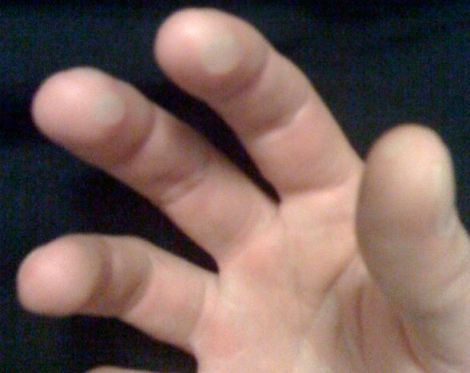
Picture courtesy of http://harpyness.blogspot.com

I believe that any discussion is worth an article. Got this posted by Rachel Hair about issues with blisters among musicians who play the harp. This is understandable. Unlike guitarists who usually use the guitar pick harpists have to rely solely on their fingers in conquering those great bunch of strings.

Hi folks,

Do any of you ever get blisters when you play? I’m just wondering how you deal with them when you get them, or how you yourselves prevent them?

I myself rarely, rarely get blisters as I’ve such hard callouses on my fingers. Last week though I had a very intense playing schedule… I had 4 gigs in 2 days, which was over 7 hours of hard, full on playing (mixture of background music and professional performing gigs).

I ended up with a massive blister on my right hand thumb, but under my callous, so it had like a 1mm skin on it! I’ve ended up taking a needle to it and bursting it and I’ve cleared the skin away (it was such thick skin it was never going to regrow in).
Now I’ve fresh skin though without callouses on my thumb that I’m going to have to “train” up again.

Was just wondering what you guys do if you end up blisters, small, or big?

Rachel Hair

Things that usually happen:

1. Small cuts on fingers on wrong places. This happens when a wrong part of the finger slides or gets into too much contact with the wired strings.

2. Blisters. According to harpist Amy Kortuem: blisters  can occur on the 4th finger of left hand, the finger that anchors all those big chords on those huge gut and metal strings in the bass.

Temporary Remedies (if there is an ongoing gig):

1. Duct tape. Here’s what Amy Kortuem said:

Once I resigned myself to the fact that it wasn’t going to look pretty, I gave in. Duct taped finger it would be. I packed up the harp, got it into the warm truck and went to my tool box — No. Duct. Tape. And I didn’t have time to stop at the hardware store before I needed to be at the Wine Café. So I steeled myself to just play through the pain.

I shouldn’t have worried, though. There were plenty of great musicians at the Wine Café, and the likes of Paul Durenberger and Minnesota Music Hall of Famer Billy Steiner rushed to my rescue with a roll of duct tape and a Swiss Army knife to trim the edges.

It made for some interesting adjustments in my playing. While I didn’t feel any blister pain, I also didn’t feel the strings at all. I spent more time looking at my fingers while playing than I have since I was first learning to play the harp. But I adjusted, and people enjoyed the show tunes and romantic songs I played.
I’m sold on the duct tape cure. So much so that I went to the drugstore last night to buy a roll for myself. The cashier looked at me a little strangely when I put the duct tape and a Valentine’s Day card on the counter (the card was for my 90-year-old neighbor, Ethel), but I didn’t explain. I just tripped off into the winter’s night with my purchases, ready to give myself a manicure with some silvery nail polish to match my newest performance accessory.

2. Plasters. Plasters are quite good for allowing one to keep on playing, as they shape themselves to the shape of your fingers, and don’t completely block off sensation.

Long term remedies:

1.Aloe vera. It has soothing, moisturizing, and healing properties. Cut a small piece, squeeze it and put the gel on your finger. Don’t be afraid to moisturize your skin,  as keeping it dry will exacerbate the problem in the long run.

2. Rock tips. It builds callouses for sensitive fingertips. More info through this link: http://rock-tips.com/

Big thanks to all harpists who contributed their ideas:

Scott Hoye, Amy Kortuem, Màiri Macleod, Leo Phillips, Corrina Hewat, Renia Kayiava, Karla Sullivan, Susan M Berry, Ray Pool, Alice Freeman, Julia Somerville and Eliseo Mauas Pinto.

Additional info can be found here: http://www.harpcolumn.com/forum/message-view?message_id=167147

Cumbria Cardboard Harp Project

This slideshow requires JavaScript.

I have been visiting the page of this wonderful project called the Cumbria Cardboard Harp Project by musician Mary Dunsford. I owe this discovery to my friend Scott Hoye who is a recording artist. He posted this in Celtic Harp (https://www.facebook.com/groups/celticharp/)  for everyone to see.

This workshop teaches  beginners how to play using cardboard lap harps,  making the once challenging instrument more accessible. I think this is amazing! Everyone can do it. It simply makes this instrument less intimidating for people who think harps are difficult to learn.

Mary Dunsford  is a harp teacher, professional musician and passionate ambassador to the harp. She  has been teaching harp for a decade already, resulting to a publication of an instructional harp book  for adult beginners.  It isn’t too late to learn new things and this is what she has been teaching everyone.
If you are curious, please go ahead and like the Cumbria Cardboard Harp Project in facebook. You might find yourself a part of her workshop and really enjoy life and music to the fullest!

Now when you become an expert, you might want to join this : http://www.furnesstradition.org.uk/

https://www.facebook.com/CardboardHarpProject

Scott Hoye Talks about His Home Recording of Black Rose (Interview)

Between O’Carolan and Indie music  is a gem of many facets: The home recording of Black Rose by American singer/harpist Scott Hoye.

Scott Hoye is my guest for this week. His album Black Rose is out in the market. It was also the start of my comprehensive journey into the world of harp music. It was an interesting learning experience. There are many harpists around the world. The harp community is growing. Within the community is a wide range of eclectic music. Every artist has his or her own unique approach in terms of style and  arrangement.

Scott Hoye embraces the two worlds of Celtic rock and New Age music. His time with Seranati and The Spriggans contributed to the edgy style of his compositions. On the other hand, his inclination for ambient or meditative music contributes to the spiritual nature of his tracks. It is the kind of balance that is both surprising and essential. This eclecticism enables him to morph into genres. It is no surprise his answers in this interview are well thought of and very informative.

At last your debut album Black Rose is finally out. This is your first solo project outside The Spriggans and Seranati. How do you feel about having this harp album finally?

My experience in creating and releasing Black Rose is twofold. I am extremely proud and happy with the end product, but as the only producer of this album, I can still hear all of the minute aspects of it that I could work, re-work, and work some more to “perfection”. However, you have to tell yourself at some point, “it’s time to kick the eagle out of the nest so that it can fly, live a life of its own”, so to speak.

The experience of recording itself was extremely rewarding, with a lot of learning curves for me. I had to put together a home studio, purchase gear, learn about engineering and mixing, write, arrange, perform all of the instrumentation and vocals, and research mastering, marketing, and distribution. I wore a lot of hats.

My goal was to work creatively, within a limited budget. The technology has changed so much since I recorded with Seranati or The Spriggans. One can literally make decent recordings at home, and work with an engineer for mastering. My goal was to work with as little as possible. Black Rose was created with one microphone, for example. I learned to use that one microphone to get a rich, mellow sound from my harp. It was also recorded in a very dry environment to control for extemporaneous sounds. That required me picking the brains of other people to work with creating a nice, resonant sound during mixing. But, I am probably digressing a bit here, and obviously this shows how excited I am about the process of creating with studio equipment, back to answering your question.

Knowing that songs I wrote fifteen years ago are realized in some fashion feels great. Knowing that I can record and produce music for people to enjoy is also gratifying. I don’t look at Black Rose as a harp album. It does feature the harp, but I set out to make a good album, not a good harp album. I hope that the variety of sounds (vocals, harp, whistles, and percussion) translates into that good experience for the audience.

Here is a link to an article I wrote last year on my recording process: http://www.wirestrungharp.com/revival/home_recording_harp.html

This is brilliant! Home recording is really the trend these days

Thanks! Glad you like it.

That article about Home Recording With a Harp is great to read. I think it is a great source of information for those wanting to start their own home recording. That essay tackles the challenges in terms of the instrumental aspect of home recording. Tell us about the vocal aspect. Your album is rich with vocal experimentation. Oh Rainy Night is an example of what you did with layers. What were the challenges doing that song as well as your approach in terms of the singing style?

Oh Rainy Night was a difficult song for me to re-conceptualize. I had originally written it for Seranati. I imagined it would be sort of like a Beatles song, either ala Revolution, or something off of Rubber Soul. Or, we would at least try not to do it so heavy handed, ala Robin Trower or Black Sabbath. This was the biggest stumbling block for me, as I couldn’t get a stop chorus of guitar, drums and keyboards out of my head. It came down to just laying the lead vocals down, and going from there. I re-imagined it with a harp accompaniment and percussion. Well, the key I liked the vocals in was C sharp major, a very lousy key for the harp to play in; lovely for keyboards. So I wound up say, “to heck with it”. I didn’t want throw out the tune entirely, and decided that a cappella was probably the strongest bet for the tune to work. I think that was probably the best choice.

As for the recording aspects of that song, it was simply adjusting the gain to meet the right level for my very loud singing, and recording the other parts. I wrote the alto and bass section in vivo; while I went along.

I like the mash up between Eleanor Plunkett and Fanny Poer. The result was really refreshing. It could have been a pairing of other songs but why these two?  

Simply put, O’Carolan wrote some of the loveliest harp music. A lot of tunes are attributed to him, and since they were passed down via the oral tradition among harpers, we don’t know which tunes are really his. These two tunes, in my estimation, are elegant, and appear to be a hybrid of Irish music and the baroque music of the English (Anglo-Irish) courts that he was fond of emulating, so I’m pretty sure they are his. The reason I chose to record them is because they are simply beautiful.

I chose to pair them up because they complement each other. Eleanor Plunkett is sad and plaintive. It ends on the dominant degree of the scale, having a strange sense of, or lack of resolution for the listener. Fanny Poer is festive, and it lands right on the tonic. In essence, the sounds move from sad/reflective to festive/happy. Limiting Eleanor Plunkett to solo harp adds to the sense of inner reflection; adding whistle and djembe to Fanny Poer built up the tension and the added color for the arrangement, allowing me to add and remove instruments as the first and second sections played out. I think that using the djembe rather than the bodhran provided a different take on the tune. When paired with the whistle, there is, I think, an almost a Caribbean flavor. The break from the harp at that also provides variety.

Mind you, I didn’t think of arranging these two tunes outright. Rather, I approached them one step at a time, and thought about how the arrangement could be crafted for the most possible interest and variety for the listener.

There is this huge wealth of music within the harp community. I also noticed the support you give to each other as musicians. Do you think that the harp (most specifically the Clarsach) has already attained the same level of mass exposure like say the fiddle or bodhran or do you think it is still heading that way and you as well as other artists are smack in the middle of that turning point?

Good question. I don’t believe the clarsach has attained the same level of exposure as fiddle, bodhran, or guitar for that matter. I think that the reason is twofold. The other instruments are spread wider at this point in other styles of music and just more culturally accepted; “monkey see, monkey do”. I think the other reason is portability. Hauling a harp takes dedication, endurance, and planning. You can easily toss a violin in a case and go. 😛

I do think that the harp is on the edge of really taking off as a more main stream instrument. Lots of great players are doing incredibly innovative work: Jochen Vogel, Rachel Hair, and Catrin McKay to name a few. Apparently, the Scottish scene is booming right now, and lots of young harpers are taking up the instrument. I hope that the wire strung harp comes up alongside the gut and nylon strung as well. I know there are great players on wire who are exposing more people to its voice. It really has a distinct sound, and it, along with the pipes, span the bridge back to the origin of a lot of British isle Celtic music. I hope this second wave of the “Renaissance of the Celtic Harp” includes equal growth for the wire strung.

A Place Where Time Stops is a track that somehow reminds me of   Flight of Dragons. I think it is the flute and the mellow singing. You also mentioned that this track has been influenced by religious and devotional poetry. It must have been an interesting period in your life. Please tell us more about it.

Future Bard

Well, it was an interesting time. I was working quite a bit as a musician and working day jobs in an unrelated field, selling books, and access to a great deal of reading material. I have always been interested in world religions and various takes on spirituality. I’m a member of the Anthroposophical Society, not very active these days, and not very orthodox for that matter. I find that spirituality is a pretty big part of who I am on some level, but I do have a more practical side as well, and try to balance the two out.

The theme in A Place Where Time Stops is based on the idea of the Beloved singing to the soul, so to speak. I suppose the Sufis sing to the Beloved as the spirit or God, attempting to work them into ecstasy. Some Hindu devotional hymns or chants are of Krishna singing to Radha, God wooing the soul. I suppose that the dialog in this tune works more from that angle. The ambiguity of the lyrics allows for the song, I hope, to translate as a simple, tender ballad or, if you take into account the sort of grandiose statements like, “I found an ocean, and you found a stream”, it can be seen as something more. At least I hope that is what comes across.

The first verses and chorus were written in 1995. I flushed the song out a bit more as I re-worked it for the album.

By the way, I just checked out Don McLean’s tune. I’ve never heard it before. Charming! I do believe that it was probably influenced in some way by Gentle Giant, or other prog rock bands that used recorders or winds in their work. All in all, I think it was a song that just fell together well as I was flushing out the parts during the recording process.

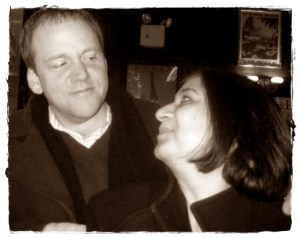
With wife Shabnam

Do you have any plan of releasing Black Rose through physical media?  

Yes. I plan to roll out a physical CD in the fall. I hope to have it available for purchase both directly from me and through an on-line distributor.

***

You can download this track for free. Please support our independent artists by buying the album or re-posting this article in other social media.

http://www.scotthoye.com/

http://soundcloud.com/scott-hoye

http://www.reverbnation.com/scotthoye

https://www.facebook.com/scott.hoye

https://www.facebook.com/groups/celticharp/

Chicago based harper and musician Scott Hoye was a founding member of the Celtic ensemble The Spriggans, as well as the progressive rock band Seranati. His repertoire includes traditional and original tunes on Celtic harp, vocals, whistles, and percussion. Scott gathers inspiration from traditional sources of Irish, Scottish, other Celtic, and folk, and world music, while mixing them together with contemporary sounds to create a new, sonic brew.

Black Rose by Scott Hoye(Track by track album review)

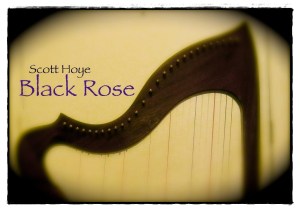
Black Rose: An album  of moods, textures and layers.

I am listening to Black Rose, a Cláirseach harp and vocal album by the  American Celtic  musician Scott Hoye. It has all the satisfying elements that you can find in a traditional album. Yet it has the experimental quality of a New Age  or Ambient album. There is a good balance between instrumental and vocal tracks  here. We find songs that are familiar, including Eleanor Plunkett. His track by track arrangement is eclectic. I hear strains of Liszt in Ultima Thule while other tracks like Oh Rainy Night  just oozes with folk/rock vocal harmonies. Black Rose is an album filled with elegance and emotional beauty. And his influences are very refreshing.

Eleanor Plunkett is played the way I remember Clannad did it in the 70s. It has that same down to earth appeal yet with elegance in its simplicity. It is tied up to Fanny Poer which has percussion and whistle. The ambiance is live. This is exactly the  kind of sound you hear on live acoustic performances.

Scott used to be part of a rock band the  Seranati. Think of Jethro Tull and Traffic. This is evident in his powerful voice that has the crunch of an electric guitar with its remarkable range. But he is being subtle here as he incorporates the Irish Sean Nos style of singing .The Flower of Magherally is rendered in a capella. I heard several versions. One is by Altan and the other is by Anuna. I have to confess Scott’s singing stops you in your tracks.

The South Wind takes us into another instrumental journey. This time we hear the delicate playing as his fingers move from one string to another with an experienced grace. The notes off the harp twinkle like little crystals. Then the tune moves into the poignant melody of Carricfergus. Here the whistle has never been so bitter-sweet. I love how these two instruments complement each other with such subtle ardor.

Black Rose which is the title track is another a capella tune. Again we hear Scott’s strong but expressive voice where he dips from woeful highs to smoldering lows. Partly Gregorian, partly rock, his singing is really magnificent.

A Neansai Mhile Gra  begins and ends with the kind of delivery that is expressive and simply beautiful. This track is very visual. This is the same kind of element you can find in his Celtic band The Spriggans.

Oh Rainy Night takes us into a rock twist with its engaging vocal harmonies. This is the style where he shines. Scott isn’t really for tamed emotions when it comes to singing. Like a wolf that needs the wild, his voice is a force of nature, so stormy yet beautiful with its power.

Where Time Stops is gentle as of a balladeer telling a story. “ I can show you a place where the time stops”..he sings with such ease of expression that when he moves to the chorus with layered voices it becomes epic. I’d call for more rainy afternoons with this song. Like a walk in the fields when the downpour stops, watching the leaves glisten. This is  the  kind of beautiful imagery this song brings to mind.

Sad Nika brings back that Sean Nos air that track 2 and 4 have. With varying arrangements, Scott has created an album  of moods, textures and layers without having to call for a lot of collaborations.

The last track Ultima Thule is a long piece with an almost operatic quality. It is dreamy, hypnotic and it is the kind of music you would like to hear when you are waiting for the rain to stop. I think without this track Black Rose would sound incomplete. Everything about Black Rose simply go together like  forks, knives and spoons. Dinner has been served. And yes it is a rewarding listening experience.

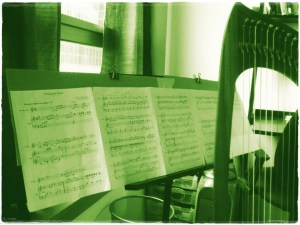
The composer at work.

Blurb about Black Rose from liner notes:

Black Rose has been many years in making. Several of the tracks were written long ago for two other projects, Seranati, a progressive rock group, and The Spriggans, a Celtic ensemble. Both groups performed and recorded in the 1990s in the Detroitarea. These songs did not see the light of day then, and they have simmered on the back burner of my mind over the years. I have re-imagined them for this, my first solo recording. Black Rose has slowly taken shape, like a musical journey with many vistas along the way. It is a fusion of many of the things that impassion me: traditional Celtic, pop, folk, and ambient musical styles.

Black Rose, the tune, was written for a friend when she had hit upon some sad times. I had initially imagined it as a prelude to a tune called Beauty’s Daughters (a.k.a., Lord Byron’s Stanza’s for Music II) crafted by my self and guitarist Patrick Penta, and played by both The Spriggans and Seranati. The refrain was written without my knowledge of the term Black Rose being attributed to Ireland; a sort of code word for the longing for a independent country during the British rule. This was a happy accident, and I humbly offer it up as a new, Sean Nos, or “old style,” a cappella song, like those popular in traditional Irish music. Two other songs here fall in this category: The Flower of Magherally (a traditional Irish tune) and Sad Nika. My friend, singer-songwrite John Hammink, wrote Sad Nika after a hiking trip in Europe. He wrote it for me to sing while I was a member of The Spriggans. I am exceedingly happy to be making it available here now. Thanks so much for waiting, John. Hope you aren’t disappointed with the effort.

Oh Rainy Wind and A Place Where Time Stops were both written for Seranati. Oh Rainy Wind describes my life walking to and from bars with various women, or just walking into and out of pubs on long nights. It was written at the behest of the keyboardist, Stefan Economou. Stefan desperately wanted to sing more bright, pop, rather that dark, blues influenced tunes. Here is your “Beatles” tune, Stefan, re-figured as a three-part, a capella, drinking song.

I like to think A Place Where Time Stops was influenced by Sufi and Hindustani religious, devotional poetry and spiritual traditions. I was also between girlfriends when I wrote it, so I can’t deny the process of sublimation in its inception. Singing in a rock band did have some fringe benefits, I suppose.

Ultima Thule is an improvised theme with multi-tracked harp and whistle. My friend Bryan Moore, sculptor and director of HP Lovecraft film and fandom fame, inspired it, naming his new home after the term. “Ultima Thule” is an idea from the ancient Greeks—the most distant, northerly island, geographically, from their perspective. Perhaps Hibernia? Albion? Who knows? By the time the Romantics referenced it in poetry and lieder, when the world had been fairly well mapped, it was an imaginary country; a land of the dream realms. I thought the pentatonic setting would give it an ancient flavor, as well as lending itself to improvisation.

Eleanor Plunkett/Fanny Poer: two tunes attributed to the 17th century, Irish harper, Turlough O’Carolan. These were both written as slantes, or tributes to two of his patrons. I attempted to give a more “archaic” sound to the arrangement with the inclusion of the descending arpeggios. The second tune includes whistle and djembe, an African hand drum, rounding it out with a full ensemble quality.

The South Wind/Carrickfergus: The first tune is attributed to O’Carolan, but sounds more like a simple folk tune to me, so he may have just grafted his own poetry to an older tune, or it was never really a part of his repertoire. Carrickfergus is a permutation of the Scottish tune, “The Water is Wide.” Dominic Behan, Brendan Behan’s brother, first recorded it, and attributed it to, of all folks, Peter O’Toole who learned in, of all places, a pub; fine couple of folks for a harper to be vicariously connected to.

A Neansaí Mhíle Grá: is a simple instrumental version of this Gaelic love song for the harp.

Thanks to the following for their support and inspiration: Ma & Da and clan Hoye; Dick Anderson of Woodsong Musical Instruments for creating a superior harp that has held up all these years; Eric & Cynthia Cathcart, Rachel Hair, Steve Toth, & Chris Caswell for recording tips, and encouragement; all Spriggans great and small (you know who you are); wirestrungharp.com, my Soundcloud cronies and FB harp associates; John Hammink for writing such a great tune and waiting so long; Regina Harris-Baiocchi for kind words and perspective; Delhi street food vendors, just because you deserve recognition, and Atul Mohan for pointing me in their direction, and providing encouragement for this project; the worldwide Khanna tribe (cheers!), and, especially, my wife Shabnam.

You can purchase the album here: http://www.cdbaby.com/cd/scotthoye

visit: https://www.facebook.com/SCOTTHOYEMUSIC

https://www.facebook.com/groups/celticharp/

and http://www.wirestrungharp.com/