Also in this edition: Colin Nea, Therese Honey and Enda Seery
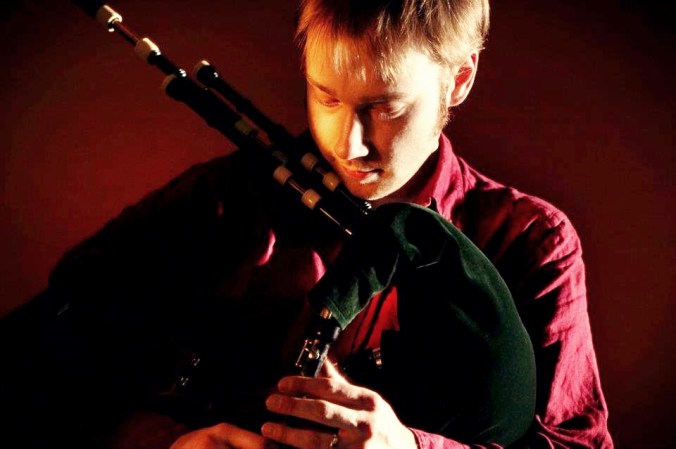
Fraser Fifield: Pic by Barryjohn Bj Stewart
Plays: saxophone/whistle/kaval/bagpipes/percussion/composition
From: Edinburgh, United Kingdom.
About: musician, composer and producer.
With the excitement of an upcoming album, Fraser Fifield talks to The Celtic Music Fan about music and what makes collaborative musical work interesting.
This week’s special attention is given to Scottish musician, composer and producer Fraser Fifield. I was captivated the first time I listened to one of his tracks. There’s sensitivity, intricacy and a sense of underlying elegance in his musical voice. I think I read and heard his music a couple of years ago, way before I even started writing about Celtic musicians. It is only now that I got an opportunity to communicate with him directly for this edition.
He plays the traditional instruments in a way a Jazz musician would, and then reverse the process with the Traditional instruments. It is like what happens when you put different people in different attires and situations and see how they react or how they look in that environment. This is what he did with music and instruments. I think his striking importance is being able to walk between different worlds and still maintaining the authenticity of his artistry in playing. This edition is about relationships: between different types of music, musicians and instruments.
I think you will enjoy how this interview turned out. I had fun making this one.
What’s keeping you busy these days Fraser?
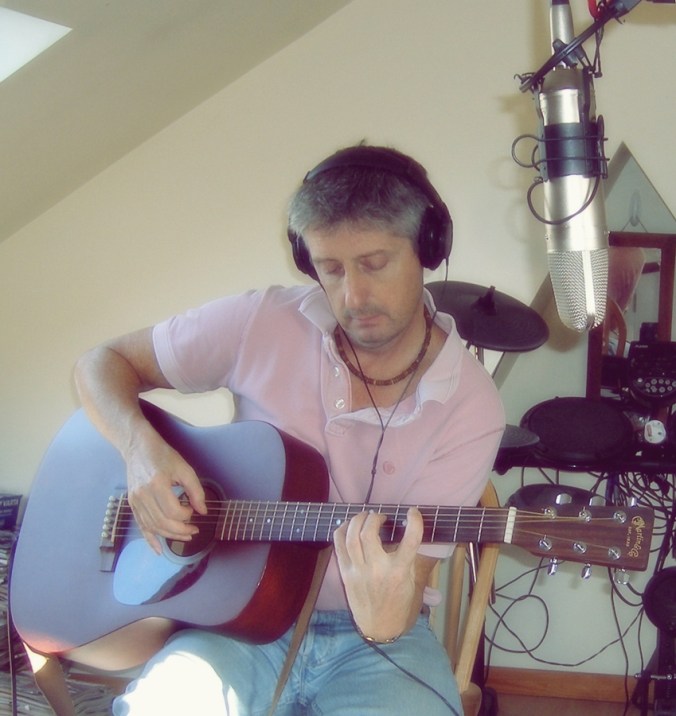
What’s going with me? Well, the main thing just now is having eventually started recording an album with Graeme Stephen, guitarist and long term colleague – just duo, focusing on live performances basically – meaning played live together, not actual concert recordings..lots of electronics too but hardware boxes used in live performance on the whole as opposed to studio laboratory type of process – which is cool, but not what we’re doing here.
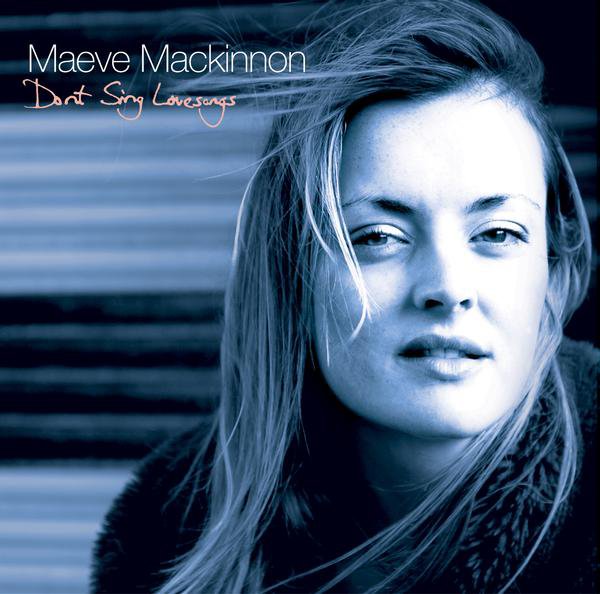
So we started that last week…and will be ongoing as time permits over the next wee while. Just had a flurry of CDs through the door as other projects I’ve recorded on came to fruition – Maeve Mackinnon, Sophie Ramsay and Wingin It…maybe you’ll hear some of these soon
Looking forward to playing London jazz festival with the Take 5 Europe ensemble plus a couple of gigs in Poland one with Maciej Obara 4tet and Take 5 again. Playing duo with Graeme in St Andrews Scotland in a couple of weeks…
Doing a recording session for Angus Lyon this week and hooking up for a small gig with an old friend – wonderful clarinet /sax player Dick Lee..

With John Surman and Tom Arthurs last week on Take 5 Europe. By Emile Holba
What can listeners expect from this new album in terms of style and sound?
I’m hoping folk will hear two musicians enjoying playing together who’ve built up strong dialogue between them (we’ve been playing together some 16 yrs I think). A general rule seems to be emerging – remember we’ve just started – to avoid layering performances/multitracking ourselves i.e. you’re essentially going hear two musicians playing live together, there’s no click track etc… that’s not too say sonically the record will be simple – early results suggest anything but…this is often just low whistle and guitar but like you’ve never heard.
A bold statement perhaps..but I’m being fairy serious… The live recordings on the soundcloud page hint at the sound of course, but I am enjoying working a little more on our recordings after the initial performance, resampling ourselves in a way, extracting small bits of audio and changing it’s function…I’ll say that much. Will it sound folk or jazz – I’m bound to be asked that… and the answer is I have absolutely no idea..a bit of both, or plenty of both actually. The compositions are mine but compared to my previous records I’d say improvised passages will turn out be more featured.
I think making music is also a relationship between you, your fellow musicians and your fans. What have you learned so far in maintaining this relationship since you started? What are the things you avoid now and what are the things you consider essential?
….Essential in regard to making music with other musicians, for me, is a sense of openness, trust and maybe some kind of mutual understanding of what it is we’re doing, not necessarily verbalized but that the feeling of all being well is present…all makes for a good starting point, at least musically; you could be having the worst week imaginable, but sometimes these things can twist around into good musical moments. Sometimes, hopefully not often, one can’t get into the right vibe to make music creatively for whatever reason, cat gone missing, who knows, but assuming all is fine there should be something you can switch on to be excited about what you’re doing, if you’re not already. Basically it helps to be in good mood is what I’m saying I suppose.
Musical situations I try to avoid are those where none of the elements to my previous answer are present. Also I’ve not been drawn into a ‘band’ situation for a wee while now, which is maybe down to my personality, I don’t know..I kind of miss it in a way, the band thing, but at the same time value the diversity of music I’m currently able to fit on my modestly sized internal drive.
Be nice to audience members if they’re being nice to you…i.e. paying to hear you play….would be a good general rule…
Try and have a relationship with the people that enjoy your music, if you want to that is…unless you have some Garbarek like qualities, and I try to mean that in a nice way, it’s a probably good idea business wise to interact a bit.. which I guess is what I’m doing right now..but I’m sort of enjoying the therapy of answering your questions. How’s this piece shaping up now by the way ?
Oh this is shaping my work nicely!
If you evaluate all the tracks you composed throughout your career, which one has an impact to you in terms of the manner it was composed and the inspiration behind it?
I’ve chosen the track called Psalm from my first solo album Honest Water as it’s perhaps the tune or idea which has had the longest and most interesting journey with me to date. The first idea was to try and imitate the sound of psalm singing from the Scottish Gaelic tradition – a most beautiful and peculiar art form in itself. My approach is a very simple one and one that has worked for me in many situations over the years, the more instruments playing together the better the effect, so great if working with groups of students of varying levels of ability for example.
Most recently I used this idea in the opening section of my piece ‘Playground Tales’ written for the group Mr McFalls Chamber with guests Corrina Hewat, James Ross, Aidan O’Rourke and myself – hopefully a recording next year. So the track Psalm from Honest Water began life as one of five parts of a suite for saxophone quintet titled Traditions – one of the first years of the ‘New Voices’ series of commissions made annually by Celtic Connections, and it’s still running – quite a body of work in there now. My turn was 2001, a long time back now!
I’ve never played the tune much on my own gigs for some reason, actually probably no reason, but have used it often in a variety of other settings, I recall…a group of 7 different European bagpipes at Rudolstadt Festival Germany, recently with Dutch trio the Nordanians, with the Take 5 Europe group this year, it’s served me pretty well, and I think it’s a nice melody.
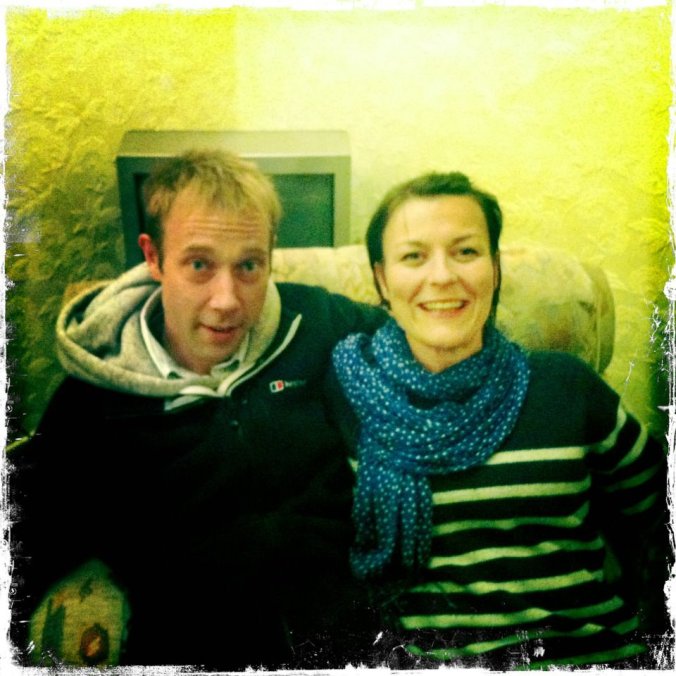
With Corrina Hewat
If you have the time, the energy and the means to be an album producer, whom would you work with and what types of musicians would you help in producing records?
Well I’m doing that very thing right now in a kind of self-medicating manner along with Graeme Stephen in the making of a duo album together which is actually a bit overdue I feel, but at last is progressing nicely. I’ve always enjoyed being very hands on with every aspect of my own record making, from the engineering through arrangements, performance to mixing. I like having the freedom to work at my own pace with things and review/adjust at will…does end up taking forever sometimes though…and that’s not so cool always.
With other artists I’ve occasionally become involved in the role of producer or perhaps co-producer in some instances – for example where a group has developed a sound collaboratively and go on to then record. I’ve never been great at adopting a workmanlike attitude when it comes to making records. I think its quite a big deal. An example I can think of is with my friend Mick West, a traditional singer from Glasgow whom I first met whilst a student there. I’d played with him in various line-ups of the Mick West Band ever since, so when the chance to make his last album ‘Sark O Snaw’ came round I really wanted to do it, not least because having played with Mick for many’s the year he’d never properly captured the best of his music on record – I wanted to change that, and I think we did, to cut a long story short. It was a labour of love like most records I’ve worked on, probably ending up with a negative hourly rate or something close it, who cares, it’s a lovely document to have.
In terms of who to work with…if they can play well with heart and soul and give and take, and we can get along well, that’s the only ingredients required. I’m pretty happy doing a lot of the work I do for those very reasons.
Take 5 is an ongoing project you are involved with. Can you tell us a little bit about it and how’s it going so far?
It’s been a very nice experience. Firstly Take 5 then this year Take 5 Europe which is new extension of it. It’s about artist development essentially, through talks/discussions/networking (that mostly over one week) and making music with the other Take 5 participants you’re given tools or ideas at least aimed at perhaps focusing one’s career, taking a look over what you’re doing and what you might be doing…it’s positive certainly if anything at all.
This year the ensemble of musicians on Take 5 Europe proved to be a surprisingly cohesive group – not a typical line-up – 2 basses, vibes, drums, guitar, trumpet, 2 saxes + me. They’re a very nice bunch of people and amazing players, in late 20s or 30s – 2 each from Netherlands, France, Poland, Norway and the UK. We’ve been playing at the festivals run by partners of the scheme in Molde, Rotterdam, Coutance, with just 2 performances left to do in November in Poland and London. Playing and hanging out with John Surman on both these Take 5 weeks was certainly noteworthy, great musician and lovely chap.
I know you have played the bagpipes for a long time. But if you were a listener, what makes a bagpipe and amazing instrument?
There’s something primal going on with it that’s for sure. I can’t get into any physics that’s for sure too…I can but agree there is something about the sound that speaks to an enormous variety of people from every part of the world. Being very loud (if we’re talking the GBH here) is surely a bonus.
-Fraser
There you have it folks. Be sure to keep track of his schedules and keep him on your radars. The new projects sound amazing!

Fraser Fifield
***
Pic of the day: Colin Nea-Between the Jigs and Reels
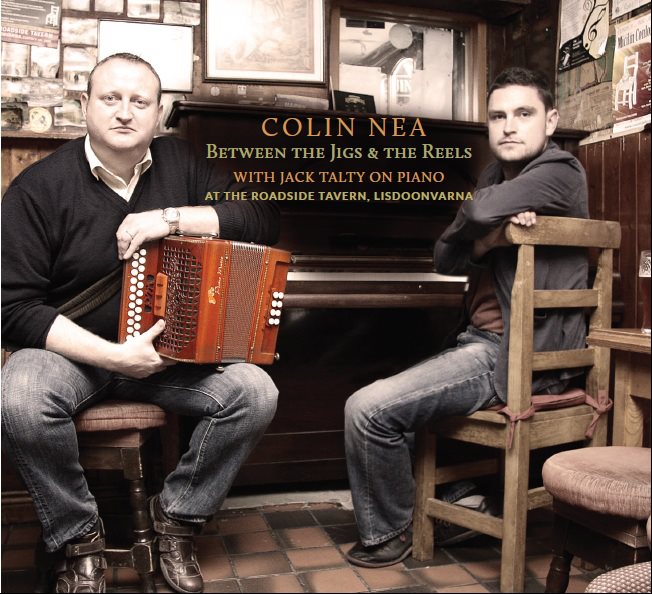
COLIN NEA will be launching his CD ‘Between the Jigs and the Reels’ at 9pm, Thursday the 8th November in the Temple Gate Hotel
***
Enda Seery: Website updated and revamped!
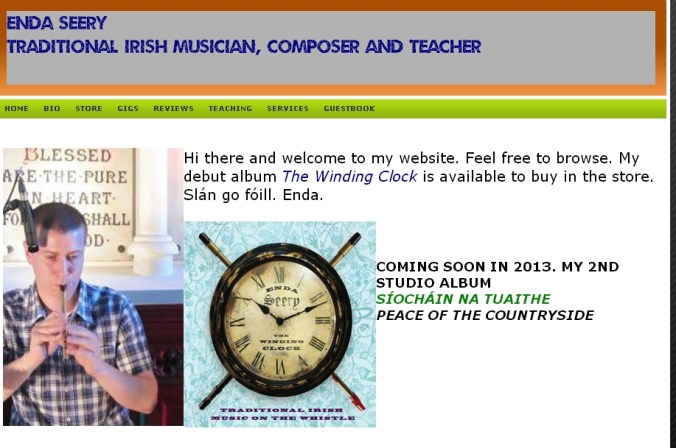
The musician/composer of The Winding Clock has introduced a new feel and look to his official website. Visit : http://www.endaseery.com/
***
Featured Video: Therese Honey: Paddy Cronin’s Jig – Jenny Pippin from ‘Summer’s End’
Yes yes! We have a new addition to our list of harpists to watch out for. Therese Honey creates a relaxing wall of strings with with the talent of Jenny Pippin. Have a listen 😀
Track 2 from the 2012 http://www.Waterbug.com release, Summer’s End. Photos of the Dingle Peninsula were taken in April 2011 by Therese Honey and Larry Mallette. Therese learned Paddy Cronin’s Jig from Gráinne Hambly. Jenny Pippin is from O’Neill’s “Music of Ireland,” 1903.
www.theresehoney.net

 Celtic Music Fan