I learned that in order to sell your stuff, you need to build an image. Image is important in marketing.The same reason why I devote this blog to a particular genre and not just put anything and later on alienate my readers. It’s the same thing with playing music . You can only experiment up to a certain point before loosing your listeners.
We all want be everything for everyone. We all want to be multifaceted-and I think we have that talent. But it does not really help. Why? Because artists who do this-those that are too eclectic lose their fanbase. Even their labels don’t know how to market them anymore. No matter how wide we roam, we should always have an anchor. A base where we can go back when things start to get complicated.
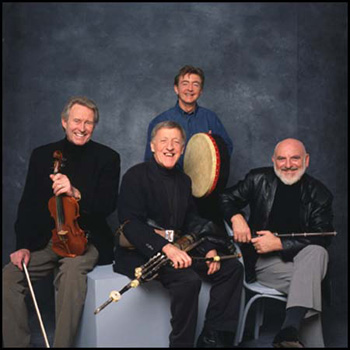
The Chieftains had set this example.They tried to build their signature sound for years before experimenting -and even with that you can still tell that it’s from them. It’s the same with other artists-Celtic or not. Take for instance Enya. Critics say that she always does the same thing or that ‘you can buy any album and you actually buy everything’. This is not true. Artists have potential for variation. But with talent comes responsibility. Your fans listen to your music because they always know what to expect. And it makes them feel good. Feeling good is what we all want after a hard day’s work. If I have to listen to something else then I will pick up a different artist. After all, I know what I will be getting. But NOT up to the point that I will ask my artist to create a different type of music for the sake of shocking or experimenting.
Art is not about just about attitude and facade. It’s about feeling. You do something out of sincerity regardless of whither it will sell, 80,000,000 copies or not. But of course selling that figure is always something everyone wants right?
With traditional music you always know what you’ll get. And that’s what makes it impressive. It is not created to impress but rather to communicate sentiments that transcend time. These are feelings that are not bounded by what’s current. I think at the end of the day one wants to be in the company of people he or she trusts…like family members. And this is what Celtic music is about. A style that never goes out of date, sentiments that always speak the truth.
For the news….
***
The Chieftains will kick start their US tours this year. This is an update I got from their website:
Six-time Grammy winners and the world’s most popular Irish traditional music group, The Chieftains, have confirmed an extensive U.S. tour for 2011. The tour will feature an array of surprise guests and local musicians and marks the band’s first return to the U.S. following the 2010 release of their critically acclaimed album ‘San Patricio.’ They’ll kick off a month of shows on Feb 17 in Troy, NY. See below for complete dates.
“In 2011, The Chieftains’ performances could be better described as a Big Show or a Spectacular rather than a concert,” says frontman Paddy Moloney. “There will be upwards of 12 people on stage at all times, with additions of local musicians, special guests I’m not allowed to divulge, anywhere from 6 to 20 local dancers on a couple of pieces, and the Scottish pipe bands performing the ‘March to Battle,’ which was narrated by Liam Neeson for ‘San Patricio.'”
Billboard called ‘San Patricio’ “as thrilling as it is enlightening,” and the New York Times described it as “joy, thoroughly Mexican yet utterly Irish, carried aloft by tin whistles, skin drums, pipes, harps, guitars and stomping feet.”
Since releasing ‘San Patricio,’ the band has collaborated with Herbie Hancock on ‘The Imagine Project,’ and Moloney has been selected as a Medal of Honour recipient by the National Arts Club.
THE CHEIFTAINS 2011 TOUR DATES:
2/17 Troy, NY @ Troy Savings Bank Music Hall
2/18 New Brunswick, NJ @ State Theatre
2/20 York, PA @ Strand – Capitol Performing Arts Center
2/22 Seattle, WA @ Seattle Symphony Orchestra
2/23 Olympia, WA @ Washington Center for Performing Arts
2/25 Austin, TX @ Riverbend Centre
2/26 Dallas, TX @ Winspear Opera House
2/27 Fayetteville, AR @ Walton Arts Center
3/1 Bloomington, IN @ IU Auditorium
3/3 Madison, WI @ Oversture Center
3/4 Chicago, IL @ Orchestra Hall
3/5 Rockford, IL @ Coronado Performing Arts Center
3/6 Dayton, OH @ Cityfolk
3/8 Morgantown, WV @ West Virginia University
3/10 Greenville, SC @ Peace Center for Performing Arts
3/11 Atlanta, GA @ Woodruff Arts Center w/symphony
3/12 Atlanta, GA @ Woodruff Arts Center w/symphony
3/13 Raleigh, NC @ Pinecone Memorial Auditorium
3/15 Princeton, NJ @ McCarter Theater
3/16 Newark, NJ @ NJPAC Prudential Hall
3/17 Toronto, ON @ Roy Thomson Hall
***
If you are a busy Clannad fan then you should have seen all the new performances posted in YouTube. They are BACK!
Thank you Christi for sending this link from Welsh band Mabon. I really appreciate it. Mabon has been making wonderful music and their live performances are really something that keep fans going back for more.
I owe this great link to my friend Loic Rathscheck whom you might remember in my earlier interview. He’s a Frenchman so there flows the Celtic blood in his veins. He doesn’t play Celtic music , rather his style is electronic but he shares my passion for almost all types of music. He is a memorable contact because he is the first person I attempted to interview. Anyway, this important link he sent to me is Andrew Lenz’s Bagpipe Tips: Learning Bagpipes without an Instructor. I think the winner in this article is not just his answers but the way he delivered them-with honesty, candour and humor.
“Anyone learning an instrument on their own can be their own worst enemy, with bad posture, poor fingering techniques, bad tuning, etc.”
What exactly does it take to learn the bagpipes on your own? This article lets you know the ins and outs of self-instruction, offers some advice and suggests some resources to help you.
Is it possible to teach yourself bagpipes?
Yes—to a point—but it is a road fraught with peril, unfortunately.
What’s going for you.
The bagpipe chanter—the bagpipe part with which you play notes with your fingers—only sounds one note at a time, so there are no chords to worry about. There are only 9 possible notes to sound (not counting a few special somewhat rarely played notes). This means that reading bagpipe music is relatively easy. And learning the basic fingering is simple.
What’s going against you and why you should get an instructor.
You’re going to get a lot of commentary in this section!
I have to say that the idea of a person teaching themselves bagpiping sets off warning bells in my head as it does most pipers. While sometimes it is a necessity due to a very remote location or poverty, in others it’s a case of people thinking that somehow the bagpipes are a “teach yourself” kind of instrument.
It’s not.
If you are even half-way serious about learning the pipes, I strongly recommend that you find yourself an instructor.
The bagpipes come with about as much in the way of instructions as a piano comes with instructions on tuning it, or a guitar on how to play chords. Next to uilleann pipes, the Great Highland Bagpipes are the most complex wind instrument on the planet—four reeds!—this is a real instrument requiring real lessons. Bagpipes are exceedingly easy to play incredibly poorly and can be quite temperamental at an inexperienced hand. Maintenance is complex compared to most instruments. Tuning the instrument proves be quite a challenge to most new pipers—heck, even many experienced ones! That’s one of the reasons the pipes get such little respect sometimes. Too many people try to teach themselves bagpipes, fail, and now here we are with a slice of the general public with a strong dislike for the pipes, oblivious to the fact that they were exposed to very poor piping.
The following may sound harsh. If you want to just doodle with them, in my opinion, you should avoid playing public as you will be representing all the truly dedicated bagpipers that have gone before you, world-class and otherwise. Friends and family fine—tell them you are a beginner—but not the general public. If you think you’re getting good enough to play in public, play in front of an experienced piper or better yet, compete at a highland games to get a truly objective appraisal of your piping skills.
There are no world level pipers that I ‘m aware of who were self-taught. Not that competing at that level is your goal necessarily, but it goes to prove a point. I’ve heard of one Grade I piper (the highest amateur grade) who was self-taught—David Daye, a link to his site is below—so it’s possible to do well on your own if you have a disciplined perfectionist personality with a very good ear for picking out minute sound problems and figuring out how to correct them…it’s very rare.
Anyone learning an instrument on their own can be their own worst enemy, with bad posture, poor fingering techniques, bad tuning, etc. If you are self-taught, try as you might, there’s a good chance you won’t know any better. You might get used to playing a chanter that’s out of tune and think nothing of it. Having an instructor set up the tuning on your practice chanter as well as your bagpipe chanter will have you developing a sense for a true bagpiping scale while you are practicing.
Another thing is self-taught pipers tend to be impatient, as are probably most learners, so without an instructor to hold you back from techniques that you are not ready for, you may press ahead anyway. For example, you could try to learn complex embellishments (series of notes) without even having basic grace notes down correctly. It’s much harder to unlearn a technique then relearn it correctly than to simply learn correctly the first time. To quote one formerly self-taught piper: “Like others, I found what I was doing was a misinterpretation of what I thought I was seeing and hearing.”
If you decide to learn piobaireachd—prounced “pee-brock” and is called the “classical music of the pipes”—you’ll discover that relatively huge departures are taken from existing sheet music. As an example, you may find three notes to be shown to be played even, when in fact the last should be played 2-3 times the length of the others. Granted, you can pick up a lot of this timing from recordings, but an instructor can help you pull every last bit of expression out a tune. This also applies to “light music” (marches, jigs, reels, etc.) though those are played much closer to the printed page. Commenting on his early unsuccessful competition experiences, PM Jim Harrington had this to say: “The problem was simply not knowing how to express the music—but that’s a problem with just about every tune when you’re a beginner with no instructor.”
Having had a bagpipes teacher for years, I can testify to their value. I’m not alone in having an instructor tell me that a bad habit has snuck in, such as my wrists are in the wrong position or an embellishment has a subtle fingering error. Even with an instructor showing you in-person how to do something, you can often go home and practice an embellishment incorrectly. It may sound right to your untrained ear, but at least it’ll be caught and corrected by your instructor as soon as your next lesson.
“No matter how many times you say it… No matter how much you may try to drill it into folks’ heads… A person learning on their own is not going to realize they need an instructor, until after they find an instructor… A slurred D-Throw sounds perfectly fine to someone who has never had it played slowly and correctly for him.”
Andrew MacTao, after 18 months of learning, having starting on his own.
These’s a saying that goes “Seven generations and seven years to make a piper.” Your instructor will be your link to those past seven generations. The seven years is up to you.
“I already play a wind instrument, I don’t think I really need an instructor.”
I’m going to let someone’s quote answer this one.
“I was classically trained in both trumpet and clarinet in college. Learning bagpipes has been a dream of mine since I was little, and there’s no instrument comparable to pipes in a technical or musical sense. If you want to learn bagpipes at a high level, you need high quality instruction from someone who has learned from a high quality teacher. If I used my classical training on bagpipe music, none of the gracenotes, or even the beats, would be in the right place. Even bagpipe tuning is radically different. I could go on for pages about the differences, but I can’t do anything right without my instructor. Each time I think I understand a new piece, nope, it’s different than I thought.” B. Hunter, band director in Houston, Texas.
“I can’t afford an instructor.”
Trust me, you can’t afford to not have an instructor. Some bands even give instruction for free. But even if you can’t find lessons at no charge, you are talking about an investment in your future. There are numerous cases where a self-taught “piper” cannot discard bad habits and learn the proper way to play and a frustrated instructor simply gives up on that individual. Often not the case, but it does happen. Get as much personalized instruction as you can afford as early in your piping career as you can manage.
“I don’t live near an instructor.”
Gregg Heath of Belgrade, Montana had this to say after a year and a half of learning: “I realized early on that self teaching was a non-starter. I did it long enough to pick up some bad habits that my instructor is gently helping me correct. I now travel 200 miles round trip once a week for instruction and band practice and it’s well worth it. If you want to play the pipes bad enough you’ll find away to get to an instructor.”
Gregg isn’t that unsual. I’ve heard of numerous students driving over three to four hours to get personal interaction with an instructor, it was so desired. Some cities have several piping teachers. Some counties have none. Maybe not “fair” but that’s the way life is.
“The nearest instructor is really far away!”
Assuming that you’ve looked correctly and there truly isn’t a piper around to instruct you face-to-face, then consider any personalized instruction very valuable. There are ways around not having an instructor within a reasonable distance. And you don’t have to meet with an instructor in-person to get individualized attention.
A tried and true method of remote but individualized instruction is sending audio cassette tapes of your playing to a teacher who then records comments and lessons for your playing. Improvements in technology has lead to newer methods such as swapping video tapes, e-mailing sound files, interactive Internet video conferencing. Another method is to simply use the telephone to engage in a live two-way lesson. One of the first websites attempting to capitalize on the need for remote instruction is LivePiper.com. What’s important is to get feedback specific to you so that you can concentrate your practice on your weaknesses.
Other opportunities for instruction are various piping seminars, workshops, summer schools, and the like which may be within your means to attend.
“I’m moving near a teacher soon, what can I do to get a head start?”
Probably the best thing to do is to simply wait and spend your free time listening to lots of bagpiping recordings. This will help develop your ear.
But if you know who your teacher is going to be, then ask him/her as to what practice chanter he/she prefers and with his/her permission, puchase that brand—but be careful, he/she may want you working on nothing! (Or if you have a practice chanter already, ask if him/her if it will suffice.)
If you don’t know your instructor, purchase a good quality practice chanter made in an industrialized nation (Scotland, USA, Canada, etc.). Buy a rank beginner’s tutorial book—check with your bagpipe supply shop. Learn the basic finger positions then learn to read bagpipe music and correlate the two. (Avoid learning combinations of notes, i.e. embellishments.) Avoid playing tunes, but if you can’t control yourself, please ignore the gracenotes for the time being. Playing tunes can introduce the possibility of changing notes incorrectly resulting in “crossing noises”—most common are in changes from a lower hand note to a higher hand note or vice versa—which an instructor will then have to go back and spend time correcting!
Remember: the more you push ahead wihout a teacher, the more risk that you’ll learn something that you’ll have to undo later.
Things to do to accelerate your learning
Listen to a lot of professional solo bagpipe recordings. Get as many CDs as you can get your hands on and listen closely and critically.
Go to highland games and piping performances/competitions. Given the choice, listen to the more advanced pipers. Though it may be inspirational to hear lower grade pipers competing also—”I can do that!”
For bagpipe maintenance and tuning, Jim McGillivray’s “Pipes Ready” and “Pipes Up”
videos and for detailed excersizes for embellishments, there’s his “Rhythmic Fingerwork“: http://www.piping.on.ca
Pipe Major Bill Robertson’s Bagpipe Tutorials (Light music and piobaireachd): www.bagpipe-tutorials.com
***
Here’s another link to a video he sent me. Wow! Red Hot Chilli Pipers having a Scottish time at The Ferry in Glasgow
***
I voted for Dom Duff’sRoc’h in the Grand Prix du Disque . Dom is an amazing musician from Brittany who continues to bring the Celtic Breton tradition to the fore by collaborating with only the best musicians and writing primarily in Breton. I wish he wins because I think Roc’h is an album of eloquent achievement. You can also vote for him through this link:
Giving you the joyful gift of this beautiful song by Wolf Tones. Look at all these nations bonded together by a common culture.
***
Calum Stewart, tullochgorum & varations…
I love the way he breathes life into the wood instrument. Calum has been recording with Welsh bandMabonand has proven that he is one of the ambassadors of Celtic music to the world.
Hello Celtic people. After a few days of rest, I am back to spin the latest news of what’s happening around in terms of music , concert as well as social networking sites these artists have. We can’t deny the influence of networking sites like MySpace and facebook in terms of music marketing. Gone are the days when artists had to tour just to get the music out there. Now, through YouTube, music video channels and even twitter , they can reach millions and court listeners. But there is a downside to this.
Though the internet is a good medium in spreading music, there is a huge competition that artists have to go through in order to be heard. Even amateurs with horrible stuff can make it out there. I am not really an expert or authority here but what I do is, I highlight bands and individual artists who are already generating the buzz. When this happens (the buzz), it means that these artists have already built a following and a credible sense of musicianship that set them apart from the rest. And yes we already have established and successful acts like Carlos Nunez, the Chieftains, Clannad, Altan, Ashley McIsaac, Capercaillie and Solas (among others) that make the headlines These headlines are important in keeping our community visible and alive. But it is also through these new acts that make all this writing about music all worthwhile, don’t you think?
Moving to Spain…..
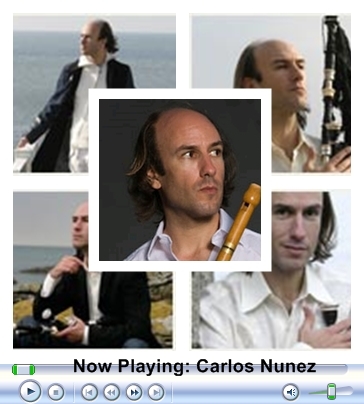
You can now listen to the official Carlos Nunez MySpace page. You can check out pictures, latest news(however I warn you this is in Spanish) and also listen to the artists he is associated with. www.myspace.com/carlosnunezoficial is now playing tracks from his latest album Alborada do Brasil (Sony Music). Fans in Morocco can catch him this 26th of June at the Festival Tarab de Tanger . Here are the details(in Spanish) of his concerts taken from his official website www.carlos-nunez.com (the bottoms is the latest up to August at the top):
28/08/2010
Metz – France
Parc de Seille 21:30
Metz
France
::
27/08/2010
Neuchâtel -La Tène Festival – Switzerland
La Tène Festival
Grande scène 21:30
Neuchâtel – Suisse
+ info: www.latenefestival.ch
::
12/08/2010
Gijón – Spain
Semana Grande de Gijón
Playa de Poniente 23:00
Gijón
::
7/08/2010
Pleuhiden sur Rance – Brittany
La Chapelle de Mordreuc 20:30
Pleuhiden sur Rance (22)
Claustro de la Catedral de Santa Maria 22:30
La Seu d’Urgell
venta de entradas:
Precio de las entradas: 20 € a taquilla // 17 € en venta anticipada.
Sitios de venta anticipada:
Turisme Seu (Avda. Valls d’Andorra s/n) 973 351 511
Turisme del Consell Comarcal de l’Alt Urgell (Passeig Joan Brudieu, 15) 973 353 112
Y, si no se agotan las entradas, el mismo día en taquilla desde las 21 horas en la entrada del Claustre de la Catedral de Santa Maria d’Urgell (C/ Santa Maria s/n)
Santiago de Compostela (Special guest with Jordi Savall) – Spain
San Domingos de Bonaval 20:30
Santiago de Compostela
+ info: Lamentos e folías célticas, das fisterras atlánticas ao novo mundo
Festival Via Stellae www.viastellae.es
JORDI SAVALL viola soprano & lyra-viol
ANDREW LAWRENCE-KING arpa céltica & salterio
PEDRO ESTEVAN percusión
invitado especial :
CARLOS NÚÑEZ gaita e frautas
ENTRADA LIBRE previa recollida de invitación dous días antes do concerto no Punto de venda de entradas do Festival Via Stellae (Teatro Principal, rúa Nova, nº 21, Santiago de Compostela). 981565027.
Os posuidores do abono completo do Via Stellae terán prioridade para retirar a súa invitación a partir do martes 29 de xuño.
::
26/06/2010
Tanger – Morocco
Festival Tarab de Tanger
Borj l-Hajoui 21:15
Tanger
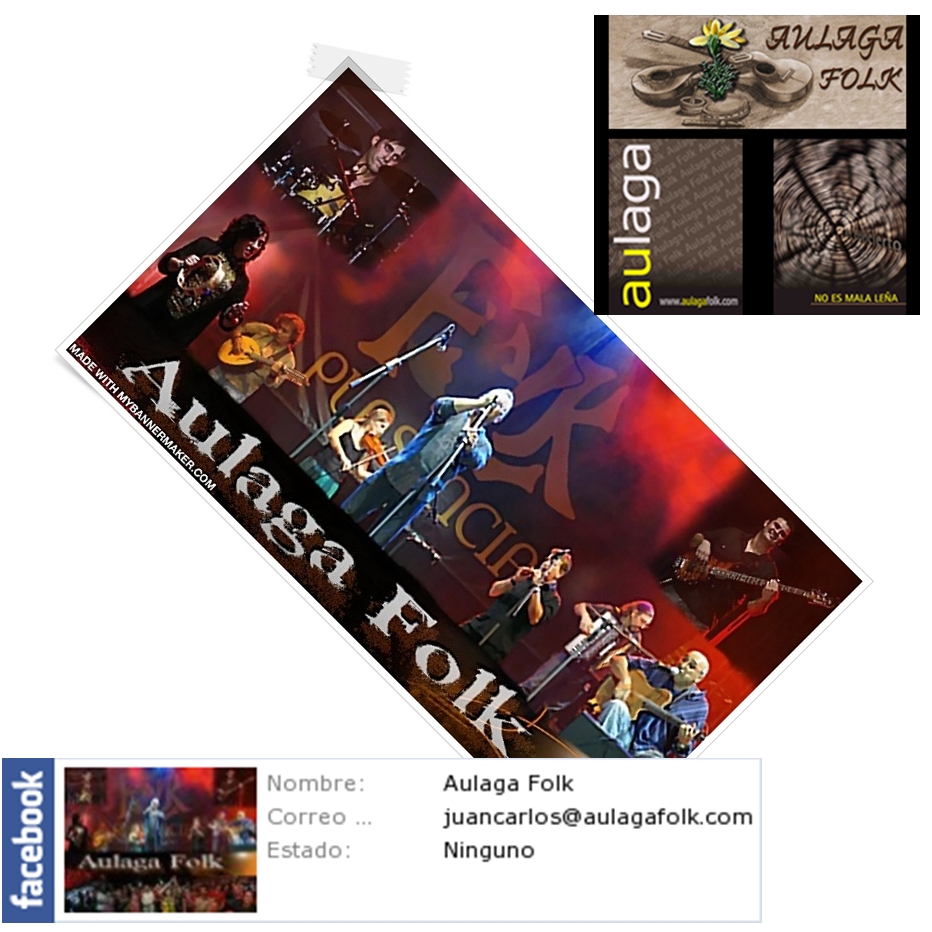
From Casas del Monte – Extremadura, Cáceres Spain, The band combines passionate acoustic guitars mixed with flamenco flavor and irresistible beat that borrows from all sources. Beautiful, melodic and distinctive, the music takes you on different landscapes and cultures yet distinctly Spanish. Band members are(In Spanish because I got this from the band site http://www.aulagafolk.com) :
According to this article The music of the region of Asturias in northern Spain has more in common with Brittany, Wales and Ireland than Spanish music from Castille or Andalusia. Traditional Asturian instruments include bagpipes, called the Gaita, the harp loom and Asturian drums.
Brenga Astur is Celtic music fused with Spanish influences.Laced with beautiful melodies , hypnotic rhytms and evocative voice of the female vocalist, here is your chance to experience the landscape, the people, the thoughts and feelings that shaped the music. Brenga Astur is composed of 10 band members with two Asturian pipers, bouzouki, bodhran, flute, electric and acoustic guitar, accordion, mandolin, drums, keyboard, vocals and more. Cekc out http://www.brengaastur.com/ for details and updates. Information and pics courtesy of http://www.ndoylefineart.com/index.html
Llan de Cubel is a popularname in Asturian Celtic music . The band has released seven albums, the last UN TIEMPU MEYOR was released way back 1999. According to official website: During the last years the band has been making a big database with Asturian traditional tunes. The members of the band have been investigating old songbooks, field recordings by ethnographic groups, old recordings from the begining of 20th century and even recordings by Asturian exilées after the Spanish Civil War. The band has also been writing new tunes in the traditional style that together with the music compiled in the database will be the alma mater of the new studio work that Llan de Cubel intends to record and release in 2010. Please refer to http://www.llandecubel.com/ and for updates about the band http://www.llandecubel.com/concieng.html . No I can’t find their MySpace page but if you have the address, please give it to me and I will post it here.
CMF pays tribute the spirits of Carlos Redondo and Igor Medio, members of the Asturian Celtic band Felpeyu, who passed away on 2006 from a car crash.
This is an article from World Music Central released in 2006:
Spain – Carlos Redondo and Igor Medio, members of Asturian Celtic band Felpeyu, died today in Zuya (northern Spain) in a vehicle accident. The group was traveling from a gig in Corvera (Asturias) to another venue in Barcelona. Felpeyu’s van exited the road and overturned. Two members died and four are severely injured. Firemen were called to rescue the injured passengers from the wreckage.
The untimely death of the two well-known musicians from the Asturias region of Spain has shocked the Spanish folk music community, specially the Celtic music scene.
Carlos Redondo joined Felpeyu in 1994. He played guitar, bass and lead vocals. He was the member of the band with more professional musical experience. He worked intensively as a rock musician, teacher, producer and sound engineer. He was mainly known in Asturias as singer and bass player of the legendary Asturian pop-rock band Los Locos. He got into folk music in the early 90’s by producing some Asturian bands; Felpeyu was one of them, and he joined the band right after producing its first recording, Felpeyu, in 1994. Carlos was born in Gijón (Asturias, Spain).
Ígor Medio had a heterogeneous background. He grew up into an atmosphere of choral and Asturian singing -which both his parents and family developed- and was also into classical music studies and blues/rock experiences before being introduced to folk music. As a folk musician, he developed a personal and eclectic way of arranging and performing Asturian traditional music. He played guitar and mandolin in the band, choosing the bouzouki as his main instrument afterwards. He played bouzouki, guitar -only on studio-, bass pedals, and sang lead and harmony vocals. Ígor was born in Gijón (Asturias, Spain).
Felpeyu recreates Asturian traditional music by combining both the Asturian orchestration and the more general and current Atlantic European types without losing its distinctiveness.
The band was formed by a group of students with similar musical tastes in 1991. Felpeyu initially performed at folk pubs and small venues. Later, it played at large stages and festivals in Asturias. In recent years, the group has performed at numerous international Celtic and world music festivals in Europe, Australia and North America.
Felpeyu has recorded four CDs: Felpeyu (Fonoastur, 1994), Tierra (Fonoastur, 1997), Live Overseas (Urchin, 2000/Tierra Discos, 2003) and Yá! (Tierra Discos 2003).
[Photos: 1 – Carlos Redondo, 2 – Ígor Medio, courtesy of Felpeyu].
From Asturias we go to Wales…
Mabon has started their UK with a blast. They have four appearances this month and 10 for August! Mabon is originally formed by Jamie Smith’s father Derek . The band has released two albums Ridiculous Thinkers (2004) and OK Pewter (2007). The beauty of Mabon is that the band infuses the influences from all the Celtic nations and yet making the sound distinct with Jamie shaping the musical path and doing the research. If you haven’t heard of them yet, well you can isten to the samples at www.myspace.com/mabonband. Here’s the list for their major appearances this month and beyond(See all here):

 . What’s important is to get feedback specific to you so that you can concentrate your practice on your weaknesses.



 Celtic Music Fan