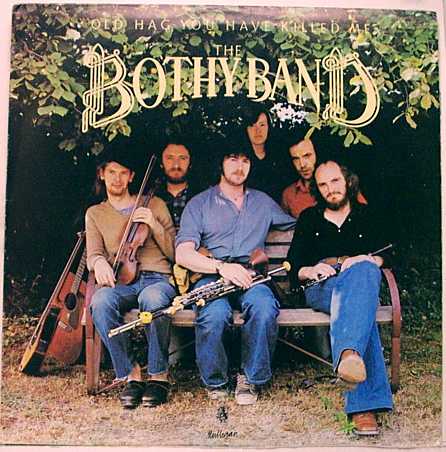
I’ve been starving for inspiration. I got nothing to write about. One needs to be passionate about something in order to create. I just had this conversation with a Scottish novelist via Facebook. And he remarked that the cure for depression is being able to do something. While we were chatting, I was listening to the second album of The Bothy Band. It’s called Old Hag You Have Killed Me. Remember that one around 1976? It is the album’s second track. I think something happened to my mind when it started to play. It is such a beautiful tune. The accuracy and speed of the rendition is otherworldly. They made their voices into instruments. And they are signing in Gaelic in this recording. I think this is my personal favorite from now on.
The beauty of traditional Irish music is that it is timeless. You could never tell that this album came out in the 70s. It sounds like it’s only recorded this year. You can feel the passion of the band members and how much they have mastered their musicality. It is true though that members Paddy Glackin, Tony MacMahon, Matt Molloy,Paddy Keenan, Dónal Lunny, Tríona Ní Dhomhnaill, Mícheál Ó Domhnaill, Tommy Peoples and Kevin Burke have already established themselves in the trad scene before joining this band.
I thank The Bothy Band for sparkling my fingers to write again. It is true you can’t give what you don’t have. You can’t write when you don’t hear or see anything that inspires you. I suggest, when you find yourself in the midst of a rut, go listen to anything or go out and see the view outside. There might be something there waiting for you.
A set of reels recorded for the fleadh program in Cavan 2012. Thanks to Brian Cunningham for sharing this video.
We can’t deny that traditional music is the music of communion. Be it Irish, Scottish, Welsh, Breton or any music of the seven Celtic nations, there is always that sense of community whenever one goes to these sessions. Unlike the ‘star versus the spectator’ culture of pop music, Celtic music encourages the audience to participate-be it dancing or playing. It is after all the music of the people.
As someone who is trying to learn how to play traditional Irish music instruments, I feel that sense of connection to the culture through these instruments. As if the music is telling me that it doesn’t matter if I am no expert but to play is to be part of something timeless.
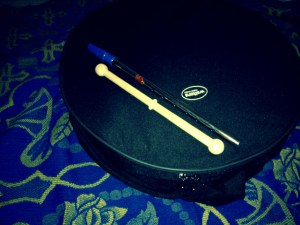
My bodhran and tin whistle.
I think there are more and more music schools being built and organized because the demand to learn traditional music is increasing. People can just buy a bodhran, Celtic harp, tin whistle or fiddle from ebay. Everything you need is there. You just have to know where to look. Even youtube offers free lessons. You just have to be enthusiastic enough to learn how to play.
Jeremy King of Poitin mentioned that his son is learning the accordion at such an early age. I mentioned in my previous post that there seems to be a resurgence of interest in the accordion. Scottish singer/harpist Anna McLuckie has wowed the mainstream audience with her unique performance of a mainstream tune. People now know that her musical upbringing is rooted in traditional music.
As I have mentioned above, traditional music is the music of the people. Wherever you are in the world, when it touches you, then you belong.
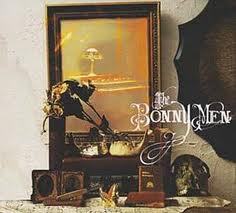
Word gets around fast for these guys..The Bonny Men!
For those who love music in the tradition of The Bothy band will love the sound this traditional group from Dublin . Bring together the knack for exuberant playing, charming vocals and great choice of arrangements then you get a good album like their self-titled debut. They are only a year old but they have accomplished so much. Read what Tradconnect has to say about the album.
They bring something to the Trad scene…that kind of feeling you get when the streets are wet after the rain. A sort of freshness and magic..something nostalgic but undeniably fresh. The album was recorded in Windmill Lane Studios Dublin..which I recall as the same place where Clannad recorded their Banba album in 1992.
Turlough Chambers – Fiddle Conor Lyons – Bodhrán Natalie Ní Chasaide – Piano Maitiú Ó Casaide – Uileann Pipes Íde Nic Mhathúna – Vocals Adam Whelan – Bouzouki Moss Landman – Flute Barry Lyons – Guitar
Donal McCague is the best kept secret of traditional Irish music. His playing is explosive and yet he never looses that cool , collected pose. It’s a quiet storm -or something like that to see him perform live. I think this is attributed to years of training and influences going back to the ‘old school’ type of fiddling,with names like Michael Coleman, Paddy Killoran and James Morrison.
Donal is always eager to share what he knows and is also excited to hear what other musicians say. This is clear in the tweets we shared as he said ” I may also be inspired by others you interview as well!” This humility and openness earned him supporters in the traditional scene from fellow musicians.
From Co. Monaghan, Donal already displayed the potential at an early age. No wonder he is going national and Internationally as the trad scene is attracting young audiences worldwide. It is a very competitive scene where precision, phrasing and style are given importance. But one has to follow the beat of his own drum and thus persistence will earn one a place among the stars. It is beautiful to see this talent unfold and this unique performer go places. Donal is one artist who will set ears on fire for years to come. CMF is lucky to have him as guest and I hope his story will not only inspire readers but also fellow musicians whom I am sure are eager to know what’s the craic!
Many fiddle players influenced my style of fiddle playing. You can go back to the 1920’s when we had the likes of Michael Coleman, Paddy Killoran and James Morrison. These three men were the start of the fiddling tradition and many players from today’s generation try to replicate their styles.
I decided upon the name “Bits ‘N’ Pieces” back in early June 2011 while attending a friends wedding. There were a few reasons for it.
Firstly, I felt that it was an appropriate name for the album as I have learned music here and there from many musicians down through the years by listening to recordings. Therefore I probably have taken bits and pieces of other fiddle players touches and moulded them together to come up with my own personal style of fiddle-playing.
Another reason for the title “Bits ‘N’ Pieces” would generate from being a County Monaghan native. Bits n Pieces is a commonly used phrase when people are in conversation with each other around here and it always seems to be said. So, I decided to use the phrase as I think it is catchy and people might remember the title of it.
You have a Zen way of playing the fiddle yet the music is explosive. Is this the new trend?
Yes explosive could be a way of putting it. A lot of the tracks on the album are more upbeat and with there being such great accompanying artists who inspire you and give you ideas playing along with me, it’s hard not to feel energised and relaxed. This would contribute to the music coming across as lively. Is this the new trend? Well, who knows?! I just want to get out there, play the music that satisfies me most and hope that the listeners enjoy what I do. Many musicians play good, up-tempo music. If I have set a new trend, I would take that as a bonus. Enjoying the music is the main thing.
You are TradConnect’s artist of the month! How does it feel?
I am very honoured to be TradConnect’s artist of the month. Only recently at Fleadh Cheoil na hÉireann did I actually come face to face with the website’s administrator, Tony Lawless. I came in contact with Tony back in June on Twitter where we discussed his website and I mentioned that I had an album coming out in the near future. In turn, Tony advised that I send him a copy of the album when it came out and if it merited album of the month, Tony said he would do that for me. Luckily enough for me, he must have enjoyed it immensely. It is another bit of publicity for me starting out in my musical career and every little helps.
What’s the ideal practice routine for you? How many hours a day should a musician practice?
I feel that getting the practice in when you are very young gives you the best possible chance to succeed in your chosen field, be it in music, sport or your what ever you do. I started playing Traditional Irish Music at the age of 3 on the Tin Whistle and swiftly moved to the Fiddle aged 4. From the age of 4-13/14, I probably would have put in an hour’s practice everyday, 7 days a week. I was also getting weekly lessons until the age of 10. After that, I was self-taught. I listened to a lot of CD’s and various instruments. I have three brothers, all older, who had been playing music in my ears since I was born so it was natural for me to learn by ear. After listening to a tune once or twice I would have had it off by heart. The amount of time spent practicing depends on the musician, the type of music they play and how big a stage they want to reach in their careers in my opinion. It’s up to the individual to decide how much they want to practice. They can then choose whether or not they still want to play music and if they do want to play after testing the water for a while, they will definitely enjoy the experience.
I never had a specific routine for practicing but there was always things I did the same all the time. I would set an aim for the next half an hour. e.g. I want to be able to do a roll on the G note. After that, I would do some simple stretches on the wrist etc to loosen up. Practicing finger positions and scales is advisable also before commencing to the learning of a tune. So by setting small, simple targets each day, you eventually come round to being able to do a lot of things in a relatively short space of time.
Who do do you think became a big musical influence for you?
Many fiddle players influenced my style of fiddle playing. You can go back to the 1920’s when we had the likes of Michael Coleman, Paddy Killoran and James Morrison. These three men were the start of the fiddling tradition and many players from today’s generation try to replicate their styles. But as I said before, I like to take a small bit from everyone’s playing and merge them. In the more recent past I would look at the great Seán Maguire as on of my influences. Maguire was the king of Irish Fiddle playing until his death around 6 years. That man could do anything on the fiddle. His classical training meant that he could skip around the finger board in his sleep practically. Then we have the likes of Tommy Peoples, Frankie Gavin. Cathal Hayden, John Carty, Brian Rooney (The Godfather as he is also known), Jesse Smith, the great Seán Keane and last but not least, Father Séamus Quinn from Fermanagh. All of the fore mentioned players have left their scars on my playing. I was fortunate enough to play with Frankie Gavin himself in the National Concert Hall, Dublin when I was just 15 so that made a big impression on me. It’s things like that which inspire you as a young musician looking to prosper. I have also attended masterclasses by the legendary Tommy Peoples from the Bothy Band at which he taught me the tune “Julia Devine’s” which features on Track 4 of the album.
Tell us about the brand of fiddle that you play and maybe a little bit of the tips for caring for your instrument.
Unfortunately I don’t actually know the maker of the fiddle I am currently playing but if I knew, I would buy another one of them now! My father bought it for my older brother Michael who plays guitar on my album around 17 years ago for around 600 Irish pounds. It was a lot of money at the time but it could not have went to a better idea in my opinion!
To keep the fiddle in proper order you should change your strings about 4-5 times a year. Obviously that depends on the amount of time you spent playing it. The more you play, the more wear and tear there will be. It is important to keep putting rosin on your bow as if you don’t, the bow will slip from the strings and it can often lead to some notes not being played even though the bow is playing on the string. A general cleaning of the fiddle itself can do no harm once in a while to keep it looking the part. I would also advise using a cloth to clean the strings after you play as this prevents a clog up of sweat and dirt on your string which will lead to you needing to buy strings more regularly that you should have to.
What are the big no nos for musicians before performing and also afterwards? (Things you need to avoid).
With being an Irish musician and taking the Irish culture into consideration, It is important at all costs to keep your alcohol consumption down to the bare minimum before playing on stage. This will show a good level of your professionalism. Another thing you should avoid is going on the stage cold. You should have played some tunes on your instrument for 10-15 minutes at the very least before going on stage meaning that from the first set you play, you will be up to scratch and playing the best music possible to you at that very moment. In my opinion you should always have a set list made up before going on stage. That’s a fairly big no no as you have no structure to your gig and the crowd will recognise that fact. If the crowd see that you are organised and you know what is happening next, they will do their best for you. A big no no after a gig for me would be having a very late night. Sleep is as important as anything. You have more energy and produce better, more consistent performances on stage.
How do you conquer stage fright?
One thing I always try to do is to pretend I am playing music in my own living room. That way it means that you are comfortable in your surroundings and may help you perform better. When speaking on stage it is a good idea to pick a spot on the back wall of the venue and concentrate on what you say. Speaking well is half the battle in a concert. The music generally will look after itself if you are on form on the night.
Your brother plays with you and I have seen videos of you and Michael doing music together. Is he in the album? What’s the most memorable part in recording Bit n’ Pieces?
Yes my brother Michael McCague plays along with me on the guitar, bouzouki and tenor guitar. He also accompanies me on piano and bass on track 15. He is also part of John Carty’s At the Racket, The Bothy Band Tribute and John McSherry’s At First Light Band. The most memorable part would probably be the craic that myself, Dave Sheridan and Michael had in the recording studio. We used to have a good laugh trying to work things out and when we tried new things it made us laugh. I also remember recording the slow air well; I recorded it once, Dave said “good enough, let’s move on to the next track” and the next time I listened to it was when myself and Paul Gurney were mixing the album. It sounded new to me!
What’s your idea of a perfect gig?
A perfect gig would be a full house with the crowd hopping mad, a good flow to the music and meeting fellow musicians after the gig for a few tunes and a pint. If that happened once in ten gigs, it would be great.
Your message to the world?
You only live once. Go for it and drive the music out!
The inaugural and exclusive awards event for Irish Traditional, Folk & Celtic Music, “Ireland’s Music Awards”, is set to take place on Saturday August 1st 2009 at the Royal Theatre Castlebar as part of The World Fleadh festival.
Yes guys you’ve heard it right. One of the most prestigious awards in Ireland is going to take place and your vote is very important. I already made my vote but I won’t tell 😉
Lots of important names will be there including Daniel Dempsey and The High Kings. I will be focusing on this even in the coming weeks.
Don’t forger to click the link/banner above to be directed to the website..

 Celtic Music Fan