Cara Dillon took time to answer this interview with The Celtic Music Fan. She talks about the new album A Thousand Hearts plus how she takes good care of her amazing voice! Photos by Paula.
This is a dream come true. I’ve been listening to the albums of Cara Dillon for years. It never occurred to me that one day she would be answering questions for The Celtic Music Fan. It seems far fetched at that time. I am glad it finally happened! Big thanks to my friend Paula who attended the concert (along with our common friend Gill). She was the one who connected me to Ali of Charcoal records. The pictures in this interview were taken during the concert.
1. Hi Cara, I am sure your global fans are excited about your latest offering “A Thousand Hearts”. Are you nervous, excited…happy?
I’m really thrilled to be releasing another album and I feel it’s some of my strongest work. I’m excited about what people may think and I hope they enjoy it as much as my others.
2. I checked the track listing and I noticed you recorded two Irish Gaelic tunes: ÉRIGH SUAS A STÓIRÍN and TÁIMSE IM’ CHODLADH. I am excited to hear your version of these Sean Nos songs. What encouraged to record them?
I’ve been singing Érigh Suas A Stóirín for over 20 years and even recorded it in my first band “Oige”. Sam had a different take on the song and has injected more energy into it. Táimse im’ Chodladh is a song that I’ve been aware of for many years and never felt confident enough to sing. It’s a beautiful melody and very intimate so I felt we should only record it when I was in the right mindset.
3. You are touring with Sam to promote the album. How’s it going so far?
It’s going fantastic. The concerts are almost all sold out and the audiences are amazing. They’re so attentive and they really seem to be hungry for the new material. I won’t lie, it’s a challenge to juggle family life with three children and going on the road to do shows and promotional appearances but I wouldn’t change it for the world.
4. You are now folk’s first lady. Are you thrilled about that?
I’m not sure I would agree…there are so many amazingly talented female performers out there, it seems that we all get a moment in the spotlight and I’m blessed that I’m passing through one now.
5. Tell us about your own label Charcoal Records.
Sam and I formed the label to release “Hill Of Thieves” in 2008. We had been signed to major labels since we were 19 years old and felt that we really needed to seize back control. We wanted to dictate our own agenda and schedules and it’s been one of the best decisions we’ve ever made. “Hill Of Thieves” has been my most successful by far and most recently led to us popping up on Sony’s radar who has just licensed “A Thousand Hearts” worldwide. It’s a dream situation as they essentially want to promote the record to as many people as possible without having any creative control over us. We also used the label to sign a duo called Winter Mountain who we saw open for us in a tiny pub in Donegal a few years back. Sam produced their debut album and they’re currently on tour throughout the UK and Ireland. It’s been a very satisfying journey helping give them the experience we never had while being signed to major labels. We can steer and advise them about the pitfalls of the industry and try to make it a fulfilling as possible….check them out, they’re amazing.
6. You mentioned that you don’t really search for materials in a conventional sense. How did you and your team approach the recording of A Thousand Hearts?
The team is just Sam and I so the buck stops with us. Both our heads are full of traditional songs and tunes. Some are favourites because we’ve known them since we were children, others are new or recently discovered. We just start playing songs together, starting with our favourites and see which ones jump out and take on a life of their own. After a while a solid collection forms and it becomes apparent if there needs to be additions to add light or shade. We never contemplate a song the other doesn’t like. There are some that we love that didn’t make it to the album as they didn’t fit with the others quite so well.
7. You have an amazing voice. How do you care for it? What are the things you avoid and things you incorporate to maintain such amazing talent?
Thank you. In all the years I’ve been singing you’re the first person to ask how I care for my voice. There is one golden rule…try not to talk or stay up late after a concert. I always do a few warm ups before I sing, usually over the course of an hour or so, this has the added benefit of helping me to relax as well. I almost always go out front to meet the audience and sign CD’s so there’s a bit of chatting, but if I get dragged to a pub or stay up late in the hotel bar then there’s usually only one outcome and that’s a weak voice the next few days.
8. I am a big fan of Sam Lakeman’s arrangement and production. What are the things that fans can expect in the new album?
I will let him know you’re a fan. He is so talented and always bows to the song. If you listen to my earlier albums his production is adventurous and expansive but on “A Thousand Hearts” it’s extremely intimate in places and full of driving rhythm in others. He always manages to pitch the tone of every song in exactly the right place. The new album is entirely acoustic and in places it sounds like the whole band is sitting in the same room playing live. He’s captured some really fine performances and the result is a natural and relaxed sound.
9. Where can they get A Thousand Hearts?
You can get signed copies of the CD direct from my online store. Also, this is my first album to be released on vinyl…just go to http://www.caradillon.co.uk
10. Thanks for your time!
You’re most welcome x
Cara Dillon performed with Winter Mountain. Pictures below.
I wrote a post about The Bombadils working on a new album. What I haven’t told you os that I made an audio interview with Luke Fraserand it is finally here. This is the first audio interview with him and you can tell that we made a good team.
Luke is one of the four members that comprise The Bombadils. He plays the guitar, mandolin and other stringed instruments. He also played for Raftmen.
Original song written by the Bombadils. Copyright 2012. Filmed and recorded by Denis Martin at Stewart Hall – Point Claire, Montreal, Canada.
Winner of the 2011 BBC Radio 2 Horizon Award and named FATEA Music Award’s ‘Best Male Vocalist of the Year.’
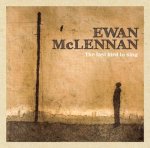
Meet one of Scotland’s new breed of moving voices,Ewan McLennan. The elegiac and stirring combination of his voice earned him a massive following all over Scotland and the rest of the Scottish diaspora. In the vein of Dougie McLean and Donovan, he can hold his own with a style that’s fresh and distinctive. If none of the songs from The Last Bird to Sing can move you, then you must have a wooden heart. Because these songs resonate what is spiritual and sensual in all of us. The things that make us human, sincere and loving. His singing is such a warm blanket in the midst of familiar stirrings all around us. If we magnify the language of the leaves and flowers then listen to each bloom softly, then such is the music of Ewan McLennan.
The poetry doesn’t end in the sounds. They also lie deep in his lyrics which talk of longing for home, the love for tradition, people and places. And he sings with that Scottish lilt that we all come to recognize and love. In the midst of such expressive singing is his style of playing the guitar. He adds that intricate delivery to simple melodies creating a balance of simplicity and refined musical skills. Such richness of music is a blessing to weary ears. He is our featured artist and what an amazing exchange of messages resulted to this interview.
You sing with this distinct style. How did you develop your haunting and beautiful voice?
It’s always a difficult question to answer. I guess the singers that I’ve heard over the years are big influences on how my voice has developed – singers I, at one time or another, tried to mimic or adapt parts of their style. I sing a lot now these days, practice exercises and scales etc. but also sing a lot of songs. I stick to the opinion that technique is important but that it is only a means to express, not the other way round.
Your guitar playing is fascinating. Will you tell me more about it?
I began by playing classical guitar at the age of 18, though I’d already been playing music for years by this point. Classical guitar was one of my foundations I’d say. But after a few years I started playing steel-string guitar and more and more folk guitar. Someone who has been a real influence on me is Martin Simpson, who I have been getting tuition from for some years.
How did you decide to call the title of your album “The Last Bird to Sing”? This is your second album right?
The Last Bird to Sing is indeed my second album. The name of the album comes from a track on it that I wrote. I thought that it worked nicely as a title for the whole piece.
Let us discuss about song Architecture. How do you lay down the foundation of a song? What is the structure you base your songwriting to?
It really depends on the particular song I’m working on. But usually the first thing is when an idea for a song, a story will come to me – that sets the ball rolling. I then begin to put together a melodic line that reflects this story. And from there I begin, separately, to work words into the melody, sometimes changing the melody to fit the words, sometimes the opposite. Finally I begin to work on the guitar part, to arrange the melody and accompany the vocals.
Are you the type who records a lot of demos and then just filter the songs that make into the album or do you sit down and really work in the idea of creating songs that all make their way into the album?
For the first two albums I recorded I chose a specific number of songs that I knew I wanted on the albums. It was then a process of getting those songs sounding just as I wanted them to. But at the moment I am beginning to work, gradually, towards a third album and I am working in a slightly different way. I’ve been writing a lot of songs lately, as well as coming across, unearthing and arranging a lot of tradition material, so I already have too many songs for one album. I will carry on this process and then begin to whittle down the tracks to what I believe are the strongest individually and what work best together on the album.
Your status post says: “On the train home from London. You know you’ve been doing a lot of travelling when you and the conductor are on first name terms.” Musicians work hard(probably harder than people realize) and do a lot of travelling. What do you think can be done by the government, not just in the UK but all over the world to make it easier and better for every musician?
…I do do a lot of travelling. I guess being a musician, like any job, has its ups and downs. But overall it is a fantastic job to have the privilege to do and earn my keep that way. I think there are lots of interesting ideas around about how to make it easier for musicians to pursue their skills and talents and more generally to help develop a really vibrant national musical culture. The musicians wage, adopted to some degree in countries like France, is one such idea, but there are many. I think we should try to think of ways by which we can support musicians and develop strong and diverse musical cultures without continuing to turn music into merely another commodity.
Are you satisfied with the feedback that the second album is getting?
I’ve been really pleased with the feedback my second album, The Last Bird to Sing, has been getting. As well as the reviews, it was nominated for FATEA album of the year and I’ve also just been nominated for two Spiral Earth Awards – www.spiralearth.co.uk/spiralawards2013
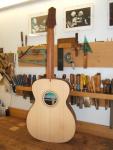
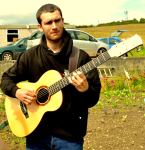
The beautiful acoustic guitars that Ewan McLennan play are custom made, built by Ralph Brown. Below are pictures of the singer/songwriter and his guitars.
Notice: Ewan McLennan has been nominated for Spiral Earth Awards ‘Best Male Singer’ of 2013. The voting for the nominees is all done online by the public. It’d be great if you would consider casting your vote his way! But also if you could pass this on to anyone else who might vote for him too that’d be much appreciated!
The Celtic Music Fan would like offer a free copy of Twist in the Tale to the winner of a competition which will start now. This is how it goes. All you need to do is find an answer to a question which in the animated picture blow. all you need to do is go to their official website http://www.wix.com/hollandandpalmley/celtictwist to look for the answer. A winner will be announced at the end of this month. Phil and Dave could send it directly to you with a short note ofcongratulations. How’s that? For those who are new to this album, here is the link to the review I did back in June 27 of 2012.
***
Huzzah!
How is everyone this week?As of this writing I am still listening to The Last Bird to Sing by our featured artist Ewan McLennan. Like I said above, his voice simply gets to you in a way one can ever imagine. And there is such palpable beauty in his rendition of new and traditional songs. This week is kind of relaxed. As you see not much feature other then the ongoing game of The Celtic Twist which I hope you take part. They make awesome recordings!
My friend Paula made an amazing discovery. This artist is harpist Mark Harmer. She posted this video on my wall. The track on the video is called Sir Arthur Shaen Carolan played by Mark Harmer on Celtic harp. I am not sure if it is me who will convince Mark to have an interview for this site or Paula. May the lucky person wins. As always, I am grateful for Paula’s enthusiasm for Celtic music even though she makes a different kind of music which is electronic. She did cover a number of Celtic inspired tunes like this one. She also sewed me those amazing frame Celtic designs and send them all the way from Yorkshire England. They proudly sit on my working table!
I am currently doing an interview with John Breen for www.67music.net. Yes yours truly is now affiliated with the amazing guys who run this wonderful site and its owner Skot Cranmore became my first interview artist for American Made Insider.
It is wonderful to know the lives of the artists who became part of this site. That discovery is a continuing process because I still get updates and they appear in this site every now and then. For me, a musical relationship is a lasting relationship. More lasting than anything I have known…other than my relatives hahahaha.
I wish you all an amazing week and watch out for my updates on the John Breen interview. I would suggest you check out my tweets which are found on the lower right of this site. That way you will see my retweets. I don’t really like to tweet about my stuff but I like retweeting relevant updates on my feeds. Take care and see you soon.
I love essays.One of my favorite writers in terms of essays is the late Anthropologist Loren Eiseley. There is something about a person relaying his personal experiences that is intimate and poignant. Alasdair Roberts together with Mairi Morrison released a wonderful album called Urstan. Since Drew of Drag City records was wonderful in getting the album to me to provide an inspiration to my review , I asked him if it is possible for Alasdair to commit as a guest blogger. I was so happy when I got a yes.
I think an exploration of the idea of the ‘Celtic’ is something which has cropped up in my work over the years – although I don’t speak the language, I know that a couple of generations back my paternal ancestors would have been Gaelic-speaking, and a lot of Gaelic music exerts a profound emotional impact upon me. It was something I had been exploring in my own right before being approached about the idea of collaborating with Mairi on ‘Urstan’ – mostly through listening to a lot of old ‘field recordings’ of traditional Gaelic singers.
For as long as I can remember I have been singing: my earliest musical recordings were done on a small tape recorder when I was about 7 or 8 years old, me improvising songs on a tiny Casio keyboard. That would be the mid-1980’s and I still remember that as a glorious time for pop music. My sisters and I would watch Top of the Pops every week and particular favourites were Erasure, the Pet Shop Boys, the Communards and Boy George. I remember being into some bad hair metal too – Europe’s ‘The Final Countdown’ of course. My primary school class played recorder all together; for a while I took bagpipe lessons too. In Scotland you begin on the chanter, which is just the pipe part of the bagpipes without the bag. My teacher was a slightly creepy fellow called Mr MacLeod; he put me off, and I couldn’t keep my fingers straight enough anyway. I love to listen to pipe music nowadays, particularly piobiareachd, the ceol mor, the great ‘classical’ music of the Highland bagpipes – but actually playing that music is another thing entirely, I imagine. It struck then and still does as a scary and rigid militaristic kind of world. Macho. But sometimes the visceral ancestral pull of piobiareachd takes hold of me and nothing else quite has the same impact as a listening experience. With all due respect to Tony Conrad, et al, the Gaels of Scotland invented minimalism in the middle ages. If you want to hear and read more, check out Allan MacDonald’s CD ‘Dastirum’ and Donald MacPherson’s CD ‘A Living Legend’, both available on Siubhal Records (www.siubhal.com). Siubhal is the label of a friend and one-time collaborator of mine, piper and educator Barnaby Brown. His label produces beautiful and informative CD packages with extensive notes – lots to absorb.
I disliked music lessons in high school. I feel like music was very badly taught and that probably put a lot of people off. There was no room for creativity, exploration, expression… very little of people actually playing together and sharing. More just rows of bored kids with headphones on working their way in solitude through books of twee tunes on electronic keyboards, with the music teacher watching like a hawk. If anybody deviated from the book, dared to improvise, there would be trouble for the unfortunate free-thinking child. I was lucky to have good piano lessons for a couple of years from a local woman, Mrs Hopper, although I must have been infuriating as I wasn’t the most conscientious student – and later I had guitar lessons from a great teacher which was helpful in showing me the rudiments of musical theory, although I don’t think the way I play guitar now was very much influenced by my teacher’s style. He was a great jazz guitarist but I never worked hard enough to develop those chops. The way I play more like how my father Alan used to play, and influence of a more British kind of folk/traditional finger style tradition can be discerned in it, absorbed through listening to players like Nic Jones, Martin Carthy, Dick Gaughan and so on. Alan used to play with the well-known singer and fiddler Dougie MacLean – he was a great accompanist of fiddle tunes, as you can hear on the LP ‘Caledonia’ by Alan Roberts and Dougie MacLean and on the LP ‘CRM’ which he and Dougie recorded with the legendary Scottish folksinger and bon viveur Alex Campbell (both were released on Plant Life Records).
Around the early nineties or so, in my early teens, I was becoming more discerning about the kind of music I liked and identified with. The John Peel Show was a real lifeline to an adolescent boy in small town Scotland – a great way to hear all these exciting sounds from places which were probably a lot more interesting and happening than my small town. I was very into all American ‘underground’ bands who came up in the wake of what they called ‘grunge’, but the bands who I regarded as doing something more interesting, subtle, thoughtful and artful than the grey (and again often oppressively male and rockist) sludge that that music often was. Slint, Codeine, Pavement and such bands. Another lifeline was the music paper Melody Maker. If one couldn’t go to these gigs, couldn’t witness the Riot Grrrl explosion taking place in exotic London and Brighton, for example, then one could at least read about it all. I remember hearing the music of Will Oldham, who has gone on to become a friend and label mate – for the first time on the John Peel Show – he played The Palace Brothers first single ‘The Ohio River Boat Song’ and it struck a chord with me. I used to tape Peel’s shows and listen to my favourite tracks over again. I remember my father asking me one day whose version of ‘The Loch Tay Boat Song’ I had been listening to – I didn’t realise at the time that Will had taken an old Scottish song and Kentuckified it.
In the village where I grew up there were two woollen mills – well, defunct woollen mills which had by then become tourist traps for the legions of English and American holidaymakers making their way up to the Highlands. The giftshops sold tartan, shortbread, woolly jumpers and scarves, plates with Highland cows on them, spurtles for stirring porridge and such like… and they tended to pipe ‘Scottish traditional music’ through their tinny sound systems. It was all bucolic sentimentality and corniness in comparison to whatever John Peel was playing or the urbane writers of the Melody Maker were writing about. What I would come to regard as the ‘kailyard’ end of Scottish music – twee tartan kitsch. It was off-putting. Of course, later I came to learn more about the ‘real’ traditional music of my nation – the great singers and musicians, the like of whom can be heard on the ‘Whaur the Pig Gaed on the Spree’ compilation of Alan Lomax’s 1950’s Scottish recordings which I compiled at the invitation of another Kentucky gent, Nathan Salsburg of the Centre for Cultural Equity – and that was another formative experience. To come to terms with a ‘genuine’ indigenous traditional song which I now regard as a bedrock which will continue to inform the music I make for the rest of my life. You’ll notice that I have put cautious speech marks around the words ‘real’ and ‘genuine’ as they are of course highly fraught and problematic terms – but if you’d been in Kilmahog Woollen Mill in 1993 and heard the kind of crap they were playing which passed for Scottish folk music, you’d understand a bit about where I’m coming from.
There was also a pub in the town I grew up in which would have occasional ‘traditional music sessions.’ I found these off-putting too. It was competitive and, again, macho. I remember a certain accordionist who used to come along and plug his accordion into a huge and nasty amplifier with a built-in drum machine and proceed to play along with yet completely drown out everyone else in the room – not only his long-suffering fiddling partner but also my father Alan who would sometimes join in on acoustic guitar (the guitar which I inherited when he died in 2001 and which I still play) – and me. I had been playing electric guitar for a year or so, was still learning, and one time went along to join in this pub session – only for the bullying accordion player to tell my father not to let me play any more as I wasn’t good enough. It wasn’t very encouraging and that, combined with the kailyard music blaring in the woollen mill shops, was enough to put me off any desire to engage with or further explore Scotland’s folk music for a long time.
Appendix Out began when I bought a four-track tape machine with money I’d saved from working in a Chinese restaurant in my home town of Callander in about 1994, the year after I left high school. I’d started writing songs shortly before then and had borrowed machines from friends to record things, but as soon as I could afford one of my own I made the long trip to the big city of Glasgow to buy one from Sound Control on Jamaica Street (most of my trips to Glasgow as a teenager were to do with music – to go to gigs underage at places like King Tut’s and the now long-gone Plaza at Eglinton Toll, where I saw Throwing Muses and, on a separate occasion The Palace Brothers sharing a bill with local heroes Teenage Fanclub) and to visit John Smith’s Bookshop on Byres Road with its great music department). Most of my spare time as a 17- and 18- year old was spent in my bedroom recording things on my four-track – songs, tunes, sounds and noises, experiments, mostly alone but sometimes joined by my younger sister Nina on drums and often by my old school friend Dave Elcock on bass guitar. This was the time of something, a movement, perhaps, that the kids used to call ‘lo-fi’ and I embraced it wholeheartedly, relishing the hiss and dropout of cassette tape. My old four-track is now broken and sadly missed. I still have all the tapes I recorded as a teenager and at some future point in an indulgent moment I’d like to go through all the recordings to see whether there’s anything at all worth salvaging. I used to give demo tapes to musicians I liked – it was through this connection, giving a tape to Will from The Palace Brothers at that Plaza gig in Glasgow in 1995, that I got involved with Drag City Records.
I moved to Glasgow when I was 18, to study English literature at the university, but I wasn’t a particularly conscientious student. A lot of my time was spent getting involved with the local music scene, playing at places like The 13th Note on Glassford Street and Nice n’ Sleazy’s on Sauchiehall Street, sharing bills with Glasgow bands of the time like Eska, The Yummy Fur, Lungleg, The Blisters (featuring a young Alex Huntly who went on to change his name to Kapranos and have great success with Franz Ferdinand), a very early incarnation of Mogwai and others. I had put a message up in the student union, listing all the bands I thought were cool at the time, looking for a drummer. That’s how I met Eva Peck, an American woman who would be the first drummer in Appendix Out. We were joined by Yorkshire woman Louise Dowding on ‘cello and my old school friend Dave Elcock on bass. The line-up of the group changed over the course of three albums before the name was finally abandoned in 2001 or so. It was ostensibly ‘folky’ music in that the instrumentation was predominantly acoustic and the songwriting was informed by some kind of intuitive feel for older musical forms, the kind of things I would have heard growing up from my father’s record collection, amassed through his years of running a booking agency in Germany (along with my mother) for Scottish, English and Irish folk acts… but a bit skewed through my punk instincts, fondness for John Peel’s show and also somewhat informed by my literary studies and interests (although, as with piano lessons, I was not at all a conscientious student). There was also a strong element of nature mysticism to the work, something which I would perhaps now regard as distinctly ‘Celtic’ and tapping intuitively into things like the veneration of trees, rivers, lochs and mountains, which was certainly heavily informed by growing up among all of those things in the Scottish countryside. That aspect of the work, the ‘folk’ and nature-mysticism elements, seemed to set apart our music in the Glasgow scene of the time which was a lot more edgy, art-school and urban. The nature mysticism remains in the work to this day but modified and tempered a great deal by years of living in a city reality and just the fact that I’m now in my mid-thirties instead of in my late teens.
I never studied music (as the ‘cellist Louise did) which is something I regret a bit – although I suppose it’s never too late – but I do remember often thinking back then that the people I met who were actually studying music tended to be the most square and least open-minded about music in general. Maybe that was a misconception, but that’s how I remembered feeling at the time. I am an autodidact: apart from some guitar and piano lessons, most of my musical knowledge, both in terms of various musical histories and in terms of technique, theory and so on, has been self-taught, which probably means that there are huge gaps… but there is a lifetime to fill those, I suppose. There is always more to know.
The first Appendix Out record ‘The Rye Bears A Poison’ was recorded at Riverside Studios in the south side of Glasgow in January 1997, while all of the group were still students. I was 19. Artistically, it was one of the most exciting times of my life up until that point, having a chance to realise musical ideas in a proper recording studio rather than at home on a four-track cassette recorder. It was great to work closely with the engineer Johnny Cameron on that session in that freezing and quiet January in Glasgow.
By the second album ‘Daylight Saving’ the group line-up had changed slightly (I did then and continue to enjoy collaborating widely) and we recorded it in the drummer and flute player Tom Crossley’s flat in the west end of Glasgow. The Teenage Fanclub guys, Norman, Gerry and Raymond in particular, were very kind in lending us their personal recording equipment: eight-track reel-to-reel machine, mixing desk, microphones, very good compressors and all. Tom’s flat had doors with windows in so we had some separation, with the control room taking over the hallway of the flat. Tom has a band called International Airport and also plays in The Pastels. It was a great honour to have Kate Wright from the Bristol band Movietone come up and sing beautifully on the record.
The third album ‘The Night Is Advancing’ was recorded in a fancier place – CaVa Sound Workshops up near Kelvingrove Park in Glasgow, which was housed in an old synagogue building. Rian Murphy from Drag City and Sean O’Hagan from The High Llamas came over from Chicago and London respectively to produce the session. In CaVa there was a smaller studio (where we recorded) and then also a larger one in the main church body – I remember that there was a major label band in the big studio while we were in the smaller one, and we seemed to record a whole album in there in the time it took them to do all the snare drum parts on their record individually. I never did understand that kind of approach.
The Appendix Out name was abandoned after that, for various reasons, and the first record under my own name ‘Farewell Sorrow’ was again recorded at CaVa with Rian Murphy. It was a lot simpler and more stripped-down overall, more song-based in contrast to the way that the Appendix Out music was becoming more and more expansive towards the end. Around this time I was digging more into Scottish and other traditional music, song particularly, reading and listening widely, and using that research to inform my own writing. From that point onward, the work would veer between self-written material which was and continues to be informed by the song and music traditions of Scotland and beyond, in various ways, among other sources (‘The Amber Gatherers’ and ‘Spoils’, recorded at CaVa again and at nearby Green Door Studios with the illustrious Sam Smith engineering respectively) – and fairly straightforward interpretations of traditional ballads and songs (such as ‘No Earthly Man’, produced in rural Aberdeenshire by old associate and label-mate Will Oldham, and ‘Too Long In This Condition’, recorded at Chem 19 Studio in Blantyre near Glasgow, the in-house studio of Glasgow’s well-known Chemikal Underground record label, engineered by the great Paul Savage). Each time, the line-up and approach would be slightly different; a constant feature would be my own voice and guitar playing, I suppose.
As a non-Gael I had always been intrigued by Gaelic music, language and culture in general. There was a small Gaelic class of about seven or eight pupils in my high school and the students were mostly children whose parents were Gaelic speakers who had moved to Perthshire from up north. I was intrigued by the language and keen to study it when I went to high school – however, my German mother insisted that I study German instead ( it was extremely rare that she or my father insisted that my sisters or I do anything we didn’t particularly want to do – in fact, this is the only instance I can remember of that happening). So I studied German in high school, and I still have never learned Gaelic formally, although Ishbel Murray who brought Mairi and me together is a Gaelic teacher and I hope that when I have more time in Glasgow I will pursue lessons with her.
I think an exploration of the idea of the ‘Celtic’ is something which has cropped up in my work over the years – although I don’t speak the language, I know that a couple of generations back my paternal ancestors would have been Gaelic-speaking, and a lot of Gaelic music exerts a profound emotional impact upon me. It was something I had been exploring in my own right before being approached about the idea of collaborating with Mairi on ‘Urstan’ – mostly through listening to a lot of old ‘field recordings’ of traditional Gaelic singers. People such as William Matheson, the Skye bard, Flora MacNeil of Barra, Calum and Annie Johnston also of Barra, and the many thousands of recordings of Gaelic song to be found in the School of Scottish Studies sound archive in Edinburgh and, now, to the great cultural benefit of the people of Scotland, on the Tobar an Dualchais (Kist o’ Riches) website: http://www.kistoriches.co.uk. I also remember that very near to where my guitar teacher lived in Bannockburn there also lived some old friends of my father’s, Roddy Campbell and his family. Roddy is a Gaelic singer from Barra, like Calum and Annie Johnston (to whom he is in fact related). His son Ruaraidh was a few years older than me – Ruaraidh went on to join the folk group Old Blind Dogs – and I remember being impressed by hearing him play the Highland pipes when he was about 16 and I was about 12. I was also impressed that he was openly smoking in front of his father at that age! Anyway, I remember being fascinated by my father telling me about Roddy, that he sang ancient Gaelic songs, thousand-year old songs about trees. That was the kind of Gaelic culture I was interested in discovering – the ancient, noble yet sadly faded bardic culture of Scotland, of which people like Roddy are living remnants (Roddy Campbell’s album ‘Tarruinn Anmoch’ [‘Late Cull’, 2000] is available on Greentrax Records [CDTRAX191]). As well as listening to the Gaelic music, I found great beauty in a lot of Gaelic literature – modern poets such as Sorley MacLean and then tracing a lineage from that to the very ancient Gaelic poetry such as that published recently in a volume of mediaeval Gaelic poetry from before 1600 called ‘Dunaire na Sracaire’ (‘Songbook of the Pillagers’) edited by English-born Gaelic poet Meg Bateman. I have also enjoyed reading a collection of verse called ‘Bho Chluaidh gu Calasraid’ (‘From the Clyde to Callander’) – Gaelic songs, poetry, tales and traditions of the Lennox and Menteith, the part of Scotland stretching from where I live now in Glasgow to where I grew up, Callander in Perthshire. I imagine that some of this material is the kind of thing my father’s mother’s forebears, the McCalls, Stewarts and so on, would have been familiar with.
The project with Mairi meant a more concerted research process with Gaelic song, which was very enjoyable. Mairi was raised in the Lewis tradition since birth and is very knowledgeable about it; she was a tremendous guide in that world for me. For the album recording I brought together a group of musicians with whom I’d worked before on various other projects, whose playing and musical sensibilities I respected and whom I also got on with as individuals, of course, and whom I thought Mairi might get on with also. People I thought could bring a lot to the music – although none of us apart from Mairi is a Gael and each player has varying degrees of relation to and knowledge of Gaelic traditional music, everyone involved is a very sensitive and respectful musician. I suppose it was more important to me that the musicians would be great and flexible regardless of their Gaelic-ness or otherwise… the fact that they are all wonderful musicians transcends any cultural and linguistic boundaries. The core band is Stevie Jones, Alastair Caplin and Alex Neilson. Stevie and I had first recorded together on ‘Too Long In This Condition’, as had Alastair Caplin and I – Alastair is an English/Scottish fiddler with some family connection to Lewis, although when I met him he was studying opera singing at the Royal Scottish Academy of Music and Drama (he’s since turned his back on that for the time being to play fiddle with people like me and is currently based in London). I first met drummer and songwriter Alex Neilson at a gig I was doing with Richard Youngs in Glasgow about ten years ago. We got talking and began playing music together shortly after that. We’ve been playing together on and off since then and have just completed a tour of Spain together. Alex currently has a band called Trembling Bells.
In terms of recording, I am currently conceiving the next recording project. A band and I will be recording for the last week of April at Diving Bell Lounge in Glasgow with Marcus Mackay, where and with whom ‘Urstan’ was also recorded. The material – it’s a body of self-written songs which have been developing and gestating for the past two or three years (things tend to take their time with me). The band will be slightly different again – Shane Connolly on drums, Stevie Jones on bass, Ben Reynolds on electric guitar (Ben is in the band Two Wings) and Welsh fiddler Rafe Fitzpatrick (who also plays in the band Tattie Toes)… then some other friends will play some brass and string arrangements I’v been working on. I’ve recently started using Sibelius composition software to create scores, trying to teach myself the rudiments of composition – and I think it still is very rudimentary but it’s an aspect of the work I am keen to develop more in future. It’s interesting writing for instruments which one doesn’t play oneself; for example, I wrote the brass parts on ‘Urstan’ and I think they could be described as a little ‘wonky’ or ‘goofy’ because I don’t have a practical familiarity with the instruments. It’s just that it’s a sound-world to which I’ve had a growing attraction in recent years. The new songs themselves cover a variety of areas and concerns thematically – metaphysical, cosmological, personal, universal, political, ludic, sexual… I am hoping that this record will be my most fully realised and complex musical statement yet. But I’d better not say too much more about it at this stage… let’s see how it goes at the end of this month. It’s great to have the continued support of a wonderful label like Drag City to support my continued musical development. Long may Drag City flourish!
Alasdair Roberts
Glasgow, Scotland
April 2012
Mairi Morrison & Alasdair Roberts – Leanabh an Óir (Rough Trade East, 19th March 2012)
Micheal Curran talks about Cavan Fleadh, playing traditional Irish music and the over all joy of gigging!
A stereotype would have been created around the old fleadhs and festivals, suggesting that it was only old people who used to go to them, and that there was very little to do but play music. But modern festivals have evolved and now include events for people of all ages and interests.
Today’s interview is unique. Not only that it highlights the musical culture of the Irish youth but it also gives us the in depth observation of what happens to music festivals from someone who has been playing in these events for years. Between college dissertations, teaching at workshops, Celtic Connections -wow talk about being busy, Michael was able to work with me in these questions. His responses are veryinformative and he is a fine writer himself.
1. How does it feel to share the space with other talented musicians in the field of traditional Irish music?
Playing Irish music has totally shaped more or less everything I do; it is like a religion, a way of life. I suppose if you were to ask the same question to any young ‘trad head’ like myself, they would give you the exact same response. I feel that playing music has developed me personally and nurtured me into the lad I am today, but if you were to ask any of my non-musical friends they would just say I am absolutely crazy, and they are probably right! Music has been a great outlet for me ever since I started playing when I was around 10 years of age; it is a fantastic pastime, hobby or whatever you would like to call it.
But apart from all of that, I think the most rewarding part of playing Irish Music with others is the friendships that I have built up over the years. Playing music has opened many doors and introduced me to so many wonderful people; having created countless friendships that last a lifetime. Music has given me loads of brilliant opportunities to travel all over Ireland and further afield, bringing my box and my music wherever I go.
In a way the space shared with other talented musicians is quite a small knit one, like a little community all with the same shared passion and interest. Music can break barriers for people and is like a language, many people from different nationalities from all over the world can play together as one. With thanks to modern technology, the internet and in particular social networks, the small knit community of Irish trad can develop on a global scale; we can stay in regular contact with musical friends all around the world, and music online is available at our fingertips. It is without a doubt, an interesting and enjoyable scene to be part of.
2. You aren’t part of a band yet and you aren’t working on an album right now. But what do you have in mind this year?
Even though I am not working on an album right now, it is something that I have not ruled out, and I would hope that in the not too distant future I will get the opportunity to put some tracks down to record. I personally feel that I am not ready to record just yet, within the last few years I feel my style of box playing has changed and developed into a more distinctive and personal style, but then again I feel it can develop even more in the next few years, so there is always room for improvement!!
When it comes to recording, I think patience is very important. Money and financial gain should not be a motivator and one should take the time to play and record music they are happy with. Time and time again I have heard other musicians who have recorded albums say that on hindsight they would have did things differently, such as not rush into recording, do more research and gather more knowledge. I will not rush into a recording studio just yet, I will when I feel the time is right, but most importantly, when I feel my music is right.
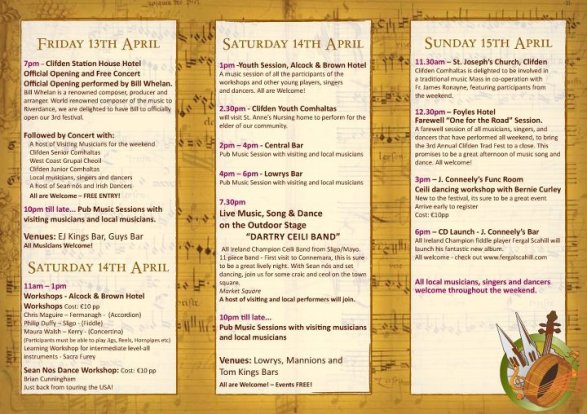
I am currently in my final year of civil engineering in Queen’s University, Belfast, so recording has not even entered the equation at the moment. Because of a hectic and intense study schedule, I find I do not have as much time to play as I would like, but fortunately at the weekends I teach at home in my spare time and go to local concerts and sessions when they are on. Also in the coming months before the Fleadh season kicks off in the summer, I have been asked to play and take workshops at various different festivals throughout the country, including the James Morrison Festival in Riverstown, Co. Sligo, and the Trad in the West Festival in Clifden, Co. Galway to name but a few.
3. Tell us about your big involvement with the Cavan Fleadh, and if possible give us an in depth look at the scene and the things that happen during these gatherings.
Being from the North, and only a short forty minute drive from Cavan Town, I have been very fortunate to meet and befriend many great people from that area within the last ten years. One such person is the widely known Martin Donohoe, virtuoso button accordion player, and a big influence on my own playing. I remember going to his house with my father when I was around 14 for a one off lesson, and I suppose it was a turning point for me, in the sense that he opened my eyes to the big bad world of trad, as it made me recognise the huge scene that is out there and one that I could get involved in.
Currently Cavan have hosted the last two All-Ireland Fleadhs and we will be back there for the third year in a row for Fleadh Cheoil na hÉireann 2012. The Fleadh is one of the biggest music festivals in Ireland, and one of the biggest Irish Music festivals in the world. Basically the Fleadh is a week long plethora of music, song and dance, with concerts, workshops and numerous impromptu sessions happening on a regular basis. Thousands of people descend onto the Fleadh’s chosen venue every year to meet old friends, make new ones and just generally have a good time.
Although probably for a lot of musicians and seasoned listeners of music, the Fleadh is about the competitions. Every year a new All Ireland Champion in different age groups are crowned, depending on their instrument. To compete at the All-Ireland, one must firstly gain qualification through their local County Fleadh, and then do likewise at their Provincial Fleadh, before they perform on the big stage. In August 2011 in Cavan, I was fortunate to gain 2nd place in the Senior Button Accordion competition. It was a great achievement which I was delighted with, and I suppose that is where my involvement lies!
4. You were in the Glasgow Comhaltas two weekends ago. Now you are back in Scotland. What are your schedules?
Yes, before Christmas I was asked over to teach the box at the Glasgow CCÉ Winter School of Irish Music, along with some other musicians and friends from around the country. The organisers always have the workshops in January as it coincides with the world famous Celtic Connections festival, Scotland’s premier music festival, spanning a period of three weeks. I had just finished some of my college exams days before I was due to fly out so I thought the weekend would be a nice break. The workshops took place on the first weekend of the festival, and we were given the opportunity to attend some of the major concerts and also to the famous ‘festival club’, which had a range of different genres playing until the wee hours, accompanied by a late bar…music and beer, ‘What more can a man ask for?!!’. This was my first time at the festival; I loved the atmosphere and enjoyed it that much that when I got back home to Ireland late on the Sunday night, I immediately booked flights back to Glasgow for the finale weekend….a decision I did not regret!
I have no set schedule when it comes to playing music. I have a simple motto, ‘If I can go, I will go’. There are always sessions and concerts on regularly around my area and I like to try and get to as many as I can, although as I mentioned earlier there are a few festivals and workshops that I have been attending for the past few years, so there are always set around the same time annually.
5. You mentioned about Civil Engineering as your course. I noticed that most Irish musicians have double careers, one that is musical and then otherwise. It seems like music doesn’t have to get in the way of your other career path as the case of most musicians I read about. Is this a common thing over there?
Yes I suppose it does seem quite common in a sense. However I feel that being a student has massive advantages. If you look at some of the savage up and coming young bands on the scene at the minute, Éalu, Goitse, JPTrio to name but a few, most of those guys are around my own age and are still studying, in particular music related courses. A lot of these bands were formed through music projects; maybe they got the opportunity to record and put a show/tour on the road as part of an assignment, and of course the main luxury for students is the extensive time off, meaning that they can afford the time to partake in such events.
As for the well known bands and musicians who have been on the road for years and who hold down a full time professional career away from the music, they probably have managed to establish a system that works both ways, so they have the times/tour dates etc set months in advance to accommodate their full time jobs.
I know from my own personal experiences that time management is very important when planning to play music and studying/working. For me I try to treat playing music as a hobby but there are times I have found myself travelling and gigging quite extensively and it sometimes feels like a job in itself! I try to find the right balance between the two so the enjoyment always remains. There have been times when I have had to miss out on some gigs and turn down invitations due my studies, but I suppose that cannot be helped. On the plus side any time I am away on a long weekend playing, I do not have a boss to answer to on a Monday morning if a few lectures are missed!!!
6. What do you think are the things responsible these days in bringing people to get into these musical events?
There is no doubt that Irish Music has had something of a revamp over the last 15-20 years. It is cool for young people to play music nowadays, and with so many festivals, fleadhs and other regular gigs on they are spoilt for choice. Modern technology has also played a huge part in this change. Long before televisions and computers tunes would have been swapped with older musicians at house parties and ceilis, passed on from one generation to the other. Nowadays all a young learner has to do is go onto websites such as YouTube and TheSession.org in order to get tunes, as well as online tutorials and tune books etc.
A stereotype would have been created around the old fleadhs and festivals, suggesting that it was only old people who used to go to them, and that there was very little to do but play music. But modern festivals have evolved and now include events for people of all ages and interests.
Personally I have always enjoyed going to these events to meet new people, as well as the many old friends that were made in previous years. The swapping of stories, playing of new tunes and just the general craic element is hard to beat. The people who go to these festivals are kindred spirits; they have the same interest as I do for the music and craic, and that is what I think are some of the things responsible for getting people involved.
7. What actually happens behind the scenes at these festivals? And what are your preparations whenever you are attending these events? How do you get along with other musicians and also deal with curious Celtic music enthusiasts?
As I mentioned earlier, the main emphasis at a Fleadh would be the competitions. Held over a weekend, they normally take during the day on a Saturday and Sunday in specific venues and locations chosen by the organisers. In the evening time sessions would take place in the local pubs of the town including local and visiting musicians, as well as some of the competitors who want to relax and join in. Some fleadhs also run concerts, dancing or singing sessions as well.
Festivals I feel are more relaxed particularly as there is no competition element to worry about. Most of the festivals I have been to have to have similar structure, again taking place over a weekend period. Usually there is an opening concert on the Friday night, with local and visiting musicians, and afterwards everyone descends on the pubs in the town for music sessions. On the Saturday afternoon workshops take place with all the different instruments, giving young musicians a great opportunity to learn from master players in a close proximity. The Saturday night and Sunday afternoon usually concludes with more sessions, which give all the local and visiting musicians to swap tunes and have fun in a relaxed atmosphere. If I am playing at a concert or taking a workshop I usually like to prepare by having a set list of tunes made out prior to the performance, and also have recordings and photocopies of music notes ready for the workshops.
It is very easy to deal with other musicians and enthusiasts as we all have the same shared interest, and possess the same affection for the music and song. The love of the music is what brings the people together; you will hardly ever meet a ‘bad’ person in the Irish Music scene. For those interested in the music, my advice would be to go and experience it first hand; head to a fleadh or festival and soak up the atmosphere, listen, play, make friends and most importantly have fun!!!
For Michael’s next scedules, refer to the post below:





 Celtic Music Fan