It is a great honor to listen to a new album by Harpist Ellen GibIing. I am listening to this at 5:00 a.m., which is a perfect time to meditate over coffee and the intricacies of life. This album is a work of art where the harp shines as a solo instrument, and I think it’s a fantastic decision on her part to create an album without other instruments. Her playing is superb, precise, and at times fast. While The Bend in the Light is a relaxing listening experience, it is far from being sterile as her mastery of the instrument proves that she can jam with other artists and has proper command of her musical skills. Her jigs, reels, polkas, and airs are refreshing because although they sound traditional, they reflect her modern embellishments. It is a pleasure to hear her fantastic artistry, and I think this is the start of a remarkable career. If you want a new harpist to listen to, I recommend Ellen Gibling. I do have a lot of collections when it comes to this type of instrument. Yet, I feel that her music is an excellent introduction to the harp instrument itself, so whether you are a person who likes to study harp or a listener who happens to love the sound of the instrument, then The Bend in the Light is a good introduction. You can find her music through Spotify and some streaming services, or you can visit her website, and please download her album to listen to it offline. It would be better if you also buy her physical albums. That way, you can support the artist, and don’t forget to go to her live performances because I’m pretty sure it will be a wonderful experience!
Special thanks to Nick Storring for introducing her music to me.
Here is an interesting update that musician Fraser Fifield posted on his Facebook page. I thought that it would be great to share this post for everyone (with his permission of course) to read. And yes he gave his approval:
“A jig with no melody per se, perhaps.a wee pre referendum musing, feeling pensive at the time I think, but optimistic, stupidly. audio a bit a low side, but you can just turn it up, a fair bit. hope you like. it’s optimistic with a hint of certainty of getting done in and overtones of despair. ”
My newsletter, to show unsubscribers just what they’re missing out on…
Welcome. Enough has happened in the life of this freelance musician, I feel, to warrant sharing an update for any vaguely interested, muse upon an existence which is pretty varied if not opulent, recount some highs and lows of the past year and so draw a line in the sand.
Then step over it and into the future. 2015 looks interesting, but first a non-chronological look at some of what was has been so far, 2014.
(Why? Because I like my work to remain current and vaguely in people’s consciousness at times, it’s healthy given my job, plus there’s good music involved which I’m genuinely happy to advertise).
I’m happy to have contributed to a variety of nice recordings. Still unreleased, but soon to be, are 2 lovely records by Inge Thomson ‘Da Fishing Hands’ and Sophie Ramsay’s 2nd solo album, respectively. Already filtering through to discerning ears are records by Patsy Reid ‘The Brightest Path’ and Jim Sutherland aka Struileag aka Children of Smoke and one by me and Graeme Stephen lest I forget – Esotero, released this time last year, and still flying off the shelves. And there’s an unmixed record by David Milligan, Graeme Stephen and I, resting on a hard disk for some months now, quite happy, look forward to share that in due course.
A pleasure to play alongside and learn from (and travel, rehearse, eat, drink etc) Angus Lyon/Duncan Lyall Band, Gavin Marwick’s Band, Corrina Hewat’s Band, Graeme Stephen, Dave Milligan, Mr McFalls Chamber, Red Note Ensemble, Allan MacDonald’s ‘Bruce 700′, Big Big Sing, Jerry Donahue and crew, and all others..Thank you all, very much.
And the Eurovision song, for Montenegro, glorious, I didn’t see that one coming. Thanks Slobodan. A lovely song too… No, no I didn’t appear in the final, just the singer and a rollerskater did. I didn’t even leave my own flat…been doing a few bits of remote recording this year – just last week on a cover of You Shook Me All Night Long by AC/DC for a musician in USA. And also last week, in another studio right enough, a kind of sultry Marilyn Monroe version of the Proclaimers’ 500 Miles kind of gobsmacked me momentarily, but I regained composure and pitched in with everything I could blow or squeeze no problemo. They won’t mind me mentioning, it’s not meant for folks like you.
My week in Gavoi, Sardinia, in June, courtesy of the British Council, collaborating and making friends with fellow European musicians, was a small sunny highlight and felt perhaps like something of a holiday whilst being allowed to pursue an interest in making experimental music, without guilt. I’m not an experienced holiday-maker, some would argue a professional one, but they don’t know.
Sad news came regarding the untimely passing of Georgi Petrov this year. He’s missed. A virtuoso player of the Gadulka, he kindly played along with Nedyalko on my 2008 record Traces of Thrace. His warmth of character, stories, good company and the music which resulted was loved by all who knew him.
The musical year started with a chance to play on a couple of songs with Capercaillie on their 30th anniversary gig in the Glasgow Concert Hall. Having gone through teenage years listening to them a part of me felt a tiny bit fraudulent being on stage.. For the 15 mins on the night and only a day or two of anticipation beforehand in typical, loveable, Shaw style, this was really exciting. Later in the year if I hadn’t missed his call I could have got to play my whistle with Kylie Minogue.
The musical year actually started bang on the 1st with Graeme and I playing our part in Lau-Land Edinburgh, which was perfect, my guitarist colleague almost managed to sleep in, but didn’t.
What else…became increasingly politically charged re the Scottish referendum for a while, insulted quite a few people with contrasting views probably, got crushed, returned to normal.
The Martyn Bennett Prize for composition happened for the 2nd year in Edinburgh. This time I had the job of trying to play the finalist’s pieces along with 4 other musicians – fun and challenging. The standard was great but I would urge more composers to have a go – it’s restricted to Scottish based composers (I think) but that’s pretty much the only restriction. It’s got a 1st and 2nd prize of 2 and 1k respectively. It’s a kind of high-brow X factor, not to be taken overly seriously as competitions shouldn’t, but an event that can help motivate new ways to integrate elements of our traditional music in composed music. Fingers crossed it’ll run next year.
Now, looking over that line and beyond the approaching festival of consumerism, is Celtic Connections Festival 2015 and my pal Greg Lawson’s work to arrange Martyn Bennett’s great last album, Grit, for a large bespoke acoustic ensemble. As you do. To be performed in the festival’s opening concert, January 15th. All being well it will (must surely) be quite epic I imagine.
Inge Thomson’s Da Fishing Hands – Celtic Connections 23rd January, Glasgow. Inge and I are also beginning to play as a duo which I’m chuffed about. More info about this soon. But the Celtic Connections gig is a 5 piece and will surely be lovely. The 1st gig of this collection of music/song, on the tiny island of Fair Isle, May 2014, was one of my favourites. Inge and I also play Dec 12th in Kilbarchan, nr Glasgow.
A great opportunity has come along for me to join the tabla maestro Zakir Hussein’s ‘Pulses of the World’ project which will tour in Dubai and India at the beginning of February and in the USA in March. With Rakesh Chaurasia and Jean-Michel Viellon on flutes… shelves of my CD collection just came to life. Not that often I can reel off a tour list like this, so I’ll take this opportunity to:
13th March – Pabst Theater, Milwaulkee
14th March – Purdue University, Fort Wayne IN
15th March – Cullen Theater, Houston TX
17th March – Lisner Auditorium, Washington DC
20th March – Moore Theatre, Seattle
21st March – Chan Centre, Vancouver BC
22nd March – Boulder Centre, Boulder CO
27th March – Painted Bride Arts Centre, Philadelphia
28th March – Carnegie Hall, New York
29th March – Somerville Theater, Boston MA
31st March – Rio Theater, Santa Cruz CA
2nd April – Jazz Centre, San Francisco, CA
3rd April – Jazz Centre, San Francisco, CA
Audiences in the Scottish Highlands (mostly) will get a chance to hear my collaboration with Red Note Ensemble and Kuljit Bhamra (tabla) at the beginning of March. It was nice to meet and try some material out at the recent Sound Festival in Aberdeenshire. The Highland dates will be posted in due course.
I’ll leave it there, just before I begin to tell of a big bit of news, good news, which I had to read a few times when it arrived the other day. But that perhaps would turn this simple newsletter into something else, a short story at the least so, back soon on that.
Nice to write to you. Nothing to sell you directly but perhaps some CDs for Christmas presents, always an option, always a tenner.
Athy from Latin America.He’s got style, he’s got the funk. He plays the harp like no other. Mix the Spanish soul with Irish tradition and you get Athy Electric harper. He is passionate in propagating the harp as popular instrument and not confined inside the doors of classical standards. I made an interview with him before and he is down to earth and filled with a great sense of humour. It is good to see how his fans are multiplying year after year. He has toured around the world ad have performed with the greats in the world of traditional and contemporary music.He is embraced by fans of Jazz, World, Classical and Folk. Irish musicians hold him in high regard and well, hearing his recordings myself made me a fan!
***
Moya Brennan and Cormac De Barra – Sailing
For those who missed this track the day it came out, here it is. So lovely! Enjoy your weeks ahead friends.
Alicia Ducout (piano, harpe celtique et chant), Florian Baron (guitare et oud), Kenan Guernalec (flûte traversière irlandaise), Marc Blanchard (arrangements électroniques), Anthony Debray-Laizé (percussions)
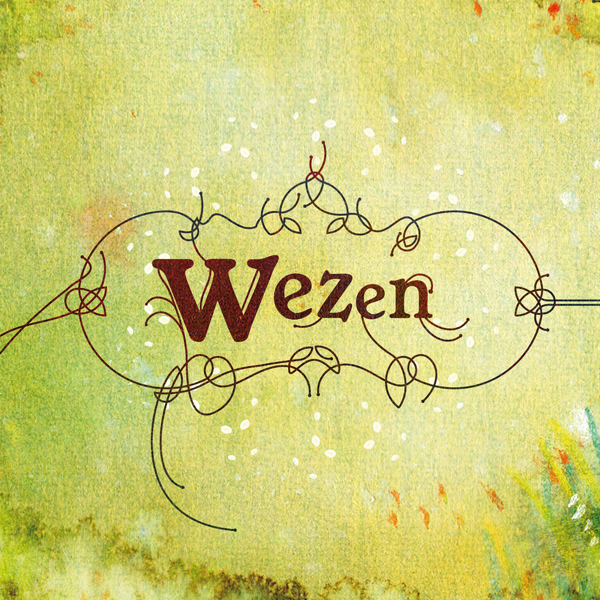
The world can be a dark and scary place. That is why we have music to escape to when things start to get chilly. I would recommend Alicia Ducout’s (who also goes under the name Luascadh) ambitiously atmospheric project called Wezen. It is a CD-Book with accompanying artwork . Her works are always marked with her classical, renaissance and Celtic influences. This is an album that’s a treasure to own because this is not something you can find in mainstream music.
I like the Celtic harp because it conjures images of Tolkien’s characters. Alicia Ducout is based in France. A detailed information about the album can be found below. Wezen is not just eclectic in the musical sense but also in its use of different languages. This calls to mind works of groups like Dead can Dance and artists like Loreena Mckennitt (for the eclectic instruments) and Connie Dover (for the multi lingual approach).
I love it when artists venture outside the English language or from their own native languages. I think language is essential for an album in addition to the instruments and arrangements. I think it adds to the authenticity of the sentiments you are trying to create and also the feeling of the song. It gives that feeling of being transported into the native soil of the composer and not in an urbane setting which is always characteristic of English songs. This is not to belittle the English language because it is what i use to blog, but being bilingual myself, I appreciate the beauty of being able to walk in the two worlds of spoken and written words.
Back to the harp, the beauty of her playing is her understanding of the emotional range of the Celtic harp or other harp instruments. Ducout studied drama at Lyon, and after 10 years of piano practice, she joined several medieval ensembles. The artistic journey opened the doors of Celtic civilization and ancient traditional music to her and now we have Wezen.
Wezen is a tale written in 2008 by Alicia Ducout. It tells the story of a strange character and the essential question: how to fight fear? This story deals with issues of identity, trust in yourself and others. The graphic novel and its soundtrack was released in December 2012.
To echo a history, music is at the crossroads of several traditions, as shown by the choice of instruments: harp, bodhran and Irish flute for the Celtic sound. Oud for the Eastern source. The nyckelharpa for Northern anchor (Swedish), the piano like a familiar linking that connects us to our own history. The electronic sounds are even more subtle we can say connect this traditional matter and to present to the world today, bringing a breath of timelessness work.
This alchemy is born a minimalist style (inspired by Philip Glass, Bruno Coulais, Steve Reich) speaking we can say here instrumental or sung in several languages.
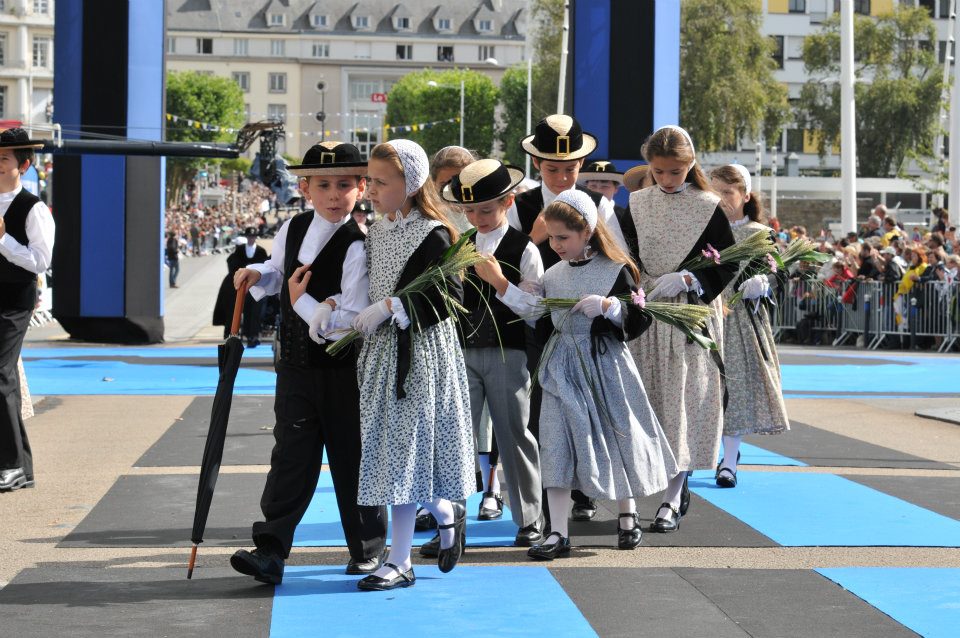
A journey through the sounds of German, English, Norwegian, Irish, Spanish, Aramaic, and even Elvish!
Plus: Nova Scotia singer/songwriter Layne Greene for our EP review, Lady of the Woods: New Single from Jamie Smith’s Mabon album Windblown and Cormac O Caoimh
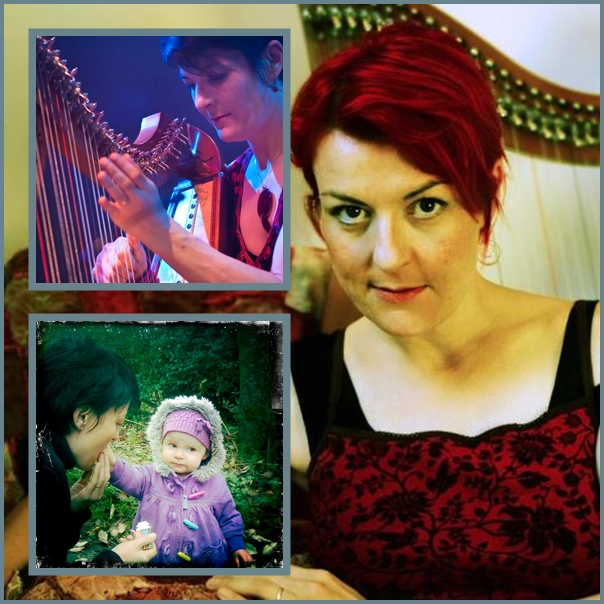
Corrina Hewat is our featured artist this week. She is a mom, a harp teacher, and a good friend to the harp community. She is promoting her project the Harp Village . “We have The Duplets, Maire Ni Chathasaigh and me and David the whole weekend, so it is a lovely mix of music and company!! The more people who come along, the better, so all publicity is great.”
Corrina Hewat has an eclectic sound. She walks between the world of traditional and avant-garde music. Listening to her album My Favorite Place her project bands including BACHUÉ give me a glimpse to her wide influences. Her music captures the Celtic sense of atmosphere and space while her refined style made her recordings at home with the urban world.
You have a huge catalog or recordings now. Do you have recordings you wish you could have improved? I am not saying they need improvement because your recordings sound polished but personally what do you think ?
All my recordings are purely ‘snapshots’ of where I was then. All the recordings are affected by where they were recorded, who was playing, how I was/we were at the time. I only ever set out to capture moments of time, and I believe that is what they all are. Every single one of them I would change and every single one of them I would keep the same as well. I don’t tend to listen to myself too much, and it only ever comes up on shuffle in the car mostly, so I can press ‘skip’ and move on. Or sometimes I listen and say ‘woah, what the heck was I thinking?!!’. Or ‘ooh that is a surprising bit’ or ‘wish I had done that instead’ or all sorts. Anyway, it’s all past stuff, so I don’t really have time to think about what I would have done better. I could have done it all better. And I will always think that.
So far, how is the experience working with BACHUÉ. Is there another BACHUÉ project in the making ?
I loved Bachue very much. It was a good fun thing and a happy thing. But it got swamped with all the other stuff that was going on, so it took a back seat for a while. I am going to do a duo gig with David Milligan in September at the Harp Village (28th – 30th September in Cromarty, The Black Isle in the Highlands of Scotland http://www.cromartyartstrust.org.uk/the-harp-village-2010.asp) and that will be the first time in ages we actually have done a gig together in such an intimate format. I’m looking forward to it. We play well together!!
You also teach harp. Does teaching come first and being an artist second?
Being an artist/musician comes first. Not that teaching comes second, but at the moment for me, I still want to write music, play and perform music, and if I can fit in teaching as well, then I do. I took on the Royal Conservatoire of Scotland’s Principal Scottish Harp Tutor job last year, and I have the help and support of Heather Downie. If I didn’t have that secondary support, then I couldn’t have said yes to it. I believe I need to continue to work towards being an inspired, creative musician and writer and strive to better myself and my work. My students will then have a happy, sharing, generous, inspired teacher. I have very few private pupils, due to my time constraints and time away touring or teaching workshops/week-long schools.
How has motherhood shaped your music and what is different now compared to when you were starting being a recording artist?
Motherhood changed me completely. Life is a joy, not a struggle now. (I used to think it was all so hard. And had a heap of crap I was carrying on my shoulders which I needed to unburden myself of, to move on.) And I lived a very ‘messy’ lifestyle but now there is no need for all that. The joy is in me and around me. Music is a joy – although finding time for it is slightly complicated sometimes. But I love being a mother so much. It ‘completed’ things for me which I didn’t realise needed completing! And I still believe my life, the traveling, the ‘being all consumed by music when in the middle of writing it’, and all that goes with being a musician, is still worth it, as I am a more fulfilled person. And if I am happy then I am a better mum.
What are the things you want to introduce to the harp scene? What is your grand vision?
I wanted to introduce a more relaxed approach to harp, and a more relaxed and creative approach to arranging. I found when I started playing that there were very few arrangements out there I even liked! Boring chordal movements, same patterns over and over again, as if that was all the harp could do! So pretty much as soon as I started learning the harp, (around the age of 12 or 13) I started writing music on the harp, arranging traditional tunes, putting mad sets together, learning music off tapes (remember them??!). I had a great teacher to start me off – Christine Martin (who is the book publisher Taigh Na Teud) – she gave me the basics, introduced me to the Clarsach Society (who I eventually hired a harp from for many years), and introduced me to the work of Savourna Stevenson. That gave me the impetus to keep writing and playing and trying to make more of the instrument. I have had amazing teachers, although sporadic. Christine for a year, then yearly weekend courses until I went to the RSAMD (now called the RCS) where i had Sanchia Pielou for a year. Then Maire Ni Chathasaigh when I was doing the jazz degree course. These three teachers gave me so much input and I thank them for it. I was a ‘wayward’ child, and they steered me well. Sileas also gave me inspiration as they were doing fun things with the harp in trad music.
My grand vision?? I want to inspire folk with my music. Inspire them emotionally, move them. Write music which people can live with and enjoy. Move them like I have been moved by others music.
A live clip of the Unusual Suspects at The Old Fruitmarket, Glasgow, 29 January 2011 as part of the Celtic Connections Festival. Featuring the tunes “Sandy Broon’s” & “Bogle’s Majority”.
Line-up:
Corrina Hewat (harp/vocal)
Ewan Robertson (guitar/vocal)
Eilidh Shaw (fiddle)
Anna Massie (fiddle)
Catriona Macdonald (fiddle)
Patsy Reid (fiddle)
Mairearad Green (accordion/ pipes)
Calum MacCrimmon (pipes/ whistle)
Donal Brown (pipes/flute)
Rick Taylor (trombone)
Nigel Hitchcock (saxophone)
Ryan Quigley (trumpet)
Colin Steele (trumpet)
Dave Milligan (piano)
Tom Lyne (bass)
Alyn Cosker (drums)
Donald Hay (percussion)
Here’s a clip of Scottish harp player Corrina Hewat playing a jig she wrote for Martyn Bennett. This is from Corrina’s online Scottish harp (clarsach) course at ayepod.net. Check it out at http://www.ayepod.net/webcasts/teaching/teaching.htm
***
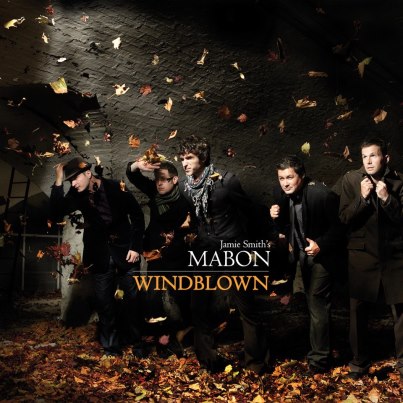
Lady of the Woods: New Single from Jamie Smith’s Mabon.
Ok I have heard the entire song and I like it! It is catchy, well crafted and the vocal harmonies are amazing. First time I heard a vocal track from the band that is known to perform great instrumental tunes. If you haven’t yet have a listen here and also download the track for FREE: http://www.jamiesmithsmabon.com/windblown/
If you are a band I’d suggest you get a photographer this band has. The pictures do an amazing way to promote the music!
***
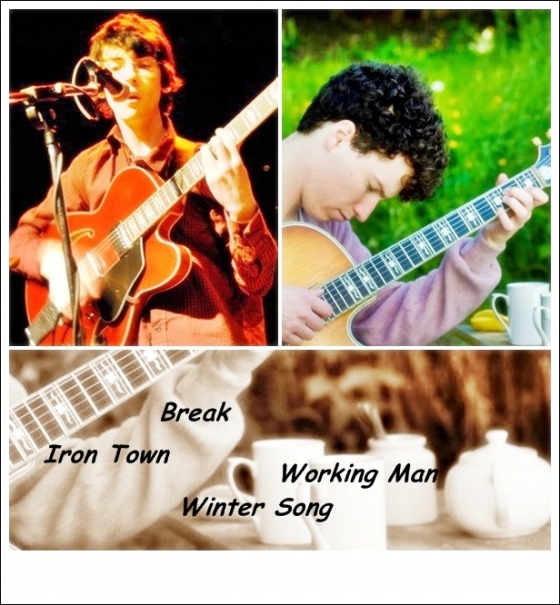
Nova Scotia singer/songwriter Layne Greene with Live!EP
Tea buddies: Layne Greene-Vocals/Guitar Alexander MacNeil-Guitar Artwork by The Celtic Music Fan.
Carving the modern Nova Scotia with the stories of people and places.
Genre: Folk
Released August 30, 2012
Personnel: Layne Greene-Vocals/Guitar Alex MacNeil-Guitar Shawn Bisson-Mixing/Engineer Andy Cunningham- Photography/crew
Knox Presbyterian Church located in Blue Mountain, Nova Scotia
Recording a crisp clear album impromptu takes a lot of skill to achieve. But singer/songwriter Layne Greene has been mixing and arranging music for years. So the live EP was conceived out of the desire to come up with songs that he recorded and arranged in the past but wanted a different take on them. This Business Administration major from St. Francis Xavier University(now in his sophomore year) juggles between making music and seeing himself producing them in the future. He even jokes that :” If worse comes to worse, I can work a crappy, well
paying, desk job”. Well I am sure it won’t come to that because he makes excellent songs that are well crafted.
One of the songs here called Working Man is dedicated to his grandfather who is a carpenter and builder of musical instruments. There are other songs that are biographical in nature. His lyrics show an introspective and philosophical nature. Although he admits that he isn’t much of a lyrics guy. He is more prone to think of songs like cathedrals with their intricate structures and designs.
Alexander MacNeil is a jazz musician who is also working with Layne on another recording. He adds his distinctive guitar style to this project. He also did the backing vocals in Iron Town. He has his own jazz Trio and Quartet. You can tell that these two made a great tandem in this EP.
One of the things that I really appreciate about this EP is the atmospheric beauty of all the tracks. I asked Layne if they used studio reverb and he said no. Everything in this project- especially the acoustic density -is through the interior of the Knox Presbyterian Church located in Blue Mountain, Nova Scotia, Canada. Engineering/mixing credit goes to Shawn Bisson who flawlessly captured the soul of the venue with such exquisite attention to detail.
I recent;y got acquainted with this wonderful artist who just released his album A New Season for Love. I am impressed with his vocal quality. I love it and his music is really worth your ears after a long day’s work.
Plus: The High Kings and Festival Interceltique de Lorient
Timothy Des Roches: The invisible noodle(string)
The harp fascinated me since childhood. I owe that to the movies and also the late Japanese jazz harpist Tadao Hayashi (in grade school) who started me in this path. He made me realize that the instrument can create a lot of sound textures depending on the player.
With my journey to the discover of Celtic music, it was not hard to fuse the past and the present. Hearing the instrument gives you deeper meaning when you know its history and its construction. How or why does it make such sound? As what poet Lao Tzu says about traveling..”A journey of a thousand miles must begin with a single step.” And also “For my part, I travel not to go anywhere, but to go. I travel for travel’s sake. The great affair is to move.” –– Robert Louis Stevenson. Learning is a great journey -by knowing the harp more.
You have to realize this didn’t take place in one day. Tim and I just sent messages and ideas back and forth as we went along:
I got a brilliant idea for the interview. Why don’t we make a picture discussion. I will go ahead and post pictures from your picture gallery and let you explain further. We will make it as informal and chatty as possible.
Or if you prefer we will make it on the main conference with Scott(Hoye). Anything that makes you comfortable.
After sometime….
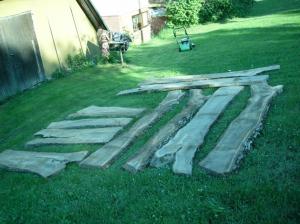
He said: This may be mildly interesting to you. I’ve been discussing the build of a traditional wire strung harp with someone for some time now. This person desires a replica harp with an English Walnut pillar and column (the sound box is to be carved from Linden/Lime ,latin: tilia. Our conversations started over a year ago. Well, after about one year I came upon a proper log for the carved sound box (the wood needs to be green/wet), and after countless hours of searching I just found the English walnut in the right thickness (rare) in Southern Poland. Enough for many harps and pleasantly priced – WAAAAY cheaper that it would be from a US vendor, even though the wood is actually more common here than in Europe. It’s very odd to me how these things seem to make themselves available when I’m close to being ready for them even if the odds are stacked against me. Money is always an issue – I have little and wood and transport are costly – and transport is always challenging as I haven’t a car.
In the picture the shorter lengths are about 1.5 meters long and 7 cm thick, the rest is 5cm thick and about 3 meters long. The wood has “seasoned” naturally for five years. Commercial wood is usually kiln dried, which is less desirable for musical instruments.
Now this is a great thread starter 😉
Hey, I know that pic (referring to the picture below).
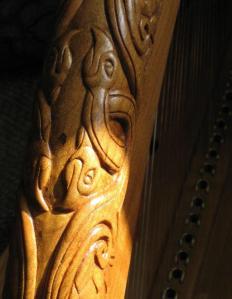
Let us discuss about wood carving in this picture. How long did it take for you to finish this one?I am actually in your album now.
Hmmmm, 80 hours maybe. But “in the round” like that is a real pain and I never clamped that piece while working on it. Or rather, I clamped it with my left elbow while carving with the right and left hand.
You seem to take harp making a step further by adding intricate designs. How do clients react to your finished products?
The design took longer than the carving – I can take a long time to settle on a design. When it’s for me, as this harp was, I want something I can live with, something that fits the harp. If a carving is for someone else THEY decide; that makes things easier.
What clients? Thus far it’s all for my wife, except one small wire harp. They liked the carving a lot, it made the harp more personal. For myself, I enjoy finding what the wood has within and adjusting to the grain. Thankfully, every piece of wood is different so even if you’re making the same design over and over there’s always something new, but hand carving adds another layer to that.
Interesting!
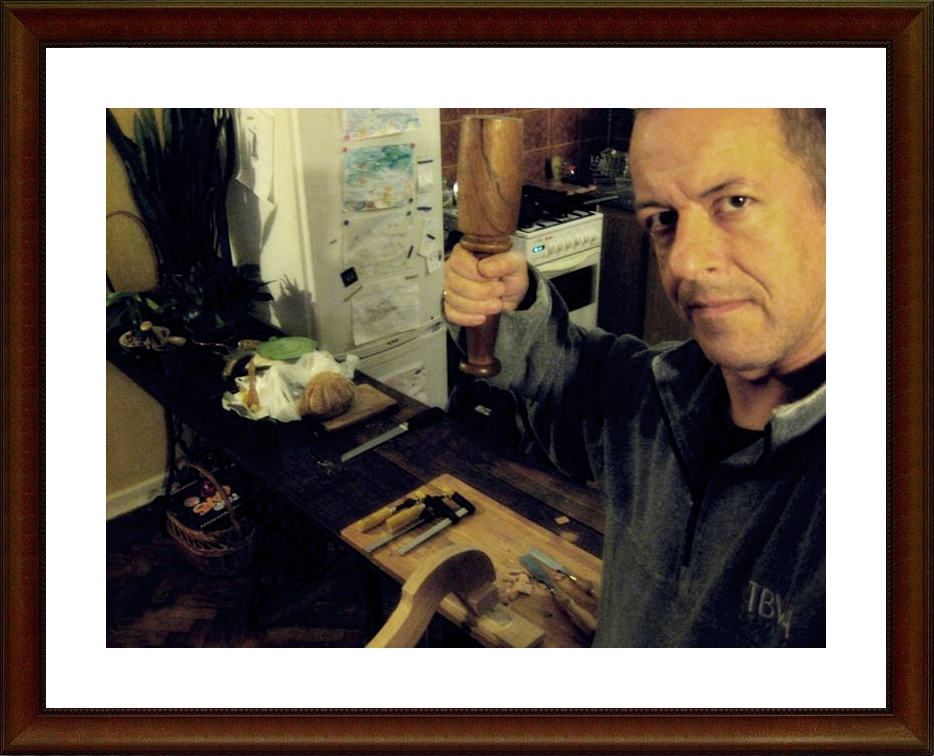
I didn’t know you have so many” weapons” ( see picture). How did you get into harp building?
I like “les armes blanches!” There’s absolutely no such thing as too many chisels. Grab and air-sickness bag, love got me involved. It was my 5th anniversary that was approaching and I wanted to give Magda something special. The fifth anniversary calls for a wooden gift so I set myself to thinking. I remembered that she had once told me that as a little girl her dream was to play the harp, but in Communist Poland that was beyond the grasp of all but the luckiest of talented youths, so she opted for classical guitar. So, I researched and bought a harp kit from Musicmakers; it was a 26 string Limerick harp in walnut. I did some simple carving to to make it truly hers and found an interest in both harps and carving. Later I made a connection with the harp maker Rick Kemper of Sligo Harps and have been enjoying a kind of intl. apprenticeship with him. Rick’s harps are awesome and he’s been very patient and kind to me. It’s now four summers that I’ve been cluttering his shop with myself and one harp project or another.
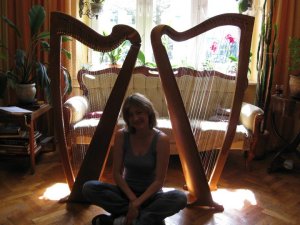
That is the best gift I have ever heard in ages!Look at these gorgeous harps she got.These are wire strung harps right? How many of these are in your house now?
Actually Magda has an irrational preference for nylon or gut strung harps. Those floor harps in the picture are nylon strung (there’s no money in my piggy bank for gut). On the left is the second harp I “built” for her, a Muscimakers Voyageur (another kit) on which she wanted carved dragons. On her right is a cross-strung harp that was the result of my second summer spent in the company of Rick Kemper. So, that’s two, then there’s my little 19 string wire harp (bronze strung) of lime and cherry, a nineteen string wire harp of cherry and maple (strung in brass), the 32 string Lamont strung in bronze and silver, and a small 22 string nylon harp bought before I decided to build a kit harp. That makes 6, and I’m currently working on a triple strung harp (81 strings) for Magda because there’s still room to throw a cat in the music room. Oh, and we live in flat that’s right in the middle of Lodz.
That one is really tiny. I haven’t seen a size like that before.
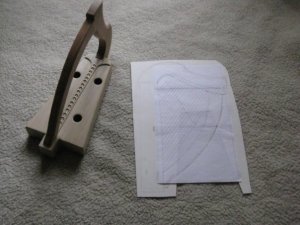
Small wire-strung, that’s the lime/cherry – fruit flavoured! Except that lime/linden trees aren’t fruit bearing and the cherry is a wild and rather unpalatable fruit bearing variety – better for cabinet making than jam making. That is actually the first harp I made all on my own. The wood for the soundbox came from a tree being felled on my way to work.
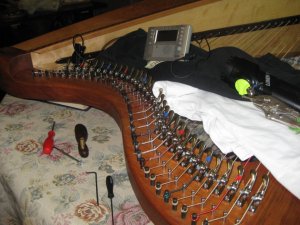
Let us talk about construction. What are the yes and no of making levers and of the kind of materials you use?
Whoa! I don’t make levers and wouldn’t want to. Levers are made by elves and dwarves in unknown lands (I do fear that some of this activity takes place in China – at least component manufacture, but I may be wrong…I hope I’m wrong. I have installed levers, and shall likely do more of it in the future although it’s not my preferred way to spend time. The levers in the picture are Camac levers and are very popular for their quality of tone and ease of use – by the harpist. Other brands exist: Truitt, Delacour, Peter Brough, Loveland, Robinson… Each type has it’s advantages and disadvantages.
Nylon and steel strings…the difference in sound, construction and the challenges making each?
Wow, esoterica. Interestingly enough, nylon and steel strings both call for just about the same vibrating length. Wire harps are strung (usually) with brass or bronze. Brass and bronze call for shorter (significantly so) vibrating lengths for a given note than than nylon. Nylon, gut, nylgut (a synthetic), or fluorocarbon strings all produce a “typical” harp sound with some being darker, some brighter, some punchier… Brass and bronze strings sound closer to a harpsichord when played with great technical skill. The wire strings have a greater sustain and typically less volume from the harp although in some ways the sound carries better. Steel strings sound more like little bells, more tinkly.
Nylon harps are lighter built than wire harps and requiring a greater length of string material for any given note. Given a wire harp and a nylon or gut harp with the same range of notes, the nylon/gut harp will be bigger. Wire harps tend to be styled after existing historic harps or harps depicted in stone carving or period illustrations. There is a greater freedom of form and materials used that can be perceived in the nylon/gut strung harp arena. Many lever harp players cry out for lighter and lighter harps, one builder even builds in carbon fiber – ultralight. You’re more likely to hear wire harp types clamoring for archaic dry joinery (no adhesives) and specific woods. All types of harps have their merits and uses.
Tim, if people are looking for great harp manufacturers, where would you refer them?
Who are they? WHERE are they? What kind of music do they want to play?
Generally I’d tend to go with one woman/man operations. You get more of a dialog, more personal service. USUALLY a better instrument. Big name companies are more interested in NOT having to perform warranted repairs and that forcibly affects building strategies and sound. It’s nice to buy local. If not, make sure a competent luthier lives within a couple of hours drive. A floor harp can be expensive to ship for repair work!
Timothy Des Roches is the guy you might want to look for if you want a harp builder. His bio says:
I live in Lodz (woodge), Poland with my wife, Magda, my son, Mieszko (myeshkoh), and my dog. Life just keeps getting better.
***
Featured video: The High Kings – “The Rising Of The Moon”
Check out the new video “The Rising Of The Moon”, from Ireland’s ‘Best Folk Group of the Year’ THE HIGH KINGS. Their new album “Memory Lane” is out now in the US.




 carved from Linden/Lime ,latin: tilia. Our conversations started over a year ago. Well, after about one year I came upon a proper log for the carved sound box (the wood needs to be green/wet), and after countless hours of searching I just found the English walnut in the right thickness (rare) in Southern Poland. Enough for many harps and pleasantly priced – WAAAAY cheaper that it would be from a US vendor, even though the wood is actually more common here than in Europe. It’s very odd to me how these things seem to make themselves available when I’m close to being ready for them even if the odds are stacked against me. Money is always an issue – I have little and wood and transport are costly – and transport is always challenging as I haven’t a car.
 😉
😉 take for you to finish this one?I am actually in your album now.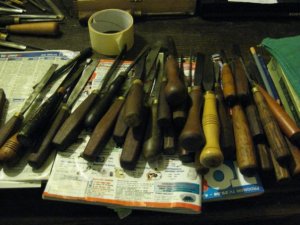
 lime/linden trees aren’t fruit bearing and the cherry is a wild and rather unpalatable fruit bearing variety – better for cabinet making than jam making. That is actually the first harp I made all on my own. The wood for the soundbox came from a tree being felled on my way to work.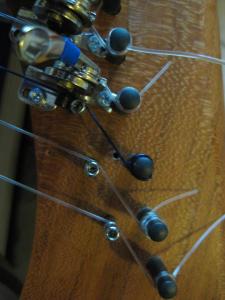
 Celtic Music Fan