Today, we are going to Brazil and listen to Irish songs. I can imagine that ‘buffering data’ from old computer look from your face. How is that possible? Teleportation is not yet in the market. So how?! Well it’s easy. Just close your eyes and listen to this album. I am sure you will float too. And I can imagine that ‘buffering look’ suddenly transformed into something else. But whither you are going to throw irony this way, we can’t deny the fact that Celtic and Brazilian fusion is amazing!
I just love this guy’s music. It sounds so refreshing. It’s like letting someone wear a different pair of shoes for the occasion. So fans of Gilberto, Jobim, Nascimento and Mendes will appreciate this one. Canções De São Patrício (Saint Patrick’s Songs) is a new release from independent digital label Progshine Records.
Rafael Senra is a name you should put in your memory because I think his music deserves a lot of exposure. He is a musician, writer and cartoonist. On August 2017 he released his first album called Canções De São Patrício (Saint Patrick’s Songs). On this record Rafael took famous Celtic songs and made Portuguese versions for them. Something that, up to now, was unheard of.
Damasqhs –
Vocals, Djembe, Djuns, Bongos, Guitar, etc.
Rebecca Holman –
Vocals, Bougaraboo etc.
Tesea Dawson –
Vocals, Flute, bass, keyboard Djembe, etc.
Brandon Mullikin –
Bass, Guitar, Djembe
Tyler Neitz –
Gutair, bass, keyboard, various percussion, etc.
Chris Bush –
Native American flute, penny whistle, bass, djembe, djuns, et
Stirring both the heart and soul: Tuatha Dea satisfies one’s musical cravings.
Bagabi inspires what is beautiful and primal. It is like being transported into a world during the time of dinosaurs. The use of didgeridoo further enhances this experience and I feel my imagination open up. It gives you that weird sensation especially when you listen to this track with the lights out. I like it when a song gives me goose bumps. It means it has achieved something greater. Music is supposed to be like this-something that touches the soul. The African inspired chanting and the eerie deep male vocals (think Brendan Perry) further enhances the effect.
This kind of style is also dominant in other tracks like the poly-rhythmic induced The Hunt(corners). The track starts with percussion then escalates into a melodic devotional chant piece. There is also the traditional inspired Mulligan Stew that should have been used in TV series like Merlin. The remaining tracks bend on the folk/rock side. The female vocals are strong reminiscent of Stevie Nicks and Annie Lennox. I think this is great because I really like singers who sound like women and not like little girls. Songs like Falling Down, Celtic Woman (Mavis McGee), Tonight and the heart hurting Skye Boat Blues will leave you contemplating lost loves and missed soul mates in fishnet stockings and thick black mascara.
Call this an aside but I really love everyone’s fashion style here. Tuatha Dea is a band that is both beautiful to the eyes and ears. A perfect companion for a long rainy night with a single candle.
Formed in 2009 by Lead Vocalist Damasqhs, Tuatha Dea has an eclectic sound incorporating tribal drumming into the Celtic music genre.
Biography
Tuatha Dea first began with a group of close friends gathering together once a week to drum for kicks in 2009. Soon after the band began to write original music and playing at local social gatherings. As they began to build a small local fan base it was decided to try their hands at taking the show out into the public eye. They eclectically mix Scotts Irish, new age, traditional and modern day music to produce a unique variety and blend of rhythm and melody. As the fan base grows, the group continues it’s evolution and is constantly re-defining it’s perimeters. More info on Tuatha Dea will be coming soon and keep your eye on our website www.tuathadea.com!
The original music of the ancient Celts, which, paradoxically, with the “Celtic” music related only marginally, however, we know almost nothing … Vojtěch Jindra
The whole of Czech Republic is alive with folk music. Emerging from this place are the three folk bands, Taliesyn(more into folk and not really Celtic), Irish Dew( in which he left in 2006 due to musical differences)and Bran. They all have or had at one time one person in common- Vojtěch Jindra(pronounced as Woy-tesh Yin-dra) His current project Bran (also means raven in Breton) have been earning followers and positive reviews from all over festival as well as websites. My introduction to them was through a youtube post by a friend several months ago. From then on I keep hearing them through posts by Celtic music enthusiasts-mostly my network friends. This network ‘cloud’ of like-minded people also determines the kind of musical current that exists these days. It is good to have them around because they are responsible in tweeting, posting as well as blogging about the trend in the musical culture that I subscribe to. I know I am part of that cloud and it is good to be in this age where sharing is easy. I did a bit of researched and was finally able to find Vojtěch and made a schedule to include this interview between his tours.
A graduate from the Faculty of Arts at the Charles University (Czech Language), he joined Bran in 2006 and is also the composer of several songs for all the bands he is working with. He has a website www.keltskahudba.cz, where he links all of his musical connections. He also started his own label to promote independent folk music. He is with us today to talk about his work with the band Bran.
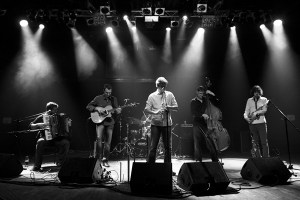
Bran brings Breton and Czech musicians together. If Bran means in Breton, the raven, which in Celtic legends is the messenger bird, then he has brought the music of Brittany to Central Europe and a little wind from the East to Brittany The musical instruments used and the diverse influences and origins of each musician create, give, put, bring together the particular colorfulness which makes Bran original. Oriented towards dance and songs of the sea Bran offers a rich and varied repertoire made up both of the compositions its members and traditional Breton tunes.
Current lineup
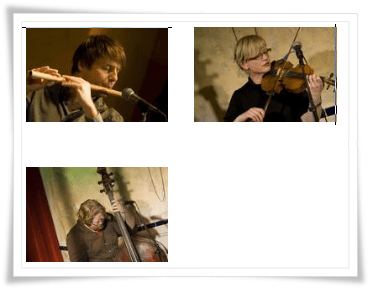
Robert Fischmann-vocals, flute;
Vojtěch Jindra-ak. guitar,
Tomáš Görtler-accordion, vocals;
Michal Wróblewski-saxophones, clarinet;
Petr Tichý-double bass;
Jan Chalupa-drums, percussion
Your album discography is available through your website and fans can listen to the tracks off the album In Concert(2010). I have to admit I find your band’s version of Tri Martolod quite refreshing. I hear elements of Jazz and also that distinctive Breton sound. I am confused…your band is based in Prague but in your concerts you speak in French. Are you aiming more in the French/Breton crowd rather than your native Czech?
Both I think. Our ex-leader Dewi Pajot came from Brittany, so he spoke in French. But yes – we are Czechs and we are based in Prague, Czech Republic.
You are the band guitarist and percussionist. You also manage the overall direction of the music. Do you find it at times exhausting to do a lot of creative and well as corporate stuff?
It can be a challenging as well as exhausting thing… there are so many things to do in terms of the overall direction of the music, how things are looking up or sounding like during tours, the business aspect … But I love it, it’s my life.
Five albums in a span of 12 years! What memorable things happened to the members in this span of time and also to you?
Many good and bad things in our personal as well as working life… One of the highlights of our career I think was when we played as supporting band for Alan Stivell during his concert. And we had to survive departure of our founder and friend Dewi Pajot. There were so many memorable moments, the jams and the beautiful melodies we created together…
Describe the Bran ‘sound’.
I have a problem describing it even in my native Czech. I don’t know – maybe natural acoustic sound with a kick. Simply – combination of voice, acoustic guitar, accordion, saxophone, flute, double bass and drum set. It’s eclectic but at the same town distinctive since it reflects the musical background we have.
You wrote an interesting piece about the Celts and Celtic music in your own site. I found that everyone has his or her own opinion as to what the ‘Celtic’ sound is…has it been easier to market your music in your country rather than say in Ireland and the rest of the Celtic nations?
It’s easier I think. A lot of people in the Czech Republic are open to this kind of music. But I am not enthusiastic about this label – Celtic music. Who knows really what ancient Celts played?
I noticed you have an eclectic taste and that includes listening to Depeche Mode and other music. I noticed that most musicians in this genre are more open minded and well exposed to different types of music compared to mainstream listener..Thoughts on this?
It’s true. For example, our bassist Petr Tichý began playing as a fan of metal, but now he’s a leading jazz musician in his generation in Prague. We are open- minded about music. An yes…eclectic.
Your schedule is picking up speed as this month is more about live performance. What are the things that remain constant when you and your band go on tour?
I am not really sure . When we’re on tour, exhaustion can happen but it is the music that drives us. When we play, we are not aware of how tired we are, we just know that we love what we are doing and also love the fact that the listeners respond to what we play. When we are home after touring, we don’t really indulge in vices.
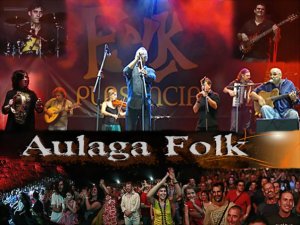
Music is an emotional persuasion. Anyone who deals with it whither directly as a composer or passively as a listener will know what it takes to really appreciate it. It is a feeling that sweeps over you that sometimes, you are helpless under its spell. Funny that that very thing that inspires us to do things can be both a blessing and a burden. Lucky are the few who made it by finding an outlet. Such is the music of Aulaga Folk.
Juan Carlos
Passion is evident in any Spanish melody. That is why we always see Latin singers as emotional and sizzling. It is that sensuality that drives the artists to bring out the best in what they do and also draw something from the listeners. But to find its very appeal and distinctive style then fuse those with other styles can be a transforming experience.
There are different elements that colour the sound of Aulaga Folk. From the haunting Gregorian inspired vocalize that finds its way into some of the tracks, to the lively poly-rhythms of Jazz and World music, the band have something for everyone. Borrowing heavily from the Celtic sound of Galicia, Asturias, and the folk music of Spain itself, this unique band are led by Juan Carlos. The the new album promises to enchant as well as to inspire listeners with its grace and sophistication. Here, he explains his thoughts about the band, the music and also how it is like carving a name for themselves in a world where styles can be an elusive thing.
Why the name Aulaga folk?
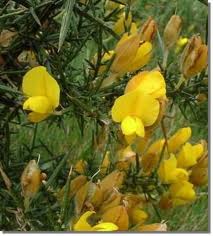
Aulaga is a plant that grows abundant in our land in the mountainous region. Once, the farmers hated it because it is a beautiful plant with yellow flowers but has very sharp spikes which does injury to livestock and had to be avoided. I decided to take the name of this plant for the band.
How do you describe your style of music?
We try to make music without borders. We can call them a combination of ethnic rhythms and progressive folk. Anything that smacks of tradition seems very interesting. It is the music of the people and for the people . We keep the original root of the songs but we try to adapt to the times. Everything in life evolves and folk music as Celtic music that we know must also adapt to new times. It allows us a fresh approach to the sound.
Can you give us a description as to what the new album is all about?
Aulaga Folk have 3 albums already , the first “FromAmbrozOur Way” is a compilation album of popular music of our valley. It is very traditional and also our first attempt in releasing a recorded album. The second album “Not Bad Wood” incorporates new rhythms and melodies. It also showcases how we evolved as musicians. This third album is released in 2011, “A quarter” and it shows, or so we think, a greater variety of ethnic rhythms mixed with progressive folk. We have found our way into the work of collecting and disseminating traditional culture, not only in Extremadura, but in many parts of the world.
Your music is lively and infectious. Was this intentional?
The folk music gives us plenty of feeling –be it joy, sorrow, work songs- in short, everything that is related to the life of our elderly. The treatment of the songs is to try to make them as realistic as possible with the environment where they originated from but at the same time, trying to give them our own touch as a group and that leads many of them to be festive and contemporary. We always try to respect the richness of the original melody, but by nature the music conveys feelings, sometimes joyful and festive and other times melancholic and profound.
What’s fun about recording the new album A Quarter?
The most fun is doing what we like to do best: in this case translate the work and dedication to the collection and dissemination of popular music in all its possibilities. In the current album we have been fortunate to have great collaborations of national folk masters: Eliseo Parra, Joaquin Diaz, Manuel Luna, Javier Ruibal, and other artists who participated in this work, which has filled us with satisfaction and pride. It has been a luxury to work with these great masters of music and the collection ofroots music. We had fun and learned a lot from the wisdom of established musicians.
Aulaga:a beautiful plant with yellow flowers but has very sharp spikes which does injury to livestock...
What were the challenges doing the new album?
Trying to get the traditional music and make it sound current was quite a challenge. We are trying to reach out to young people today to let them become aware of their past which is for the sake of understanding the present so that we will walk steadily forward. Also, to discover what their grandparents were doing not so long ago, the roots and origins of the things that we are living right now, and finally to have a sense of history and a past that we are trying to retell. I think these were the challenges that we had creating A Quarter.
What keeps you guys together and what drives you to keep steady during tours and festivals at this time?
In these difficult times where the economy is so affected, most of the budget cuts are made in the areas of culture. Many of the festivals organizers do not know whether they will continue due to the budget cuts. The future is uncertain this 2012. So we reflected in our past, our roots, and we hope to continue tour with our work. We want to meet new people which is the most beautiful of the tours, and discover new places, enjoy the landscapes and its people-these are really the most important and beautiful part of being in this business.
My friend Christi introduced me to this band yesterday. And since then I could not get rid of these headsets off my head. Whither you are listening to large surround speakers or the intimacy of your earphones, you could not stop your feet from shaking and tapping.
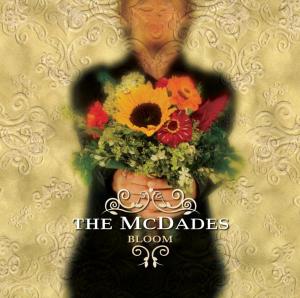
Throbbing bass, hypnotic hand drumming, high-octane playing; the things that make the sound of siblings Jeremiah, Shannon and Solon – The McDades. I am writing this article while moving my head and smiling. I couldn’t help it. Theses guys are sugar and pepper. All the more reason for listening and collecting Celtic music we now know as hip and refreshing. Forget your mediocre top 40 radio and college campus music, this is it! This is high energy , the thing that new Celtic music should be like.
The band are another export of the burgeoning Canadian Celtic music scene. The fusion of Jazz, World music and even some of that French folk makes their music sound like a buffet . Yeah after a full listen to Bloom it’s like having that full meal surrounded by a garden of exotic flowers…makes you feel the good vibration.
Musical style: Celtic, World, Jazz
Origin: Edmonton, Alberta
Achievements: Bloom – Free Radio Records 2006 (2007 Juno Award Winner – Best Roots/Traditional Album (group), 2007 Independent Music Award Winner – Best World Album Traditional [1], two time Canadian Folk Music Award Winners Best World Group & Best Instrumental Group)
 Celtic Music Fan