From the a capella verse of the first track Duthaich MhicAoid/Mackay County, one can’t help but be taken by the highland singing of Fiona J Mackenzie. The voice and Irvin Daguid’s piano are like two old friends who finally meet-complimenting with beautiful results. All musicians involved in this project are exceptional.
Fiona has the nuance and lightness of voice but with just the right weight to add an air of mystery and authority. There is a combination of sweetness, palpable hope and poignancy in her singing echoing the sentiments of the Scottish exiles all over the world.
According to her, A Good Suit of Clothes is a title taken from one of the best known emigrant songs ‘ Mo Duthaich’ from South Uist. I am aware how Uist in the Scottish Hebrides have been a continuing force in the Gaelic revival with archives of songs being recorded by artists such as Julie Fowlis recently.
The production is superb and polished to flawless quality. The sound is crisp and clear with minimal reverb to make the instruments sound lush and alive.
Some of the tracks like Oran a Chiamalais/ Song of Homesickness and Illean Bithibn Sunndach/Boys Be Happy are fast toe-tapping tunes with acoustic guitars . While tracks like Cuir Culaibh Ri Asante/ Leaving Assynt Behind has a melancholy atmosphere and a haunting melody.
A Good Suit of Clothes is what happens when exquisite talent meets excellent production techniques.The liner notes are very helpful. All Gaelic songs have English translations . Fiona is right when she suggested to me the importance of the liner notes beside the music. On top of that, she also provided her own explanation and the story behind each songs, the composers and the lives they led .
If the purpose of this album is a message in a bottle to those immigrants hoping they’d return…then it is a successful attempt wich will not only bring back long-lost friends but a cavalry of guests , the passionate new comers who are drawn to the beauty of this type of music.
Credits:
Irvin Daguid (Piano and harmonium)
Fraser Fifield (Whistle and pipes)
John Goldie (Guitar)
Mary Ann Kennedy (Clarsach)
James Mackintosh (Percussion)
Anna Massie (Cittern and guitar)
Ed McFarlane (Double bass)
Mr McFall’s Chamber-Clare Sterling (violin) Robert McFall (violin)
Jane Atkins (viola) and Su-a Lee (cello)
Ian Muir ( Accordion)
Guy Nichoson (Percussion)
Simone Welsh (Fiddle)
Singers: Darren Maclean, Katie Mackenzie, Sineag Macintyre and Cathy Ann MacPhee
Thanks to geekbynight for posting this video and added info:
Scottish singer and educator Fiona J. MacKenzie sings Abu Chuibhl’. She is joined by her Gaelic Singing and Language Student Doyle Raines. This is part of a concert Fiona gave in Jimera de Libar, Andalucia, Spain on May 2nd 2010.
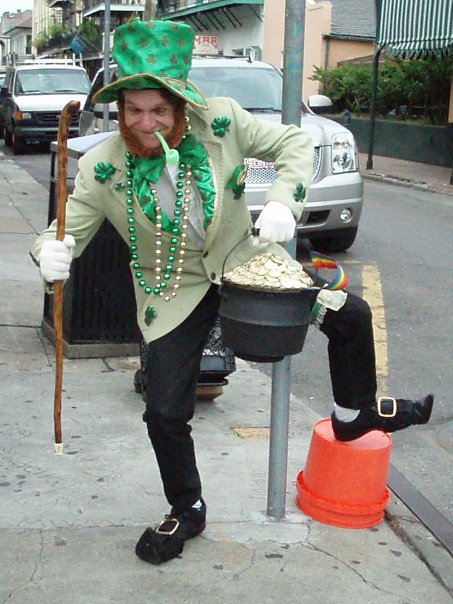
…..I love New Orleans not just by giving us Anne Rice, Poppy Z Brite , True Blood and a lot more of exotica. What’s next? Maybe Mr Leprechaun will have his toe-tapping green humor on the beautiful side of the French Quarter. Here are some pics from facebook’s Irish New Orleans
…….The album teaser of Dom Duff is out. This should thrill fans of Breton music with language entirely in Breton. Expect more exotic sounds and energetic performance from the guy himself.
…..Catch Welsh band Mabon performing at Festival Interceltique de Lorient in Bretagne France , that going to be in August 6, 2010. For the performances in the month of August, check out their tour schedules link:
……Another musician from Wales Oli-Wilson-Dickson combines the adventurous mood of Gypsy music and the Celtic music’s triumphant tunes . If you are into Balkan stuff, or anything Central European with a twist of jig then this is your music. You can also visit http://www.fiddle.org.uk/
In music , improvement does not necessarily mean changing of sound. When you improve, you are simply polishing your style or progressing in the style you have already cultivated. What applies to restless disposable Pop music does not mostly apply to our musical culture. We adhere to tradition for its own sake. Tradition is all we have or else we will loose our credibility.
That is why it is funny when critics start to say something bad about artists who don’t change their sound. It also goes to show that whoever these critics are, they have a serious case of ADHD-always looking for a different sound or the shock value which has nothing to do with the technical aspect of music. Now I do have that kind of affliction, only that it is mild and CERTAINLY not with music which I write about!
These critics have no respect for the craft. And we know based on their reviews that they haven’t listened to the complete albums themselves (track by track and liner notes) to understand the intention of the artist behind. These critics are not here to preserve civilization or improve it. They want to ruin it-hastily, as an errant child would. And they get paid to do it.
But for us serious bloggers (who aren’t paid to write but write because we love to do it), we keep our jobs so we can do the things we love to do including blogging about music that really matters.
Now not to divert from the nature of this discussion, we might take into other forms or styles through time (as what Alan Stivell or Donal Lunny does), but it is through the instruments used, the guest players, and the definitive sound that this brand of music really shines with.
Oftentimes new artists bring something fresh to what is already there but we know that straying away from the bonds of what the music is defined(even teetering on top 40 radio fame) can sometimes compromise its integrity. And I don’t know about you but for me , that standard to which a music is defined as Celtic should not narrowly be based on its acoustic form-therefore ignoring the richness that electronic artists bring to the fold. After all, it not just music and style. It’s about sound and perception too. So everything has to be considered as long as it brings forth the spirit.
And now for the news….
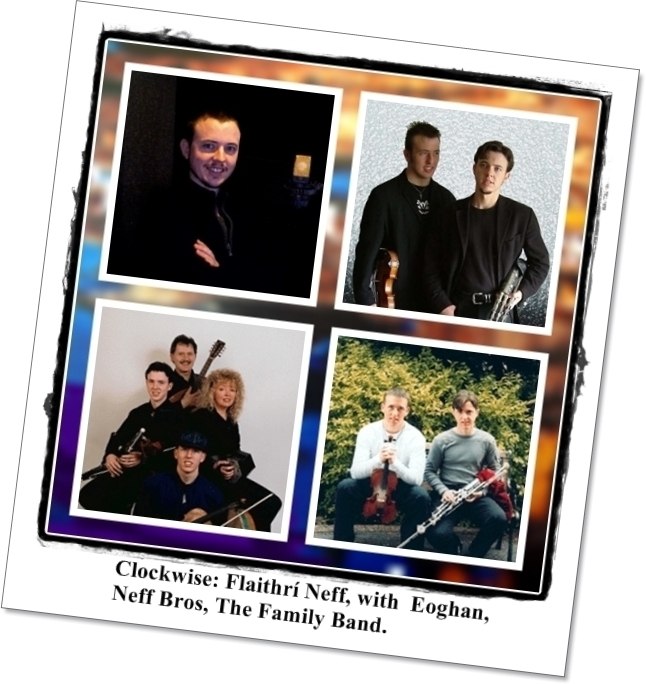
If you want to hear the future of traditional music, then you better not miss Flaithrí Neff’s musical projects. From country Cork, Flaithrí was joined by Eoghan that form the Neff Bros, bringing together passionate and innovative playing of traditional tunes. In the early days, they were in a family band called ‘Teaghlach’, composed of researcher, composer and musician Flaithrí Neff (flaithrineff.com) and Eoghan . The duo is joined by parents Muireann (Marion) and Éibhear.
His latest project is Partholón. According to his site: recounts the gripping story of a mythological Sicilian prince in the ancient Irish text, LEBOR GABÁLA ÉRENN (The Book of Invasions). The 9-minute piece was performed with The Cork Youth Orchestra under the direction of Tomás McCarthy, Cork City Hall, April 25th, 2009www.myspace.com/neffbros .
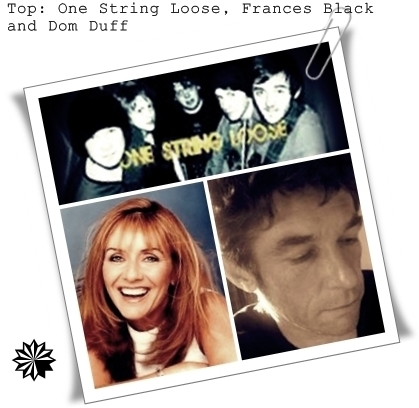
Cited by Nanci Giffith as the sweetest voice of Ireland , Frances Black (Twice Winner of the“Best Irish Female” IRMA Award”) continues to charm audiences all over Ireland with her live performances and well-crafted recordings. Recently her own RISE foundation has achieved more accolades. Check out http://frances-black.net/news/news.htm for your source of the latest Frances black news and concerts. Her latest double CD album The Essential Frances Black can be purchased here Contact: Manager Brian Allen, E-mail:brianallen@ireland.com, Publicist Andrea Smith E-mail:francesblackpr@eircom.net.
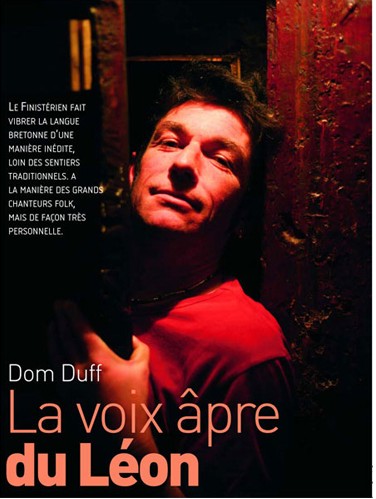
Breton tradition is alive and well because of Dom Duff. I recently featured a link to his new single here (please use the search engine on the upper right to refer to old articles as well as names of artists you are looking for). Dom (voice, guitars, mandolin, bodhran) along with band members Nicola Hayes : violin, Dom Bott : electric & acoustic bass and David Seite : percussion; continue to bring innovation and grit to Breton tradition with their crafted recordings and live performances For an in depth look at his band and music , please refer to www.myspace.com/domduff and WWW.DOMDUFF.COM and the Interview I did for him.
One String Loose is a band from Caldicot Wales composed of five members: Scott McKeon on fiddle and banjo, Jack Stewart – acoustic guitar, electric guitar, bodhran, Joe Brady – whistle, low whistle, flute, Baz Barwick – bass and Owen Emmanuel – drums. The band has been building reputation with their dynamic renditions of traditional and original materials. I myself was swept away upon hearing one of their songs for the first time. According to their site: One String Loose have always recognised that their style of music is deeply rooted in dance, and have sought to contemporise it with grooving rhythmic patterns from the bass and drums, intricate accompaniment from the guitar and foot stomping melodies from the fiddle and whistle. As a consequence, a gig that doesn’t get at least a substantial part of their audience up and shaking has now become a rarity. Sounds really awesome eh? They have cemented themselves as the who’s who in the music scene which according to the site: The past few years have been exceptional for One String Loose. The band reached the finals of the BBC Radio 2 Young Folk Awards, followed with a polished performance at the highly prestigious Glastonbury Festival on the Avalon Stage. Breath taking performances in Poland and France further cemented their popularity in Europe and plenty of gigs up and down the UK helped the band to progress to where they are now. More recently the band released their second studio album “KUMQUAT” which has been received superbly both by critics and fans. With that in mind, never go off your radar. You can catch them as they tour UK this July(the last happened this June 19): http://events.myspace.com/Event/3964511/The-Big-Session-Festival . More on www.myspace.com/onestringloose and http://www.onestringloose.com
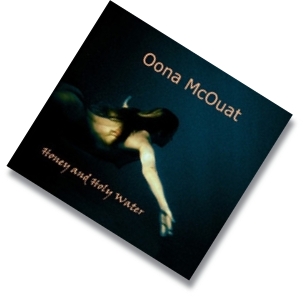
If you haven’t got your copy of Honey and Holy Water by Oona McOuat yet, then don’t miss this jewel of an album. I have been listening to it back and forth for more than a month and I never get tired of it because it has been beautifully conceived and artfully crafted. Oona has the gift of mesmerizing melodies, a visionaries’ depth and a perchance for eclectic arrangements that truly mark this album’s strength. I have a lot of personal favorites including This is A Prayer and Sleepy Maggie but I am sure you will find your own. Listen to her and I am sure this I the kind of album that will get worn out after a lot of plays. Listen to www.myspace.com/oonamcouat, visit and buy the CD at www.oonamcouat.com. The Oona McOuat band: Oona: Harp and voice, Corbin Keep: cello, electric guitar and back up vocals. Richard Lee: sax, flute, clarinet, pennywhistle, recorder, guitar & back-up vocals and Chris Bertin: didgeridoo & percussion. I tell ya, the instruments speak for themselves!
The new video by Barleyjuice ‘Weekend Irish’ is now available for general viewing on on YouTube. The band’s latest album Bonny Prince Charles is now out. Original link is : http://www.youtube.com/watch?v=lUxhIAJYwWo I have been enjoying this video!
There are so many reasons to go to France. Not only that it is the country hosting the biggest Celtic music event called Interceltique Festival, the west coast is also home to Breton music. There are so many musicians that are already out there stirring the scene with their brand of Celtic music and some of them made it to our ears. Let me present now
Carré Manchot
This I got from the official website:
Carré Manchot is a traditional dance music band from Brittany; it was founded in 1986 by Remi MARTIN (box accordion), Jean-Claude RIOU (fiddle), Herve LE LU (bombarde) and Gilbert LE PENNEC (guitar), who still plays with the band today. The same year, they produced their first recording: “Tabalich”.
In 1988, Remi and Jean-Claude left and were replaced by Ronan ROBERT (box) and Ronan PINC (fiddle). After two albums (“Mab ar Miliner” and “An Disparti”), both Ronan left the band and three musicians joined: Yannig ALORY (wooden flute), Erwan VOLANT (bass) and Yann-Loïc JOLY (box accordion). Together they released five albums: “Noz!” (1996), “Riboul!” (1997),”Liyannaj” (1999, featuring Guadeloupean group “Akiyo Ka” and breton singer Patrick Marie), “Degemer” (2001), “Liyannaj Live” (2003). In 2005, Stéphane SOTIN (percussions) replaced Erwan Volant and in 2006, Carré Manchot recorded a new album “Laÿoù” and celebrated their 20th anniversary on July the 13th in Mûr-de-Bretagne, along with many Breton musicians and bands.
In 2007, Herve LE LU, founding member, and Stephane SOTIN, percussionist, hit the road for some new musical adventures…
Uilleann piper Loïc BLEJEAN joined in January 2007.This new line-up keeps playing with the same energy that has made Carré Manchot one of the most acclaimed Breton music band for more than twenty years on the dance floors of festou noz in Brittany and elsewhere…
My personal observation:
This is quite unique coming from Breton music. The melodies are gentle, the instruments are not the usual wall of sound you would expect without the bombarde and the binou. It is also interesting to note that the band has been around since 1986 and yet they still play with the same energy the day they started. They are still here, still making beautiful music for us. And I think this is what makes the rest of the guys wonderful.
Wow, I love the energy of these guys. The instruments are something you would like to dip your ears into and experience a moment of bliss. Sweet, spicy and a lot of Celtic Spirit. So watch out for these guys.
Just received an update from Dom Duff’s twitter about a single (radio edit). I listened to it and I like it. You can also check out our previous interview with him above this page.
As always it is not the destination that counts but the journey. It is impossible to get into the center of ourselves when we have inhibitions, hang ups and the tendency for stereotyping. Music speaks in any language, be it Irish, Breton, Welsh, English or Latin. It is our emotional responses to it that really matters and I think that is the core of music-or certain kinds of music. There are those who create songs whose language becomes the secondary importance. There are even those who create vocal music that transcends language …when language becomes beautiful in itself not because of what it is trying to convey.
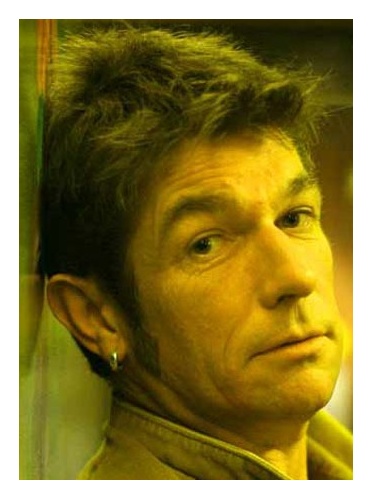
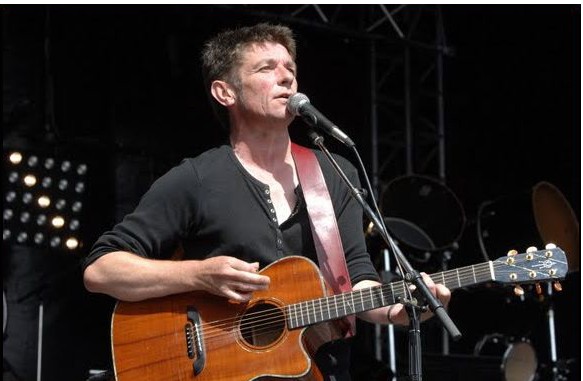
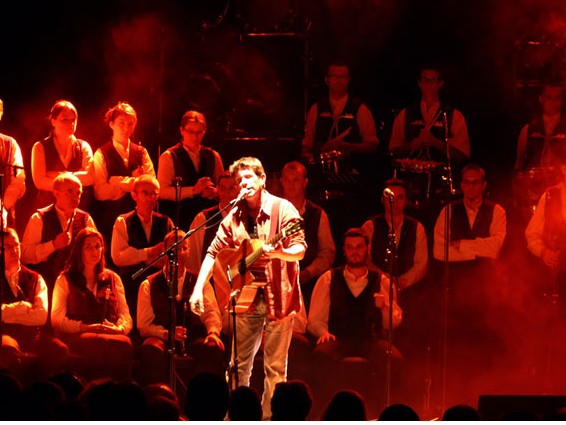
We have a guest this weekend. His name is Dom Duff. Since we are in our Breton Odyssey, why not get someone here who is both musician and native speaker from that region? His music is vibrant, percussive and a totally different experience. If you love World Music in general then you will like what Dom Duff is doing. You can read his biography on the main site as well as check his releases. So far he has three albums out ! (Photos coutesy of domduff.com)
Dom Duff Music Sampler: Click on the titles to be directed to vox.com
I initially told him that I lost my initial questionnaire and that I had to do it all over again over coffee.
-Welcome to our interview today Dom. How are you doing?
I am fine, having a cup of coffee too, and working hard, after buzzy summer, strumming my fingers back on the guitar.
-Every year, Festival Interceltique de Lorient draws a ,of people as well as musicians from all over the world. Tell us about this phenomenon that has become an international phenomenon.
Yes, it’s a great event here in Brittany, a real amazing spot to share music with an international audience, and to hook up with musicians from all over the world.
That’s started 39 years ago, and the aim as always been keeping Celtic links as strong as possible.
-This event has become a sort of United Celtic colors of the world. Countries from Nova Scotia Canada up to the British Isle have their own special festivals. What’s the importance of keeping these events alive ?
Many efforts were done in the past years to expose every Celtic culture, bringing in artists from different countries and giving them exposure to the audience here, which is varied and wide. It comes from French families discovering Brittany during holidays to an all music addicts coming from Italy, Germany and America. The mix in the audiences is really interesting. Despite the music styles-which swings from drinking bands playing drinking songs at the fringe, to real international headers playing in another venue. It is the main place to put under the spots our cultures.
-Bretagne or Brittany is part of France, and yet uniquely Celtic. What do you think makes Brittany proud in keeping that tradition alive?
Mmmmm… You have a lot of time to spent?
Brittany is an old nation coming from pre-roman Celtic natives. Then, Brithonic migrations started about 5th century. Mostly Brithonics (Welsh, Cornish) and Gaels also (Irish) came over here. It was a kind of Celtic clans coming back in another Celtic land, so the Roman influence was out of the game. And all those ways of life remained strong, powerful (language, legends …).
And this way of life is still strong. By now there’s about 300 000 Breton speakers; they were about one million in the early twentieth century. The reasons are: France has done everything to eliminate the language, and also the decline increased with the two wars.
But at the same time, I am not a kind of strange Breton speaker. The language was strong at home, and a lot of people which are not fluent inBreton, keep theimaginary structure of the language when they speak French. It happens, I think, in every country where both languages are spoken.
-You are a musician composing your own original Breton music .How is your material different from other artists going through the traditional road and how is it similar as well ?
The main difference for me,is that my stuff could be sang in every language. You know, I compose with my guitars, adding chords and licks as I want. Then, the language comes in. I like to use Breton syllabs beating the music, and that’s the way I do.
In the meantime, I think the rhythm of the words and accentuations remind the traditional material, of course. But, to be honest, my north Breton accent is stronger than the other one maybe.
-Tell us about your former band Diwall. How is this music you are creating now different from the band?
Diwall was a band for dancing music, playing Fest-Noz (Breton ceilis). We played mostly tunes, traditional ones, or our own tunes written on traditional scheme. I used to sing three or four songs only, it was a kind of frustration for me.
-I read that your music has been classified as “power folk”. Thoughts?
Yes, I’ve heard about. Someone in UK reviewed a gig using “power folk”. I think, power was about my guitar strumming, and my broken strings? I like that : playing powerful acoustic guitar , using two or three open tunings; but I need at the same time two or three instruments around me.
-How did you get into music and chose to lead this path? You could have gone into straight ahead rock and roll but why this style?
I’ve started at 15, playing folk and rock stuff in the mid 70′. But, quickly I joined friends of mine starting a band playing Breton dances, and the line up was bass, drums, etc. They asked me for playing guitar. It was a great occasion for me to perform, and I teamed up with this village band.
I’ve always been a real rock ‘n roll fan, but in my area they were no real rock ‘n roll band. North Brittany is not Manchester or Glasgow, ha ha !
The only good thing we’ve been able to do at this period, was organizing festivals in Brittany with folk and rock bands from abroad.
-I noticed that there is this distinctive vocal style in Brittany. Can you elaborate how it is different from say the style of singing in Ireland, Scotland or other regions?
The reasons are the language I think, an also the accent. The Breton accent is stronger than Irish, because Breton accent is closer to French accent. And at the same time, Irish pronunciation is closer to English, perhaps ? Breton words use more P, K, T, sounds than the Irish. Irish is more sweet, to my ears.
Breton tunes are also high tempo sometimes: listen to the “Kan ha diskan” style, it’s a kind of rap. I am sure you could find on the web pages speaking about.
-Who are your influences upon growing up?
Influences? mmmm … difficult.
I can mention: from Led Zeppelin to old fishermen and farmers in my village.Lol.Especially charismatic artists like Kevin Coyne, Horslips, Luka Bloom, Pogues, Stivell, and an unknown band from Brittany STORLOK, crazy people! Worth a listen . Their EP was in every jukebox pub in 78. It was rock in Breton, awesome.
But I’ve always been listening rock, folk, Irish, Scottish, etc. And Breton of course…. African singers too. I love listening guitarists from Africa, they sound great. It’s hard to answer you know.
-Most of the traditional instruments in Brittany can get really loud. How loud can a bombarde get?
It’s a dog bawling, the tail stuck in the door.
-I am listening to the great Alan Stivell while I though about the questions to ask you. He also spoke fondly of you and your music.You contributed two tracks on his album which will be released on the 22 of October based on your blog. What did you enjoy about this project?
I’ve been really impressed with Alan Stivell when I was 13. I discovered my culture could be really as good as others cultures. When he spoke about me, I’ve been, to be honest, touched. I’ve just launch the second album, months before, there were good feedbacks with the media, but not real success. It was quite difficult for me to keep going on. I said to myself “kick in the ass now and straight ahead !”.
Last May he asked me to sing for his new album. It was great for me, as I respect those people who are still going on, after years . Nice.
-You are also involved with the animation Brendan and The Secret of Kells. I think it’s is a beautiful animation with an interesting story line. Tell us more about it.
No, I just add a few voices for dubbing movies in Breton. They need different voices for that, so I am aboard the dubbing boat, but I am not a real character. There’s a lot of others people around. I can be a doorman in Columbo, a drunk fellow in an American pub, etc. But, there’s a lot of fun.
Brendan and The Kells is good, because it is quite a new movie which is amazing for children and adults. Also my Irish friends Kila released the soundtrack.
-What bands/music are you listening to these days?
If you need a few names : I could mention Luka Bloom, a US band call 2 Dragons, WovenHand, African bands also (Tinariwen, …), Calexico, the Levellers, …
– You have a blog http://duffdom.blogspot.com .As a blogger myself, I really admire artists who take time to write their own thoughts for people to read. .How and why did you decide to put up a blog?
I needed to add news to the website, that is accessible for comments. I don’t need another page for that. But the blog is part of the website and it’s easy to keep connections.
You can also access lyrics & translations by clicking the label SONGS, at the top right of the blog. There’s a few translations in English, Flemish, Welsh, Irish and Icelandic.
-I know this interview has taken a lot of your time and I am really happy to get to ask you these questions. What’s your message to our bloggers and readers who love Celtic music?
Feel free to listen Breton music and to share it all around the world !
-And how to you say “ I wish you love and peace in Breton?”
That is : “Hetiñ a ran deoc’h, karantez ha peoc’h !”
-Anything you wish to add?
I am just starting to work on a 4th studio album (the last one was Live and Solo) I’ve asked my friend Dom Bott (bass) to join me. We were both in Diwall 15 years ago. Nicole Hayes, an Australian fiddler-also based in Brittany is also playing and David Seité (percussions).
 From the a capella verse of the first track Duthaich MhicAoid/Mackay County, one can’t help but be taken by the highland singing of Fiona J Mackenzie. The voice and Irvin Daguid’s piano are like two old friends who finally meet-complimenting with beautiful results. All musicians involved in this project are exceptional.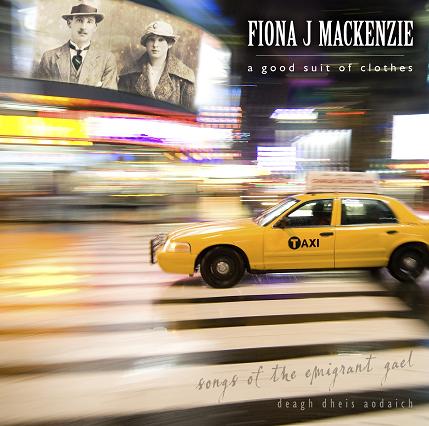
 Celtic Music Fan