Christiane Cargill:The Fairy from Orange County

  If you have been searching in the Internet for a female vocalist with Chopin’s piano talent then you might have landed on Christiane Cargill’s Celtic cafe. She’s from Orange County California whose lineage are of Irish and Scottish. In Metamorphosis, she pays tribute to her heritage but at the same time added her own modern twist.


  She studied Classical music at an early age but found her first love in song writing.All of the songs in Metamorphosis are piano based. If you love the way Tori Amos tinkers with the keys, but with the haunting touch of Nightnoise , then you’d buy this album. If you love the vocals of Evanescence‘s Amy Lee (but way better) then yes! this is for you. There is a sunny side in her renderings that make you really dream of green fields.


  Check her full song ‘Green Fields of France’  featured on  Celtic Folk Podcast  hosted by Al Mann. You can also visit her official site  for news as well as tour dates. Who knows,she might be playing in your area soon.  And oh she’s in  MySpace.

Instrumentation
Christiane Cargill – vocals and piano

Additional Instrumentation:
Carter Dewberry – cello
Rebecca Kleinmann – flute
Bob Malone – accordian
Paul McIntire – violin
Christo Pellani – drums and percussion

Listen to samples and track list here
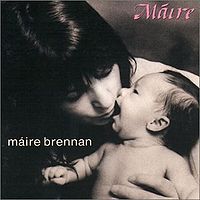
Máire,the debut album of Moya Brennan

  Today I want to review Moya Brennan’s Maire…her first solo album out of 200px-MoyaBrennan_MaireClannad. Released in 1992, the album celebrates the Irish tradition in a fresh approach. Abundance of percussion,  electric guitars and vocal layerings embellish this release under Atlantic Records.
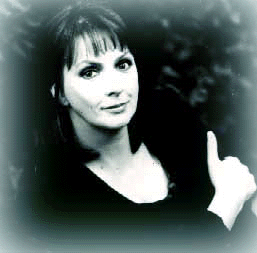
 

 I just love the way Moya sings each slow tracks as if she is whispering. There is nuance and at the same time up front delivery. Tracks like “Cé Leis” and “Jealous Heart” promise heart hearting beauty. While “Atlantic Shore” is update,rock driven; well suited to the age of Grunge without being ‘Rock and Roll”.

  Musicians are :

Producer: Calwn Malcolm and Donal Lunny.vbrennan3

Heard of Heather Dale lately?

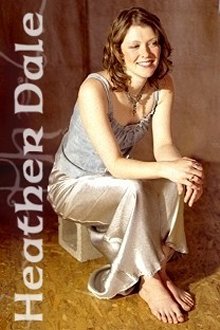
HeatherDale-BlueSuedeSmile-220w-72dpi  Heather Dale is a Canadian multi-instrumentalist and a member of  Society for Creative Anachronismhistorical re-enactment events.Touring has been one of her chief focus this year. She has released a number of albums infused with influences from Celtic,jazz,folk rock and blues.In one new track Dream of Rhonabwy(The Gabriel Hounds ,2008),Heather combined elements of Celtic traditional style,folk acoustic guitars and jazz creating a lively yet relaxing mood.If you love the vocals of Loreena McKennitt and Sarah McLachlan,if you love the acoustic jazz of Bela Fleck then you’d love Heather Dale.

Instruments:

Voice, Piano, Bodhran Drum, Tin & Low Whistles, Recorders, Mountain Dulcimer, Hammered Dulcimer, Harp, Bowed Psaltery, Percussion

For more Information,visit her official site.

Celtic Connections

  cherry holmes

For those who want to see how Scotland showcases its brand of tunes for international audience, then you might want to bookmard Celtic Connections.It’s a site devoted to budding talents in Celtic music.The aim is to inspire new audience and also for existing audience be exposed to new talents.As part of their repertoire, they are also supporting the Scottish Music Center as part of the Showcase Scotland program.

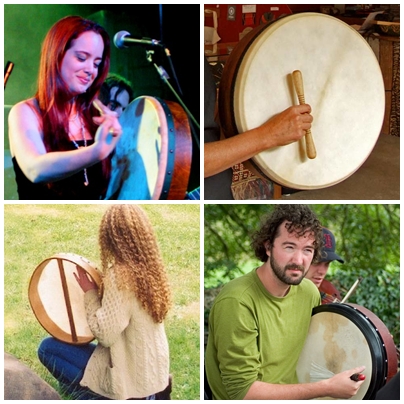
All about the bodhran(Irish frame drum)

bodhran

  Been a fan of this percussion instrument for God knows how long. There is something about it that calls to mind the feelings on anticipation, excitement,glee and of course sensuality.It’s the quality of the bodhran’s sound that is unparalleled by other percussion instrument.There is expressiveness there and yes love by its creator.My friend Brandon has a bodhran. Someone in Multiply asked me if there is a store that sells bodhran here. What” In the Philippines? Unless there’s a marooned Irish musician, then you’ll be in luck.

Quick info:

The bodhrán (pronounced /ˈbɔːrɑːn/ or /ˈbaʊrɑːn/; plural bodhráns or bodhráin) is an Irish frame drum ranging from 25 to 65cm (10″ to 26″) in diameter, with most drums measuring 35 to 45cm (14″ to 18″). The sides of the drum are 9 to 20cm (3½” to 8″) deep. A goatskin head is tacked to one side (although nowadays, synthetic heads, or new materials like kangaroo skin, are sometimes used). The other side is open ended for one hand to be placed against the inside of the drum head to control the pitch and timbre. One or two crossbars, sometimes removable, may be inside the frame, but this is increasingly rare on professional instruments. Some professional modern bodhráns integrate mechanical tuning systems similar to those used on drums found in drum kits.

History

There is evidence that the bodhrán was used during the Irish rebellion of 1603, by the Irish forces as a battle drum, or that the use of the drum was to provide a cadence for the pipers and warriors to keep to, as well as announce the arrival of the army. This leads some to think that the bodhrán was derived from an old Celtic war drum.