A Look into the Future, A Nod into the Past (Including two Interviews)

Celtic music…what do you think will happen and how social networking can influence your ways of getting heard.

Featuring: interviews with Enda Seery and Calum Stewart. Featured performances: Enda Seery, Calum STEWART & Heikki BOURGAULT, bands and a documentary.

As 2012 draws to a close, 2013 promises to be more exciting with the arrival of new albums. There are new bands out there who will probably reach our awareness next year. But these young people are fierce. They are armed with both the musical knowledge and tech savvy necessary in getting their music heard.

With technology  you have the power to make anything possible. But one must be aware that competition is all around. This is due to the sheer volume of music being released day after day. You  have to work twice as hard than before. There are musicians who became  friends and I  found that without being ‘involved’ socially then nothing can really come out of one’s effort.

Whither we like it or not, music is a social activity. You don’t write music for your own personal enjoyment. Whoever argues with this please raise your hand. Because I don’t believe in such a thing. Artists write music to be heard. If you think otherwise then you have to ask yourself if you are in the right business. With that said let me get into the main course which is of course music.

Enda Seery and A New Album Next Year

Enda Seery is working on a second album which will be released next year. I am looking forward to it because I love the way he plays. He has that style of playing that is hard to find these days. I’ve had many pleasures interviewing and featuring his works. Right now, he is busy doing interactive teaching. He is also working on other projects. His cousin Colin Nea also  released and album this year and he is  supporting the album.  I got questions about his new album. He answers them as best as he can. But before that, take a listen to this track!

An Luradán/Santa Cruz/Only for Barney (Jigs)
Final Performance for Masters in Traditional Irish Music Performance
Enda Seery-Sindt D whistle
Tom Delany-guitar
An Luradán composed by Junior Crehan
Santa Cruz composed by Enda Seery
Only for Barney composed by Josephine Keegan
Recorded live at Theatre at The Irish World Academy of Music and Dance, University of Limerick, September 11th 2012
Recording Engineer: Niall Keegan

Here is another version of the track above without the talking in the intro. For those who just like the music.  In my case I like them all. Just saying 😉

Enda Seery talks about the upcoming album

How’s the second album doing?

Second album is coming along quite well. This is a big release for me with two years and a bit since The Winding Clock release and music being more or less my career now. Recording is finished. At the mixing and editing stage now and all the other details that come with releasing an album. Check out my blogs on tradconnect. Oh by the way, the album will be called ‘Síocháin na Tuaithe’ (Peace of the Countryside)!

You will be doing vocals in two of these tracks. This will be the first time I will hear you sing. Were you nervous?

Not that nervous to be honest but I suppose a little. I have been singing a while since being in my family’s céilí and pub band we had many years ago. I enjoyed recording the vocals in studio but singing live will be a different matter altogether! I spend so much time composing and researching other instrumental and dance tunes that I forget about looking for songs so this will have to change.

 What can we expect on the second album?

Well more of my compositions will be included. Nearly 10 in total between jigs, reels, hornpipes and slow pieces. A good bit of material and new tunes was got from my time on the Masters in Trad Performance course at University of Limerick. I had an absolutely brilliant year there. Also some duet and trio tracks will be on the new album with some great musicians I met in Limerick. I have expanded the repertoire on this album too as to not focus entirely on jigs and reels. I suppose the big change will be the songs and also the flute tracks along with my regular whistle playing tracks.

Ahoy! can’t wait to get my hands on that new album next year!

***

Calum STEWART & Heikki BOURGAULT – “L’heure avant l’Aube”

I had a pleasure putting Calum Stewart as part of my featured artist of the week. It is also amazing to see his project with Breton artist Heikki Bourgault take off. Calum drops by for a little chat about the video. Cool guy. But before reading that, check this video out.

Published on Dec 18, 2012

“L’heure avant l’Aube”

trad / Calum Stewart – arrangements Calum Stewart & Heikki Bourgault

http://www.calumheikki.com

Calum talks about the video:

Can you tell us the whole experience making this video?

We recorded this video in an amazing venue, called Amzer Nevez: Near Lorient, in Brittany. It’s a venue strongly associated with Breton music, and the promotion of the Breton language, dance and song.

Can you give us a little background about this track?

The track is a set of 2 reels. The first I picked up while in Belfast, Ireland. It’s normally played a little more layed back than the way we do it: but we like this groove with the 2nd reel. The 2nd was written at 4.30am during the amazing Shetland Folk Festival: “L’heure avant l’haube” (The hour before dawn)!

What’s upcoming for Calum STEWART & Heikki BOURGAULT this 2013?

2012 has been a really busy year for the duo, and we’ll keep things moving in 2013. We are working on an album release for late 2013, which features a new repertoire. It’s always great to move onto new ground and keep things fresh!

Hmm late 2013 seems like a long time when you think about the sheer artistry of these two! But yes let us enjoy the current repertoire and let the music enrich our souls.

***

Featured trad video:The Steeple Session withConal Ó Grada, Dave Sheridan, Benny McCarthy and Colm Murphy

A nod to the past:

These songs appeared in my facebook status after fever hit me. I was getting all nostalgic and these bands and artists popped in my head . I realized that they are like anchor to the new bands I feature week after week and it is always great to look back and realize how music has evolved through the years.

Originating from Argyll, a region of western Scotland it’s Capercaillie with Waiting For The Wheel To Turn from LP Delirium (1991)
Karen Matheson — Vocals
Charlie McKerron — Fiddle
Manus Lunny — Bouzouki, guitar
Michael McGoldrick — Flute, whistle, Uilleann pipes
Donald Shaw — Keyboards, accordion
Ewen Vernal — Bass
Che Beresford — Drums
David “Chimp” Robertson — Percussion

“Coisich, A Rùin (Come On, My Love)”actually made it to the UK top 40 …lyrics in Scottish Gaelic (Gàidhlig)

I still listen to ” Hi How Are You Today” by Cape Breton artist Ashley MacIsaac.In this track he is joined by Mary Jane Lammond singing in Cape Breton Gaelic. One of the reasons why I want to see the East Coast of Canada one day.

From Brittany…beautiful place fin the North west of France ..The father of Celtic harp music Alan Stivell.

Also from Brittany Cecile Corbel. At 18, she went to Paris to study archeology, still dreaming of music. Concert after concert in Parisian pubs and cafes, she self-produced her album Songbook 1, soon noticed by the label Keltia Musique (Sinead O’Connor, Loreena McKennit).

From Manitoba Canada, Loreena McKennitt studied to be a veterinarian but Celtic music took her away.

And…last Clannad and Bono of U2: From the album Macalla which is Irish Gaelic for Echo. I think this is really cool in a sense that it’s the first time fans of New Wave music and Irish music got together in the mid 80s to cheer for this amazing song.

***

Irish Folk Music Revival – Documentary (90mins)

I took down notes while watching this documentary. For those who think it is long, I list down the names of speakers and artists who appeared in chronological order…These  are very familiar names that are in this documentary:

Ronnie Drew speaks(he appears all over), Bob Geldof(he also appears all throughout) the voice of Eamon Devalera, writer John Waters, Martin Hayes (also appearing many times),Paddy Moloney,….. watch the part around 7:15 ,Willie Clancy,Anne Briggs,Johnny Moynihan,Philip Chevron of the Pogues,Teada,Eamon Carr of Horslips,
writers:Brendan Behan appears with Patrick Kavanaghand Flann O’Brien, Paddy Glackin,The Clancy Brothers and Tommy Makem…

Sean Limmas, writer Joe Kennedy, The Dubliners, Christy Moore,Pecker Dunne,Sean O’Riada who added the orchestral movement to trad music in the mid 60s…
Johnny Moynihan, Donal Lunny and around 1968, the Troubles.
Terry Woods ofSweeney’s Men,Andy Irvine..this is the period when the bouzouki was introduced in Irish music….
Planxty, journalist Peter Lennon, ..the 70s was sweeped by the Planxty phenomenon, then Horslips happened in the mid 70s, Thin Lizzy followed, Then The Chieftains, Clannad, DeDannan and the rest…The Bothy Band took where Planxty left off, Paddy Glackin..
The 80s where irish music became prominent brought by the popularity The Boomtown Rats, U2 etc.
The Pogues, Neil Hannon of The Devine Comedy comments,the difference being London Irish and Irish Irish, Kristy Mccoll,
Then..the birth of Celtic Music spearheaded by Clannad through the evolution of their sound in the mid 80s…oh goosebumps!Maire Brennan appears in a clip. Also the lil bit about the Brennans.

Then came the 90s happened with sound clip from Sinead O’Connor,Mary Black, The Sharron Shannon Band,the rise of Irish women!

In the 2000s with Michael Flatley, Riverdance, Damien Dempsey the documentary closes with Martin Hayes and Dennis Cahill playing a tune.

http://youtu.be/39D0J8SzQMA

I hope you enjoyed this post as I did writing it..even during my fever. I am working on another interview article and more music.
Wood Soul: Interview with Scottish Wooden Flutist Calum Stewart

Also in this edition: Lori Watson and Rule Of Three and Kernowpods

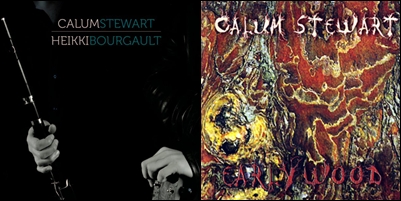
Calum Stewart and the cover art of the new album.

Between working with the London Philharmonic orchestra, recording for the next “Lord of the Rings” film, “Hobbit Movie” and completing being part of Jamie Smith’s Mabon’s Windblown, Calum Stewart took the time to talk to us about his career and how it all started.

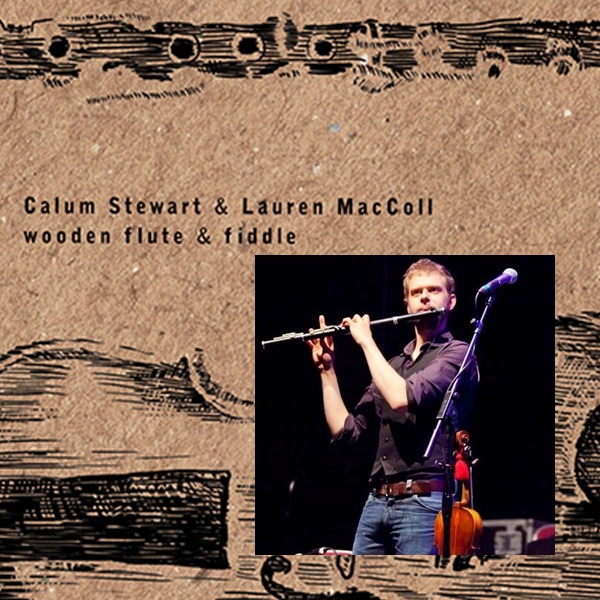
Greetings! It is a lovely the month of October Celtic music followers. Our guest for this week is flutist Calum Stewart. He made a lot of collaboration with other bands. The new album Wooden Flute and Fiddle is out in the market! It is a collaboration with fiddler Lauren McColl and other musicians. If you don’t have a copy of the album yet, I want to tell you it is an amazing thing to have as part of your traditional music collection. Like what I mentioned in my last article about the album: This is an album that every traditional music listeners will want in his or her collection. This is due to the huge effort that the two and the rest of the session musicians placed on this album. There are slow and fast tunes. Expect variety in instruments and grand artistry that only musicians of their caliber can provide. And even if you are not really into Scottish or Irish trad music, you will still warm up to this one for its melodic and relaxing merit. Love it love it!

This interview was done in a relaxed manner. He has a tour this autumn and  you can nominate Calum as traditional Scottish instrumentalist of the year here http://www.scottishcultureonline.com/blogs/nominate-your-favourite-act-for-mg-alba-scots-trad-music-awards-2012/

All musicians started with something that they consider memorable. I helped him trace back on how it all started-with the release of his debut album Earlywood.

Can you tell us a little background as to why is  the debut album Early Wood?

“Earlywood” is my first solo album, and reflects my home tradition of the north of Scotland, with many tunes from Morayshire. There are also several compositions, which sit side by side the older repertoire, all arranged for Wooden Flute, Fiddle and Piano: my main interest has always been finding strong repertoire, interesting arrangements and powerful sounds, in acoustic settings. The title “Earlywood” refers to the inner growth circles inside trees. The “Earlywood” stage is the time when the tree grows the most… “Latewood” is the other time, and perhaps when the tree takes stock, during winter. Earlywood seemed a good title, because it was my first solo recording.

Since recording “Earlywood” and touring with my trio, I’ve had the opportunity to continue work with Lauren MacColl (Fiddle), with whom I’m releasing a new album with now (featuring Eamon Doorley of Danu, and Andy May). ( Go to www.laurenmaccoll.co.uk/shop )

I’ve also been working closely and touring with Breton guitarist Heikki Bourgault; we released our first duo album last year, with plans for a second one in 2013 (visit www.calumheikki.com for details).

Jamie Smith’s MABON has released Windblown. What can we expect from your musical contribution in this album?

I am featured as a guest on several of the tracks of their new album “Windblown”. Although I can’t play as a core member of JSM and Mánran now, because of my own project commitments, I really enjoy working with them when the occasion arises, guesting on recordings or sometimes at concerts / festivals. We are all very good friends and keep in touch about our own separate projects, and enjoy meeting when our projects cross paths, playing at the same festival!

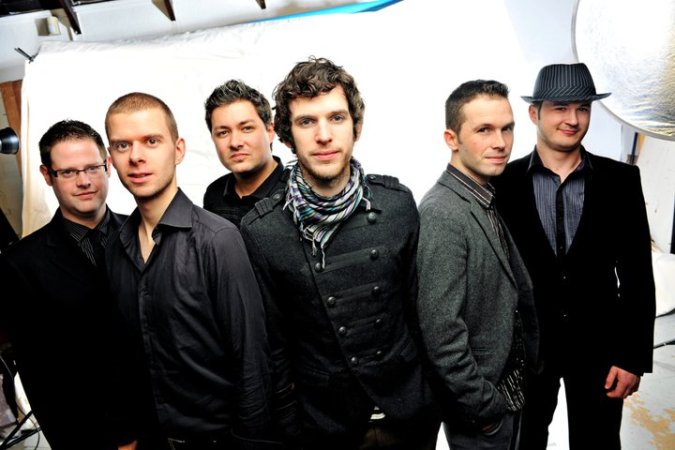
Early promo pic of Jamie Smith’s Mabon

You are known to play hide and seek between time zones with multiple natures: you are in demand as a musician! How’s the experience of working with different artists and how this shaped your artistry?

Working and collaborating with different artists from different genres is really important, enabling one to have a more open perspective. I’ve had the opportunity to work with some really inspiring people and they’ve really shaped my approach. However I also think it’s good to concentrate and develop one’s own musicality, ones own musical journey. Whilst you may encounter many influences along the way, fundamentally you must find your own voice.

Your musical development was traditional since you are originally from the North of Scotland and brought up with the traditional music of your native Morayshire. How do people in your hometown respond to your international success?

I always really look forward to playing on home turf, and it’s great to catch up with those musicians whom I played with when I was growing up. I try and “re-charge my batteries” when I’m back in Moray, usually remembering old tunes, learning some new ones or writing some, and most importantly remembering why I enjoy playing music in the first place! I still have family in my home village, although I don’t live there anymore – so I really enjoy going back there.

I realized that although your name is synonymous with the wooden flute, you are also and expert in playing the uilleann pipes and whistle. What are the other instruments that you play?

I concentrate on the Wooden Flute although I do play Uilleann pipes too, and really enjoy the different voice this instrument has. However the Wooden Flute takes up almost all of my concentration. Although there are different qualities in the pipes and the whistle, and sometimes they are useful – the Wooden Flute is really my musical voice, so I prefer to concentrate on this. I have a very special old flute, which I use for all my musical projects – its a Rudall Carte & co, made in the 1930’s. Its made from cocus wood, and has been with me in every musical situation since I found her! I use wooden headjoints by Tobias Mancke with her. In addition I own a brilliant Wooden Flute by Peter Worrell which is based closely on my original. As I don’t like owning many flutes and changing flutes, I take my Rudall Carte & co. with me, wherever I go!

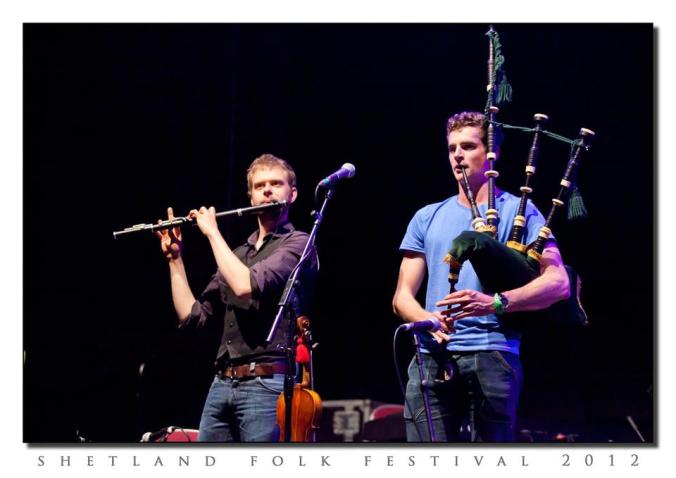
Ewen Henderson at Clickimin Centre.

What is the recording process in making an album?

Every recording I’ve been involved with has been different. Although usually after the initial concept or inspiration, there follows a period of collecting / writing / arranging, before either rehearsals or concerts and then recording. Sometimes it’s possible to play music for a long time in concerts, developing ideas before the studio, but sometimes the music takes shape in the studio – there are no rules!


   After a big performance, how do you chill?

Usually, there is a lot of work to be done after a performance. I always try and meet the audience personally, making contact after the concert. Often there are interviews to do, CD signings and meetings – so it can be quite busy! After all this is over, and my flute is put away… I usually hang out with my band and quench my thirst.

What are other projects that you are working on?

This summer I’ve been working with the London Philharmonic orchestra, recording for the next “Lord of the Rings” film, “Hobbit Movie”. As well as that, I’ve recorded with fiddler Lauren MacColl, joined by Eamon Doorley (Danu / Julie Fowlis), and Andy May – this is available via: http://www.laurenmaccoll.co.uk/shop .

Otherwise, I’ve been guesting on recordings such as the new JSM album, and preparing new repertoire for a 2013 release with my duo.

What can fans expect to hear from the new album now that it is out?

Quite a traditional repertoire, coupled with some new offerings: based strongly on the interplay between the wooden flute and the fiddle

You are a huge influence to young people who are trying to learn traditional instruments. What can you advice them in how to make it like you

Play music that you believe in and always be yourself.

There you have it readers. Another exciting moment with Scottish musician Calum Stewart. I am looking forward to the “ Hobbits” soundtrack knowing he is part of the music. Also get your copies of the new album and drop by his website to say Hi. He is really down to earth and has an amazing sense of humor. I enjoyed this interview with Calum and it is really fun talking to artists and getting to know how they create their music. Have a great week ahead!

Check out his website:

http://www.calum-stewart.com

Video samples:

***

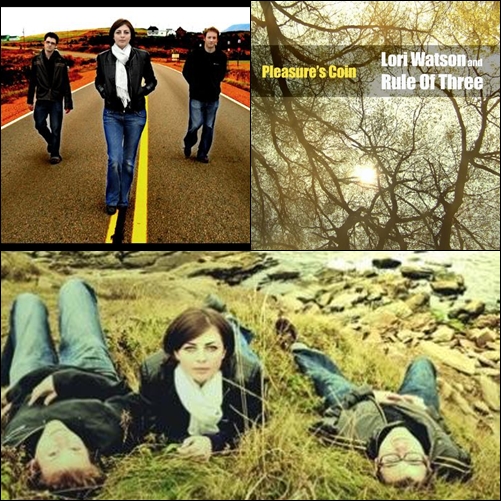
Featured band:Lori Watson and Rule Of Three

Genre: Acoustic / Folk

Location Scotland, UK

http://www.myspace.com/loriwatsonandruleofthree

Sweetness! Lori Watson has a voice than can melt your heart like butter. But don’t let this sweetness fool you. This amazing musician plays music with such intensity and break neck speed. Her band is gaining a wide following all over with their fusion of traditional and contemporary style.

.

***

Kernowpods: War an gwyns – remix

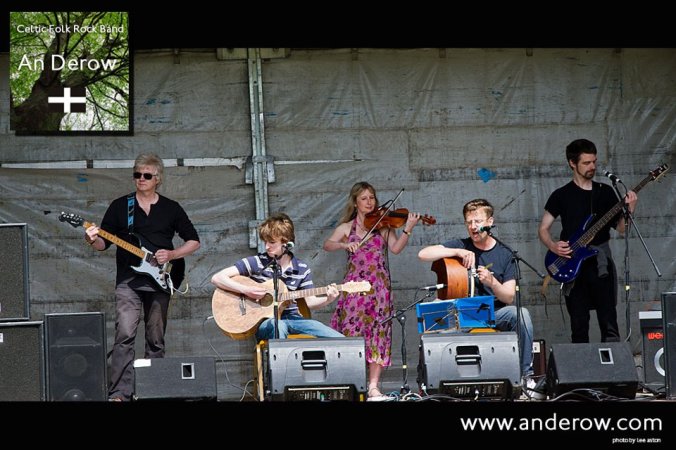
Cornwall has her own thriving community of painters, photographers, musicians and people doing their own art. One of those who help define the Cornish cultural identity is Matthew(Matthi) Clarke. He is part of Sue and Phil Aston’s circle and they are doing a LOT of diverse things with music and visuals. This is one of the songs Matt uploaded in his podcast.

Phil Aston,Dan Aston, Sue Aston, Matthi Clarke and James Perkins-An Derow.

Thanks for reading folks. More album reviews coming up very soon.

Ghost Whistle..Anyone?

Calum Stewart is very active these days playing as part of the Scottish group Manran. He is fully booked with events like Samso Festival( July 20, Denmark with Manran), Spyfest (July 28 Moray, Scotland with Heikki Bourgault), and also on July 28 at the same venue with Manran.

This short video caught my attention because of this unique glass whistle. I haven’t seen anything like it.

Visit his website: http://calum-stewart.com/

His gears for the new Jamie Smith’s MABON album “Windblown”

Teaching Yourself Bagpipes and Other Stuff

I owe this great link to my friend Loic Rathscheck whom you might remember in my earlier interview. He’s a Frenchman so there flows the Celtic blood in his veins. He doesn’t play Celtic music , rather his style is electronic but he shares my passion for almost all types of music. He is a memorable contact because he is the first person I attempted to interview. Anyway, this important link he sent to me is Andrew Lenz’s Bagpipe Tips: Learning Bagpipes without an Instructor. I think the winner in this article is not just his answers but the way he delivered them-with honesty, candour and humor.

“Anyone learning an instrument on their own can be their own worst enemy, with bad posture, poor fingering techniques, bad tuning, etc.”

Check this link out: http://www.bagpipejourney.com/articles/self_taught.shtml

The link doesn’t work in my browser so it might not work with yours. I am just pasting the whole thing here just to be sure you won’t miss anything.

Andrew’s Tips: Learning Bagpipes without an Instructor

By Andrew T. Lenz, Jr., Santa Cruz, California, ©2003-2009


What exactly does it take to learn the bagpipes on your own? This article lets you know the ins and outs of self-instruction, offers some advice and suggests some resources to help you.

Is it possible to teach yourself bagpipes?

Yes—to a point—but it is a road fraught with peril, unfortunately.

What’s going for you.

The bagpipe chanter—the bagpipe part with which you play notes with your fingers—only sounds one note at a time, so there are no chords to worry about. There are only 9 possible notes to sound (not counting a few special somewhat rarely played notes). This means that reading bagpipe music is relatively easy. And learning the basic fingering is simple.

What’s going against you and why you should get an instructor.

You’re going to get a lot of commentary in this section!

I have to say that the idea of a person teaching themselves bagpiping sets off warning bells in my head as it does most pipers. While sometimes it is a necessity due to a very remote location or poverty, in others it’s a case of people thinking that somehow the bagpipes are a “teach yourself” kind of instrument.

It’s not.

If you are even half-way serious about learning the pipes, I strongly recommend that you find yourself an instructor.

The bagpipes come with about as much in the way of instructions as a piano comes with instructions on tuning it, or a guitar on how to play chords. Next to uilleann pipes, the Great Highland Bagpipes are the most complex wind instrument on the planet—four reeds!—this is a real instrument requiring real lessons. Bagpipes are exceedingly easy to play incredibly poorly and can be quite temperamental at an inexperienced hand. Maintenance is complex compared to most instruments. Tuning the instrument proves be quite a challenge to most new pipers—heck, even many experienced ones! That’s one of the reasons the pipes get such little respect sometimes. Too many people try to teach themselves bagpipes, fail, and now here we are with a slice of the general public with a strong dislike for the pipes, oblivious to the fact that they were exposed to very poor piping.

The following may sound harsh. If you want to just doodle with them, in my opinion, you should avoid playing public as you will be representing all the truly dedicated bagpipers that have gone before you, world-class and otherwise. Friends and family fine—tell them you are a beginner—but not the general public. If you think you’re getting good enough to play in public, play in front of an experienced piper or better yet, compete at a highland games to get a truly objective appraisal of your piping skills.

There are no world level pipers that I ‘m aware of who were self-taught. Not that competing at that level is your goal necessarily, but it goes to prove a point. I’ve heard of one Grade I piper (the highest amateur grade) who was self-taught—David Daye, a link to his site is below—so it’s possible to do well on your own if you have a disciplined perfectionist personality with a very good ear for picking out minute sound problems and figuring out how to correct them…it’s very rare.

Anyone learning an instrument on their own can be their own worst enemy, with bad posture, poor fingering techniques, bad tuning, etc. If you are self-taught, try as you might, there’s a good chance you won’t know any better. You might get used to playing a chanter that’s out of tune and think nothing of it. Having an instructor set up the tuning on your practice chanter as well as your bagpipe chanter will have you developing a sense for a true bagpiping scale while you are practicing.

Another thing is self-taught pipers tend to be impatient, as are probably most learners, so without an instructor to hold you back from techniques that you are not ready for, you may press ahead anyway. For example, you could try to learn complex embellishments (series of notes) without even having basic grace notes down correctly. It’s much harder to unlearn a technique then relearn it correctly than to simply learn correctly the first time. To quote one formerly self-taught piper: “Like others, I found what I was doing was a misinterpretation of what I thought I was seeing and hearing.”

If you decide to learn piobaireachd—prounced “pee-brock” and is called the “classical music of the pipes”—you’ll discover that relatively huge departures are taken from existing sheet music. As an example, you may find three notes to be shown to be played even, when in fact the last should be played 2-3 times the length of the others. Granted, you can pick up a lot of this timing from recordings, but an instructor can help you pull every last bit of expression out a tune. This also applies to “light music” (marches, jigs, reels, etc.) though those are played much closer to the printed page. Commenting on his early unsuccessful competition experiences, PM Jim Harrington had this to say: “The problem was simply not knowing how to express the music—but that’s a problem with just about every tune when you’re a beginner with no instructor.”

Having had a bagpipes teacher for years, I can testify to their value. I’m not alone in having an instructor tell me that a bad habit has snuck in, such as my wrists are in the wrong position or an embellishment has a subtle fingering error. Even with an instructor showing you in-person how to do something, you can often go home and practice an embellishment incorrectly. It may sound right to your untrained ear, but at least it’ll be caught and corrected by your instructor as soon as your next lesson.

“No matter how many times you say it… No matter how much you may try to drill it into folks’ heads… A person learning on their own is not going to realize they need an instructor, until after they find an instructor… A slurred D-Throw sounds perfectly fine to someone who has never had it played slowly and correctly for him.”
Andrew MacTao, after 18 months of learning, having starting on his own.

If I’ve convinced you that an bagpipe teacher is a good idea, you’ll probably want to read my article How to Find the Right Bagpipe Instructor.

These’s a saying that goes “Seven generations and seven years to make a piper.” Your instructor will be your link to those past seven generations. The seven years is up to you.

“I already play a wind instrument, I don’t think I really need an instructor.”

I’m going to let someone’s quote answer this one.

“I was classically trained in both trumpet and clarinet in college. Learning bagpipes has been a dream of mine since I was little, and there’s no instrument comparable to pipes in a technical or musical sense. If you want to learn bagpipes at a high level, you need high quality instruction from someone who has learned from a high quality teacher. If I used my classical training on bagpipe music, none of the gracenotes, or even the beats, would be in the right place. Even bagpipe tuning is radically different. I could go on for pages about the differences, but I can’t do anything right without my instructor. Each time I think I understand a new piece, nope, it’s different than I thought.”
B. Hunter, band director in Houston, Texas.

“I can’t afford an instructor.”

Trust me, you can’t afford to not have an instructor. Some bands even give instruction for free. But even if you can’t find lessons at no charge, you are talking about an investment in your future. There are numerous cases where a self-taught “piper” cannot discard bad habits and learn the proper way to play and a frustrated instructor simply gives up on that individual. Often not the case, but it does happen. Get as much personalized instruction as you can afford as early in your piping career as you can manage.

“I don’t live near an instructor.”

Gregg Heath of Belgrade, Montana had this to say after a year and a half of learning: “I realized early on that self teaching was a non-starter. I did it long enough to pick up some bad habits that my instructor is gently helping me correct. I now travel 200 miles round trip once a week for instruction and band practice and it’s well worth it. If you want to play the pipes bad enough you’ll find away to get to an instructor.”

Gregg isn’t that unsual. I’ve heard of numerous students driving over three to four hours to get personal interaction with an instructor, it was so desired. Some cities have several piping teachers. Some counties have none. Maybe not “fair” but that’s the way life is.

“The nearest instructor is really far away!”

Assuming that you’ve looked correctly and there truly isn’t a piper around to instruct you face-to-face, then consider any personalized instruction very valuable. There are ways around not having an instructor within a reasonable distance. And you don’t have to meet with an instructor in-person to get individualized attention.

A tried and true method of remote but individualized instruction is sending audio cassette tapes of your playing to a teacher who then records comments and lessons for your playing. Improvements in technology has lead to newer methods such as swapping video tapes, e-mailing sound files, interactive Internet video conferencing. Another method is to simply use the telephone to engage in a live two-way lesson. One of the first websites attempting to capitalize on the need for remote instruction is LivePiper.com. What’s important is to get feedback specific to you so that you can concentrate your practice on your weaknesses.
Other opportunities for instruction are various piping seminars, workshops, summer schools, and the like which may be within your means to attend.

“I’m moving near a teacher soon, what can I do to get a head start?”

Probably the best thing to do is to simply wait and spend your free time listening to lots of bagpiping recordings. This will help develop your ear.

But if you know who your teacher is going to be, then ask him/her as to what practice chanter he/she prefers and with his/her permission, puchase that brand—but be careful, he/she may want you working on nothing! (Or if you have a practice chanter already, ask if him/her if it will suffice.)

If you don’t know your instructor, purchase a good quality practice chanter made in an industrialized nation (Scotland, USA, Canada, etc.). Buy a rank beginner’s tutorial book—check with your bagpipe supply shop. Learn the basic finger positions then learn to read bagpipe music and correlate the two. (Avoid learning combinations of notes, i.e. embellishments.) Avoid playing tunes, but if you can’t control yourself, please ignore the gracenotes for the time being. Playing tunes can introduce the possibility of changing notes incorrectly resulting in “crossing noises”—most common are in changes from a lower hand note to a higher hand note or vice versa—which an instructor will then have to go back and spend time correcting!

Remember: the more you push ahead wihout a teacher, the more risk that you’ll learn something that you’ll have to undo later.

Things to do to accelerate your learning

Listen to a lot of professional solo bagpipe recordings. Get as many CDs as you can get your hands on and listen closely and critically.

Go to highland games and piping performances/competitions. Given the choice, listen to the more advanced pipers. Though it may be inspirational to hear lower grade pipers competing also—”I can do that!”

Read my article on How to Become a Rotten Piper then do the opposite!

Instructional materials

Here are a few recommended items for teaching yourself bagpiping (there are other good ones).

John Cairns’ Multi-volume learning program:
http://www.bagpipesolutions.com

For bagpipe maintenance and tuning, Jim McGillivray’s “Pipes Ready” and “Pipes Up
videos and for detailed excersizes for embellishments, there’s his “Rhythmic Fingerwork“:
http://www.piping.on.ca

Archie Cairns’ books and CDs on learning piobaireachd:
http://www.archiecairnsmusic.com

Pipe Major Bill Robertson’s Bagpipe Tutorials (Light music and piobaireachd):
www.bagpipe-tutorials.com


***

Here’s another link to a  video he sent me. Wow! Red Hot Chilli Pipers having a Scottish time at The Ferry in Glasgow

***

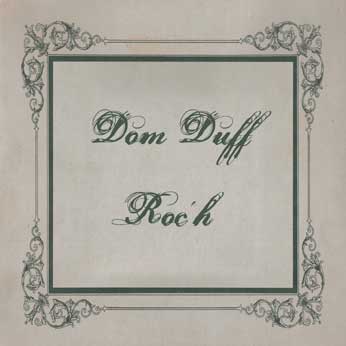
I voted for Dom Duff’s Roc’h in the Grand Prix du Disque . Dom is an amazing musician from Brittany who continues to bring the Celtic Breton tradition to the fore by collaborating with only the best musicians and writing primarily in Breton. I wish he wins because I think Roc’h is an album of eloquent achievement. You can also vote for him through this link:

http://www.letelegramme.com/arche/page.php?sk=prixdudisque%2Fprixdudisque.sk

***

Wolf Tones-Song of the Celts

Giving you the joyful gift of this beautiful song by Wolf Tones. Look at all these nations bonded together by a common culture.

***

Calum Stewart, tullochgorum & varations…

I love the way he breathes life into the wood instrument. Calum has been recording with Welsh band Mabon and has proven that he is one of the ambassadors of Celtic music to the world.