There are so many reasons to go to France. Not only that it is the country hosting the biggest Celtic music event called Interceltique Festival, the west coast is also home to Breton music. There are so many musicians that are already out there stirring the scene with their brand of Celtic music and some of them made it to our ears. Let me present now
Carré Manchot
This I got from the official website:
Carré Manchot is a traditional dance music band from Brittany; it was founded in 1986 by Remi MARTIN (box accordion), Jean-Claude RIOU (fiddle), Herve LE LU (bombarde) and Gilbert LE PENNEC (guitar), who still plays with the band today. The same year, they produced their first recording: “Tabalich”.
In 1988, Remi and Jean-Claude left and were replaced by Ronan ROBERT (box) and Ronan PINC (fiddle). After two albums (“Mab ar Miliner” and “An Disparti”), both Ronan left the band and three musicians joined: Yannig ALORY (wooden flute), Erwan VOLANT (bass) and Yann-Loïc JOLY (box accordion). Together they released five albums: “Noz!” (1996), “Riboul!” (1997),”Liyannaj” (1999, featuring Guadeloupean group “Akiyo Ka” and breton singer Patrick Marie), “Degemer” (2001), “Liyannaj Live” (2003). In 2005, Stéphane SOTIN (percussions) replaced Erwan Volant and in 2006, Carré Manchot recorded a new album “Laÿoù” and celebrated their 20th anniversary on July the 13th in Mûr-de-Bretagne, along with many Breton musicians and bands.
In 2007, Herve LE LU, founding member, and Stephane SOTIN, percussionist, hit the road for some new musical adventures…
Uilleann piper Loïc BLEJEAN joined in January 2007.This new line-up keeps playing with the same energy that has made Carré Manchot one of the most acclaimed Breton music band for more than twenty years on the dance floors of festou noz in Brittany and elsewhere…
My personal observation:
This is quite unique coming from Breton music. The melodies are gentle, the instruments are not the usual wall of sound you would expect without the bombarde and the binou. It is also interesting to note that the band has been around since 1986 and yet they still play with the same energy the day they started. They are still here, still making beautiful music for us. And I think this is what makes the rest of the guys wonderful.
Wow, I love the energy of these guys. The instruments are something you would like to dip your ears into and experience a moment of bliss. Sweet, spicy and a lot of Celtic Spirit. So watch out for these guys.
Just received an update from Dom Duff’s twitter about a single (radio edit). I listened to it and I like it. You can also check out our previous interview with him above this page.
As always it is not the destination that counts but the journey. It is impossible to get into the center of ourselves when we have inhibitions, hang ups and the tendency for stereotyping. Music speaks in any language, be it Irish, Breton, Welsh, English or Latin. It is our emotional responses to it that really matters and I think that is the core of music-or certain kinds of music. There are those who create songs whose language becomes the secondary importance. There are even those who create vocal music that transcends language …when language becomes beautiful in itself not because of what it is trying to convey.
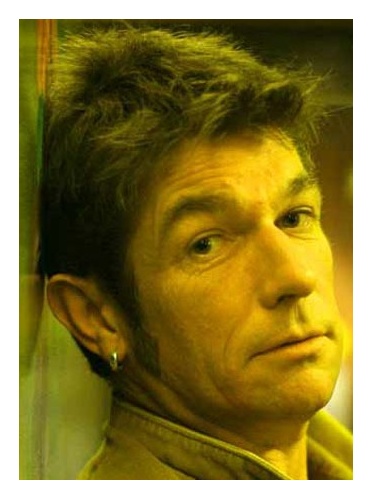
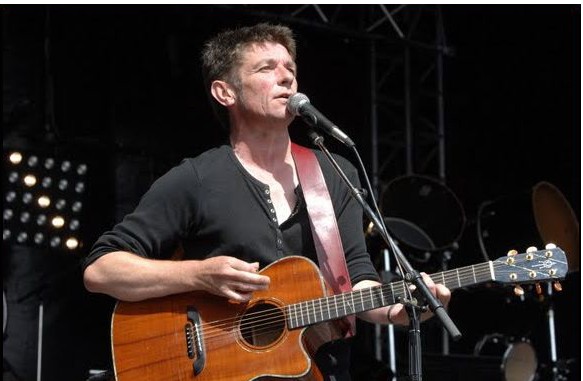
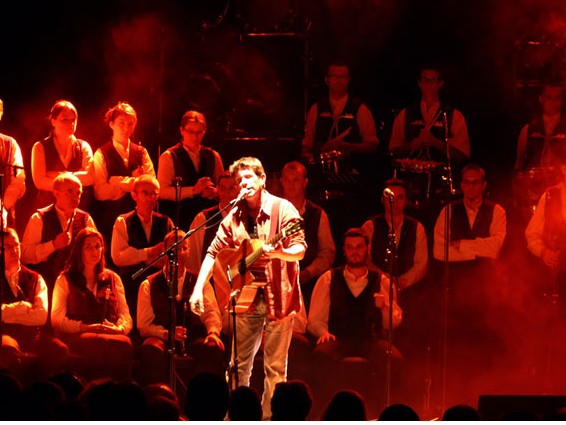
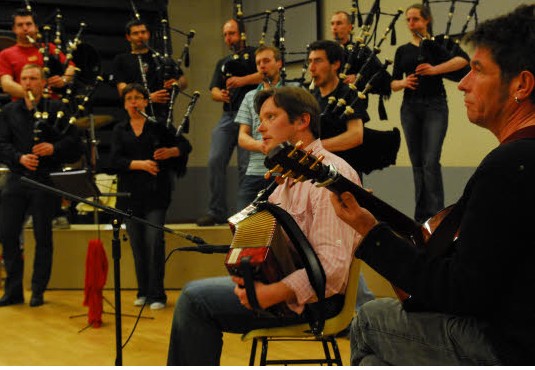
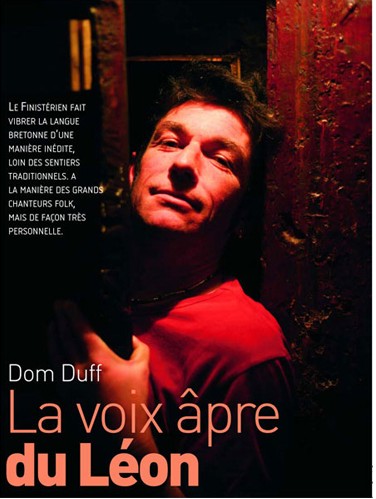
We have a guest this weekend. His name is Dom Duff. Since we are in our Breton Odyssey, why not get someone here who is both musician and native speaker from that region? His music is vibrant, percussive and a totally different experience. If you love World Music in general then you will like what Dom Duff is doing. You can read his biography on the main site as well as check his releases. So far he has three albums out ! (Photos coutesy of domduff.com)
Dom Duff Music Sampler: Click on the titles to be directed to vox.com
I initially told him that I lost my initial questionnaire and that I had to do it all over again over coffee.
-Welcome to our interview today Dom. How are you doing?
I am fine, having a cup of coffee too, and working hard, after buzzy summer, strumming my fingers back on the guitar.
-Every year, Festival Interceltique de Lorient draws a ,of people as well as musicians from all over the world. Tell us about this phenomenon that has become an international phenomenon.
Yes, it’s a great event here in Brittany, a real amazing spot to share music with an international audience, and to hook up with musicians from all over the world.
That’s started 39 years ago, and the aim as always been keeping Celtic links as strong as possible.
-This event has become a sort of United Celtic colors of the world. Countries from Nova Scotia Canada up to the British Isle have their own special festivals. What’s the importance of keeping these events alive ?
Many efforts were done in the past years to expose every Celtic culture, bringing in artists from different countries and giving them exposure to the audience here, which is varied and wide. It comes from French families discovering Brittany during holidays to an all music addicts coming from Italy, Germany and America. The mix in the audiences is really interesting. Despite the music styles-which swings from drinking bands playing drinking songs at the fringe, to real international headers playing in another venue. It is the main place to put under the spots our cultures.
-Bretagne or Brittany is part of France, and yet uniquely Celtic. What do you think makes Brittany proud in keeping that tradition alive?
Mmmmm… You have a lot of time to spent?
Brittany is an old nation coming from pre-roman Celtic natives. Then, Brithonic migrations started about 5th century. Mostly Brithonics (Welsh, Cornish) and Gaels also (Irish) came over here. It was a kind of Celtic clans coming back in another Celtic land, so the Roman influence was out of the game. And all those ways of life remained strong, powerful (language, legends …).
And this way of life is still strong. By now there’s about 300 000 Breton speakers; they were about one million in the early twentieth century. The reasons are: France has done everything to eliminate the language, and also the decline increased with the two wars.
But at the same time, I am not a kind of strange Breton speaker. The language was strong at home, and a lot of people which are not fluent inBreton, keep theimaginary structure of the language when they speak French. It happens, I think, in every country where both languages are spoken.
-You are a musician composing your own original Breton music .How is your material different from other artists going through the traditional road and how is it similar as well ?
The main difference for me,is that my stuff could be sang in every language. You know, I compose with my guitars, adding chords and licks as I want. Then, the language comes in. I like to use Breton syllabs beating the music, and that’s the way I do.
In the meantime, I think the rhythm of the words and accentuations remind the traditional material, of course. But, to be honest, my north Breton accent is stronger than the other one maybe.
-Tell us about your former band Diwall. How is this music you are creating now different from the band?
Diwall was a band for dancing music, playing Fest-Noz (Breton ceilis). We played mostly tunes, traditional ones, or our own tunes written on traditional scheme. I used to sing three or four songs only, it was a kind of frustration for me.
-I read that your music has been classified as “power folk”. Thoughts?
Yes, I’ve heard about. Someone in UK reviewed a gig using “power folk”. I think, power was about my guitar strumming, and my broken strings? I like that : playing powerful acoustic guitar , using two or three open tunings; but I need at the same time two or three instruments around me.
-How did you get into music and chose to lead this path? You could have gone into straight ahead rock and roll but why this style?
I’ve started at 15, playing folk and rock stuff in the mid 70′. But, quickly I joined friends of mine starting a band playing Breton dances, and the line up was bass, drums, etc. They asked me for playing guitar. It was a great occasion for me to perform, and I teamed up with this village band.
I’ve always been a real rock ‘n roll fan, but in my area they were no real rock ‘n roll band. North Brittany is not Manchester or Glasgow, ha ha !
The only good thing we’ve been able to do at this period, was organizing festivals in Brittany with folk and rock bands from abroad.
-I noticed that there is this distinctive vocal style in Brittany. Can you elaborate how it is different from say the style of singing in Ireland, Scotland or other regions?
The reasons are the language I think, an also the accent. The Breton accent is stronger than Irish, because Breton accent is closer to French accent. And at the same time, Irish pronunciation is closer to English, perhaps ? Breton words use more P, K, T, sounds than the Irish. Irish is more sweet, to my ears.
Breton tunes are also high tempo sometimes: listen to the “Kan ha diskan” style, it’s a kind of rap. I am sure you could find on the web pages speaking about.
-Who are your influences upon growing up?
Influences? mmmm … difficult.
I can mention: from Led Zeppelin to old fishermen and farmers in my village.Lol.Especially charismatic artists like Kevin Coyne, Horslips, Luka Bloom, Pogues, Stivell, and an unknown band from Brittany STORLOK, crazy people! Worth a listen . Their EP was in every jukebox pub in 78. It was rock in Breton, awesome.
But I’ve always been listening rock, folk, Irish, Scottish, etc. And Breton of course…. African singers too. I love listening guitarists from Africa, they sound great. It’s hard to answer you know.
-Most of the traditional instruments in Brittany can get really loud. How loud can a bombarde get?
It’s a dog bawling, the tail stuck in the door.
-I am listening to the great Alan Stivell while I though about the questions to ask you. He also spoke fondly of you and your music.You contributed two tracks on his album which will be released on the 22 of October based on your blog. What did you enjoy about this project?
I’ve been really impressed with Alan Stivell when I was 13. I discovered my culture could be really as good as others cultures. When he spoke about me, I’ve been, to be honest, touched. I’ve just launch the second album, months before, there were good feedbacks with the media, but not real success. It was quite difficult for me to keep going on. I said to myself “kick in the ass now and straight ahead !”.
Last May he asked me to sing for his new album. It was great for me, as I respect those people who are still going on, after years . Nice.
-You are also involved with the animation Brendan and The Secret of Kells. I think it’s is a beautiful animation with an interesting story line. Tell us more about it.
No, I just add a few voices for dubbing movies in Breton. They need different voices for that, so I am aboard the dubbing boat, but I am not a real character. There’s a lot of others people around. I can be a doorman in Columbo, a drunk fellow in an American pub, etc. But, there’s a lot of fun.
Brendan and The Kells is good, because it is quite a new movie which is amazing for children and adults. Also my Irish friends Kila released the soundtrack.
-What bands/music are you listening to these days?
If you need a few names : I could mention Luka Bloom, a US band call 2 Dragons, WovenHand, African bands also (Tinariwen, …), Calexico, the Levellers, …
– You have a blog http://duffdom.blogspot.com .As a blogger myself, I really admire artists who take time to write their own thoughts for people to read. .How and why did you decide to put up a blog?
I needed to add news to the website, that is accessible for comments. I don’t need another page for that. But the blog is part of the website and it’s easy to keep connections.
You can also access lyrics & translations by clicking the label SONGS, at the top right of the blog. There’s a few translations in English, Flemish, Welsh, Irish and Icelandic.
-I know this interview has taken a lot of your time and I am really happy to get to ask you these questions. What’s your message to our bloggers and readers who love Celtic music?
Feel free to listen Breton music and to share it all around the world !
-And how to you say “ I wish you love and peace in Breton?”
That is : “Hetiñ a ran deoc’h, karantez ha peoc’h !”
-Anything you wish to add?
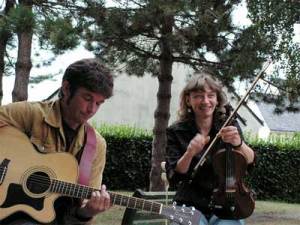
I am just starting to work on a 4th studio album (the last one was Live and Solo) I’ve asked my friend Dom Bott (bass) to join me. We were both in Diwall 15 years ago. Nicole Hayes, an Australian fiddler-also based in Brittany is also playing and David Seité (percussions).
Since we are at the height of our plunge into the Celtic music of Brittany, I want to share some personal discoveries. Again thanks for visiting and leaving your comments . So look around, listen to the music through the links and relax. Weekend is coming and I still have more for you.
Alan Stivell:The Best of
When you talk about Breton music then you have to talk about the great Alan Stivell. He has been making records since the early 70s. His name stands up there with the other greats in the world of Celtic revival. Those who heard Renaissance of the Celtic Harp released in 1972 can attest to its greatness and is now considered the album that opened Breton music to the world.
Here’s a sample music for you:Eliza Iza (From Renaissance of the Celtic Harp)
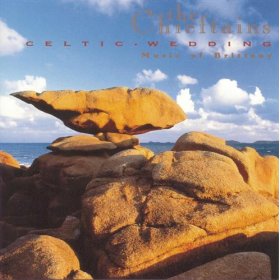
The Chieftains: Celtic Wedding-The Music of Brittany
I took out The Chieftains’ Celtic Wedding-The Music of Brittany out of my shelf. My perspective has changed now, after learning more about Breton music. I see the wealth in its distinctive arrangement. Nolwen Monjaret’s singing was something I found strange at first because It’s really different from the rest of Celtic women I have been listening to . Her’s as well as the rest of Breton singing style is more inflected, strong and mournful. I am sure everyone would agree that her’s is more Lisa Gerrard than say, Enya or Moya Brennan. But learning how geographical location can affect one’s style of performing, I think I really got into it, understand it and came to appreciate its uniqueness.
The album contains nine tracks that are popularly used as wedding accompaniment. Recorded at Lansdowne Studios, Dublin in 1986, Celtic Wedding became my introductory to Breton music.
For more comprehensive lists of Breton artists, you can click the links below:
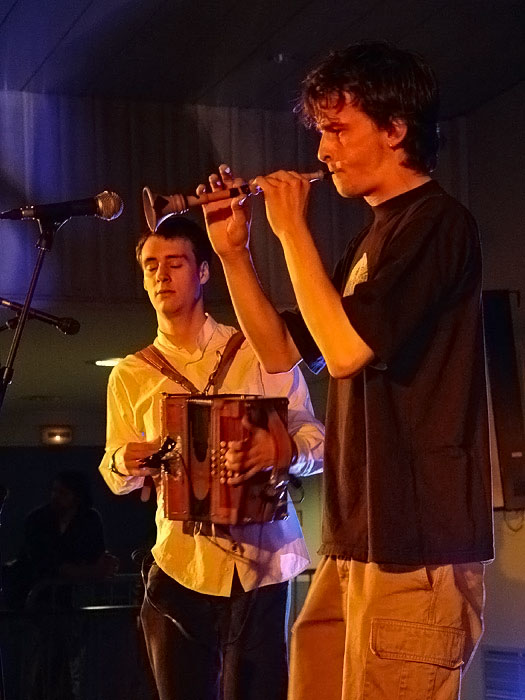
We will be focusing on Breton music most of this week. I visited Dom Duff‘s website from time to time and I asked him to be my next guest on my interview . I did feature the music of Brittany on my previous thread . Right now let us give the spotlight to a band called Startijenn. Most of what you need to know about the band can be found in their official myspace music page. You can also visit the Trad.It! section to read more in English. The Official website has a lot to give. However it’s in French and Breton. I wish one day it will have an English/multi-lingual translation available soon like what happened with Loreena McKennitt’s Quinlan Road website.
The first time I heard the music I was captivated. They resemble a bit to their Irish cousins Kila but this one has that distinctive Breton sound that can also be heard on Dan Ar Braz and Denez Prigent. They are young, great looking and they bring something to the mix that isn’t available in others.
For more information please visit the sites I posted to get more information about tour dates, news as well as new music.

 Celtic Music Fan