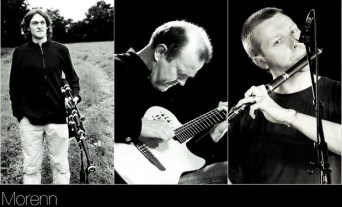
I discovered the music of Morenn after clicking the link posted by Francois Marchal of Caliorne on facebook. I think Morenn is a fascinating project and needs a good support from lovers of Breton Celtic music. There are three videos posted in their kisskissbankbank crowd funding project in which one of them I decided to post here. Their approach to music is eclectic, blending traditional Breton sounds and other World influences. The music is lively, optimistic and evokes the landscapes of Brittany.
Members of Morenn are Xavier Boderiou , Sylvain Barou andPellen Jacques. The three are the finest in the world of Breton music. I am quoting this interesting blurb from the site so you will have an idea what the project is all about:
The “Morenn” project is the result of the meeting between Xavier Boderiou, Sylvain Barou and Jacques Pellen around the classical music of Scottish bagpipes.The piobaireachd is usually performed solo. The songs here are unstructured, merging three instruments consistently. This unique creation combines bagpipes, guitar, flute, but also a hint of experimental music around a centenary book for an explosive result in imprecise, nebulous … Morenn.
“Babel Pow Wow” is the fifth album by Breton singer/songwriter Dom Duff. He got this started through the Kiss Kiss Bank Bank program. So what’s thid album all about? According to Dom Duff :
This album pays tribute to the world’s cultures, languages, to all those people who use their words and their rhythms to sing, dance, laugh, … The idea came to me after many meetings with different fans, speaking about multilingual cultures : our imagery, rhythm of our words, of our music. As usual, I sing my native Breton language, adding my guitar licks surrounds by fiddle, bass and percussion to these stomping songs and tunes.It’s about local & global troubles, causes, …
So what’s my assessment of Babel Pow Wow? To those who haven’t heard it yet, Babel Pow Wow is a collection of folk/ rock inspired tunes laced with Breton music. It is composed of a richly layered album with a wide array of instrumental explorations. I think this is Dom Duff’s most successful work to date, with ambitious effort and sleek production to match.
This album aims to take nods on all Celtic music branches. It also highlights other musical genres, from all sides of the globe. It is an album that is a must for lovers of Breton culture and the rest of the Celtic nations. And even if you don’t speak Breton, the rhythm of the language will take you to places you’ve never dreamed of.
Buan yann buan starts the album with its inspiring guitar and percussion. The tune takes flight as fiddles, harmonica and other instruments wrap this track with passionate abandon. The mandolin takes the center stage in Bitter Lands of Llydaw, along with the strong and haunting vocals of Dom. Noa pulls us into the mysterious Breton landscape with that strange mechanical sound for ambience. Chikoloden has the groove that is definitively Celtic with its beautiful instrumental arrangement and also a jig in the second half of the track that nods on the Irish side of the influence.
Floc’har jabadao is typical Dom Duff with the driving percussion and strumming. A-du gant an avel is a beautiful ballad a sweet melody and beautiful guitar solos. Those who love psychedelic rock will love the title track Babel Pow Wow. Jigs, hypnotic percussion and driving rhythm are all explored to the max in one track. Houarn & lêr channels a bit of George Harrison with that beautiful and catchy chanting for chorus. This style is also found in the next track Buzhug’o’matik.
Koroll gouez starts with an adult alternative intro and then followed by the marathon run intensity of the verse and chorus matched by the energetic fiddle and percussion. The mysterious sounds make a comeback in Treizh. The style is Middle Eastern. En tu all d’an treizh gets us back to our feet with the signature Breton rock that’s always typical of Dom Duff. Foeter breizh closes this amazing album with the sound of Breton footsteps by Breton runners. The video of this song was published more than a year ago and it’s been widely shared across Brittany.
I will never get tired listening to Babel Pow Wow. It’s got all the grooves, the sound spices you need when you want a kind of music that not only inspired but also soothes the hunger for something rooted to tradition and the love for diversity. Better get your copy now!
***
Huzzah!
Alan Cooke, The Wild Irish Poet
It’s Monday! Birds are singing, the sun is up and ground is wet from last night’s rain. How are you doing?
Last time I mentioned that I read in advance The Spirit of Ireland – An Odyssey HOME – Alan Cooke’s follow-up memoir to Naked in New York. Did I mentioned that the book moved me that I wept? perhaps not so I am telling you now. It is a beautiful work , richly layered in atmosphere and images. You need to get it when it is finally out. So here’s a passage:
From The Spirit of Ireland – An Odyssey HOME : I looked at an old cottage that was for sale because the picture struck me as haunting and evocative. It was dark and grey outside with the threat of rain. This house had no road, no gentle garden path with plants along the edges. It was muddy and full of rocks. I got to the door. A small river ran around the entire house. Inside it was chilling and desolate. A whole planet of despair resounded here in lost memories and lives that had been lived out. Old stained suit jackets hung in the window. Everything was dead. The house had shed its last breath. The windows were blurred with dirt and finger marks. The floor was broken and warped and an old kettle sat in the middle of the room awaiting an owner to bring it into life again. This house had kept generations enveloped in a kind of soft life. Yet hardship always lurked nearby in the form of poverty. I imagined coins counted to the penny and a soft shuffle out the door to get a loaf of bread and some meat for the week. Or some news brought to the door that would shatter the heart. Or the sound of a baby covered in her Mother’s blood born on the wet floor as the roof let in the rain at angles. A weeping newborn amidst the rain storms that took hold of the land and shook and drowned her till she was sodden and miserable.
I saw old cigarette boxes lying by the fireplace. I imagined rugged hands lighting wrinkled cigarettes shoved into the sides of black stained drinking mouths and scouring the land, planting and digging and heaving and sweating the years away. Or maybe a song that was hummed and filled their sleep in the night. Or a foot that tapped with rhythm on the black dirt floors. Or the eyes that were lit by the fire. Soft country eyes that had only seen the glory of nature all their lives. Yet I could feel the intense energy and loss of this ghostly cottage. A house withered and dying without human warmth felt terribly lonely to me. And above me a billion miles into the sky far above the ghosts in this house we were looked down upon by forces undefinable. This tiny house in this tiny land and this eternal terror of being. The light filled the soul, measured against the immense beyond. I felt the depth of it and the memory so thick down to my fingers which I traced along a window sill.
In an old drawer I spotted a faded photo of a Father and his child. The photo was half burned, the daughter looking away from the camera. The Father had a beautiful smile. His cap was in his hands. He looked humble and had soft eyes. Where were they now? Long gone. So far gone I could not sense any of their life in this sad place. Who would buy this place? I wanted the weeds and the fern and the branches of trees to grow tall and strong and wrap themselves around this cottage. Move inside the walls and windows. Creep along the floor and take this house back into the earth. It did not belong in the present. I put the photo back in its place. I felt like I had walked upon a grave. I was trespassing amongst the dead.
Here amongst the ragged remains of an Irish home at once comforting and now cold and dead I sensed what the end might feel like. My own end. It sent a fever into the throat to think on this, the idea of ceasing to exist and of disappearing. Outside I could see a bird wet, on a thin branch still singing in this most terrible of winter days. His eyes darted with each note and his breathy reedy notes were a symphonic calming release against the singular bleakness of my emotions.
His was the constant song of aliveness. The paradox when God seemed to have bolted his door. It almost seemed to me that this messenger was all that kept the world from upending and falling apart. It is the voices of hope in the world that keep us from despair. The bird stayed for an eternity. Singing, for no purpose, but his own, and I selfishly took it for mine as well. To give my own presence meaning.
I left the house and walked back down the rocky path to my car. I looked in the mirror inside and I could see my own darkened eyes, this strange search for home within me always. The restless spirit misaligned with a race that itself was lost. Spinning on in this grey eternity called life.
Plus: Lúnasa video and new releases fromAndrew “Slim” Black, Michelle Mulcahy and Eliseo Mauas Pinto.
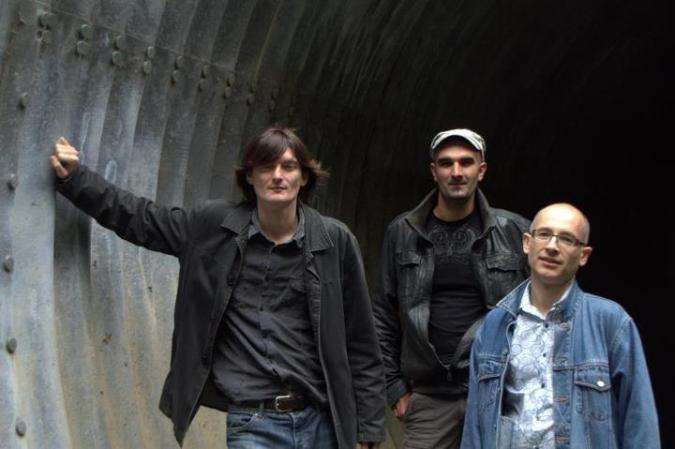
Gwendal Meillarec, Herve Briand and Gilles Bogzh-daonet.
I am glad to discover the band Daonet from Nantes. They are a fine addition to our ever growing collection of Breton artists. They play catchy rock oriented music using Breton language. It doesn’t matter if you don’t speak the language. The music is fun, catchy with just enough loudness to awaken your caffeine deprived family members. The lead vocals of Gwendal Meillarec (he also plays the flute) is strong but not imposing which is a good thing. He sometimes mimics the sound of the bagpipes with his guitar tuned in a unique fashion using great effects.
My guest Gilles H mostly plays bass guitar. He explains : “I personally mostly play bass guitar except on O’surfin on which we play with 2 guitars (Gwendal on chorus me in rhythmic guitar and after we exchange the roles). On stage I also play synth sounds controlled by my bass (organ, guitars sounds etc.) or my guitar on “O’surfin” (upright bass sound) but on the CD, I’ve used this sounds on “Marv Ponkalleg” intro and one effect on “Nerzh-kalon”. The drums of Herve Briand make the crunch! If you read further, Gilles gives us an in-depth look at the Celtic music scene in the whole of France not just in Brittany. Here, Gilles uses the terms Breton and Celtic to differentiate the specific from the general.
You made a different treatment of Tri Martolod..it has a more energetic and punk feel. What are your expectations in terms of people’s reactions to this song and those who are loyal with Alan Stivell’s version?
Yes we play Tri Martolod on stage in our way since 2003, 2004 I think. The reactions to our interpretation of this traditional song are always good, never any complaints 😉 people sing and clap their hands every time 😉
Daonet means Damned in English. Why did you choose that name for the band?
We are from the town of Nantes = Naoned in Breton language and there is an expression from Brittany “Mont da Naoned da c’hortoz bezan daonet” = going to Nantes waiting being damned, an expression referring to people from west part of Brittany who had to go to Nantes to get a job in the 19th century. The 12th track of Donemat album, “Mont da Naoned” is a folk-rock style song based on this expression with a parallel on nowadays people who have to migrate to find a job … Paris or elsewhere on the planet …
How about giving us a brief background of each band member?
Gwendal founded the band in 2000. He is an electric and acoustic guitarist. He also sings, and plays tin whistle. He writes lyrics mainly in Breton or in French.
I (Gilles) have joined the band in 2002. I play bass guitar, upright bass, synth guitar, and I also sing.
I’ve played in the late 80’s and early 90’s in a Celtic rock band from Vannes called Tan Flam. I’ve also played, wrote and sung in rock, rock’n roll, blues-rock bands ….for example Bogzh ! with Hervé on drums …
Hervé has joined Daonet in 2006, he plays drums, derbouka, djembe, cajon etc. He played in different music styles band before Daonet : rock, punk-rock, blues-rock …
What can we expect from the band this year?
We have recorded “Donemat” with guests’ participation on violin (Frédéric Bouley) and bombarde (Olivier Arz). We have played some concerts with Olivier. We also played in acoustic configuration (acoustic guitars, upright bass, cajon and voices). These different configurations may be developed in the future for live and recording events …
Where can listeners purchase their copies of Daonet CDs and mp3s?
The latest album “Donemat” is distributed by Coop Breizh, so dealers may have access to this record. It is also available on Daonet’s website http://www.daonet.eu/ as the previous CD “Rok a raok”, the different albums are also available in numeric version on http://daonet.bandcamp.com/ .
Donemat is also available in MP3 on itunes, Amazon platforms … It is also possible to discover the album through Deezer, spotify …
What are the festivals around France that you guys have been to?And what memorable things happened during these shows?
We played for the “Festival des filets bleus” in Concarneau (Brittany) 1 year ago opening for Gilles Servat with 10 000 people attending, we were announced as the “coup de coeur” of the festival… It was great. We’ve also played for “Celtival on the rock” in Guemene-Penfao with Dom Duff and Muray Head, for Festival des nuits salines in Batz-sur-mer …
It is not a festival, but a fest like the St Patrick fest for Ireland, in Brittany around the St Yves day / Gouël Erwann may 19th there is Brittany Fest organized since several years and promoted by Brittany region, we play during this period in different contexts. We played for example, few years ago in Rennes with traditional music bands, “Les Ramoneurs de menhirs” with their special recipe mixing traditionnal music and punk music and also a punk-metal-fusion band singing in Breton … This year we played for one of this concerts for the Brittany Fest in Nantes for or the first Breton language fest in Loire Atlantique. We are also asked for playing every year for the St Patrick day with Irish music bands (traditional or rock bands). We also play sometimes our music in concerts with no Celtic, or folk theme, with rock, blues-rock, punk bands etc. for concerts organized by bikers that sometimes are a little afraid of songs in Breton but when we ask if they understand the lyrics of English singing bands this stops their fear and they often recognize that even some French singing bands are not so easy to understand ;-).
Tell us about making the album Donemat. How do you gather materials etc. Can you tell us the procedure down to the final mixing?
Most of the songs were played on stage several years before they were recorded but in the beginning of the new record project, we’ve selected the songs (with 2 traditional songs “marv pontkalleg” and the Brittany anthem “Bro gozh ma zadoù”) and we stopped playing others songs, new songs replacing the previous ones. We worked the titles adopted in studio versions exclusively with the strict tempo of a metronome on every rehearsal during at least one year. We recorded with Arthur Lauth, who manages when this is possible our sound on stage, in a one day captation + mix, a pre-production recording of the 12 titles. With this pre-production CD, we met several sound engineers to find the studio allowing us to get the recording we were expecting with an agenda matching ours ;-).
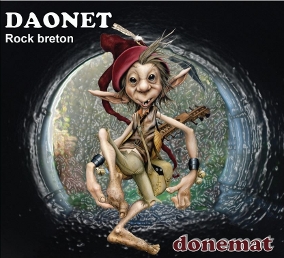
At this point of the project, we had the agreement of Coop Breizh for the distribution of our album in France. We also had a contact with a painter / illustrator Brucéro to order him a drawing for the CD.
We chose to work with a brand new studio : Woodbox Studio near Nantes – managed by Jeff Ferrand that worked before in others studios.
We began the recording in the end of may 2011 with drums and bass tracks (electric basses and fretless bass) in 2 week-ends.
Followed later by Gwendal during a week electric and acoustic guitars parts, a keyboard track on the slow song, tin whistle, and we recorded voices.
Two guests recorded after then theirs parts in other sessions :
– Olivier Arz (we played together in Tan Flam group long time ago) played bombarde on three tracks, we worked together for several rehearsals with Olivier with the complete band, or with guitar, bass and tin whistle/ bombarde.
– Frédéric Bouley who plays violin in numerous bands (Breton, Irish music) recorded on the song “Mont da Naoned”, we worked with him and Gwendal in rehearsal (acoustic guitar, upright bass, violin), and with a first mix of the tracks already recorded of this title.
We finished the choirs, Hervé recorded Derbouka and Djembe, I recorded upright bass licks with the bow on “Mont da Naoned”, synth guitar on “Marv Pontkalleg” intro and my rhythm and chorus guitar parts on O’Surfin …
Jeff did the mix with some adjustments after listen sessions with the band. We defined the final order for the titles and then the mastering process was done in a specialized company.
My brother Lionel took pictures of the band for the CD and newspapers, he also did the graphics of the Digipack including the booklet with lyrics etc. with the character Brucéro drew for us.
The CD was then manufactured in the first week of January 2012 and sent to stores in February by Coop Breizh, we also sent CD to fans who pre-ordered and organized a concert in Nantes to invite fans for this disc availability.
Do you think Celtic Breton is stronger now than before?
I suppose that you ask the question of Breton music . Is it stronger ? It is always present. In Brittany there are many bands playing traditional music : bagadoù created on the model of pipe bands. There are fest-noz bands (fest noz can be translated in night fest) and they play music to make people dance traditional Breton dances. They are very active. There are also Celtic rock bands and some Breton rock bands. They play songs written in Breton, in Gallo with or without traditional, Breton or Celtic music influences. The success of Celtic music and of Breton music for masses is cyclic in France. Alan Stivell, Tri Yann, Soldat Louis, Manau (Celtic rap), Armens, Dan Ar Braz, Matmatah (their first album), Merzhin etc. had a very good success in some periods, Nolwenn Leroy with her cover album of best of traditional songs in Breton had been a big success recently.
The scene for Celtic music and Breton music is always present here, especially in Brittany, where the festivals are very popular and numerous (Festival interceltique de Lorient, Nuits salines in Batz sur Mer, Filets bleus in Concarneau, Festival de Cornouaille etc. In the Festival des Vieilles Charrues in Carhaix-Plouguer it is much more rock and pop oriented, but a stage is reserved for Breton music). But bands playing Breton music are not only present in Brittany. In every region of France there are Breton associations including a bagad, a “cercle celtique” (breton dance group) promoting Breton music and Breton learning in the region where they live. There are also Celtic rock, folk-rock bands in the different regions playing Breton, Celtic inspired music…
A band like Daonet mostly plays rock sung in Breton language to promote its use, its learn that was in the past reduced in use by the action of France (interdiction in French schools).
Daonet band is based in Nantes, a town that officially is not a part of administrative region Bretagne, the department of Loire Atlantique was in fact removed from the historic Brittany to create an artificial region called “Pays de la Loire”. Numerous songs of Daonet are based on Brittany and Nantes history, and the use of Breton language for a band from Nantes in this context is of course a symbol. Others bands from Nantes that don’t still exist played Breton rock sung in Breton, EV and Tri Bleiz Die for example, (EV guitarist-singer Gweltaz ADEUX plays now pop-rock songs in Breton), the band Tri Yann that exists since the 70’s, plays Breton and Celtic music with some songs in Breton language is also based in Nantes.
Called “the hottest Irish acoustic band on the planet” by the Irish Times, Lúnasa performs live from the intimate confines of The Burren Irish Pub in Somerville, Massachusetts. Named for an ancient Celtic harvest festival in honor of the Irish god Lugh, patron of the arts, Lúnasa is made up of some of the top musical talents in Ireland. The current lineup includes:
Audio Engineer: Antonio Oliart Camera/Editing: Greg Shea Camera: Annie Shreffler Producer/Host: Brian O’Donovan
My big thanks to Greg Shea for this one.
***
New Releases:
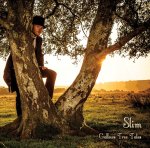
Slim’s forthcoming LP, ‘Gallows Tree Tales’, is a barn-storming folk-rock romp through tales of love, loss, booze, laughter and madness. With big productions, there’s everything from americana rock, celtic folk, country balladeering, and even a gospel choir thrown in for good measure. Once the record’s released, you’ll be able to buy it here, and there’ll be a full band tour, gigs-aplenty, and of course, a fair few ‘Gallows Tree Tales’ to tell. Get it here: http://www.slim-music.com/tcms/home
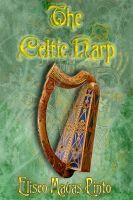
“The Celtic Harp” is a very interesting quick guide not only approaching to questions regarding the origins of its name, its history and revival, but also to the surviving types, suggested Celtic Harpists, and a list of related external links. https://www.smashwords.com/books/view/210054
Plus: Somerset Folk Harp Festival, Athas’tour pic and schedules, Celtic vampire novel by Karen Victoria Smith and Delta Rae …so emotional and beautiful!
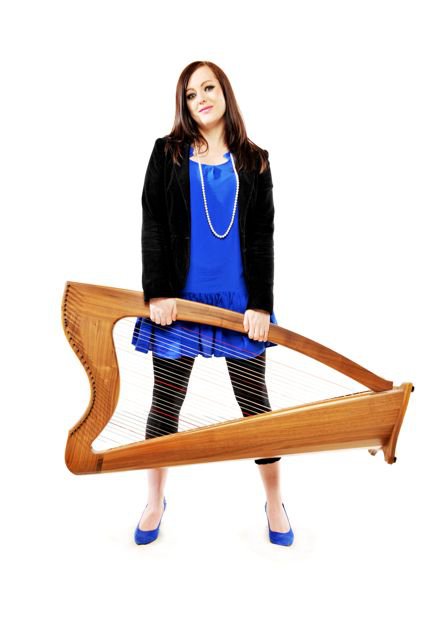
Scottish harpist Rachel Hair notes down her tips on how to get into this fascinating musical instrument: The Celtic harp!
It was through my discovery of harp music that got me started in perusing the web for more resources. I think it was my interview with Scott Hoye and his invite to join the Celtic Harp facebook page made this interview with Rachel Hair possible. The Rachel Hair trio brings something fresh to harp music. There’s unmistakable groove, atmosphere and optimism the first time you listen to any of their tracks. Interviewing Rachel deepened my respect and admiration for her music and her band. She is one of the great contributors to the forum lately while being out joining the Manx music festival. She kept everyone updated with pictures and links. I even got my Maeve Gilchrist through her recommendation. Everyone in the Celtic Harp community is very supportive of each other. Eric, Scott, Rachel, Corrina, Amy and the rest keep the community alive with their ideas and presence.
Rachel is very enthusiastic to share her thoughts with everyone. Especially those who are planning to study the instrument but might have doubts that hold them back. I like her in-depth way of answering questions. I am sure you will enjoy this and add it to your bookmarks for reference.
How do you describe the Scottish folk scene these days ? What’s the trend in terms of playing, the instruments and also the general band image that the listeners are warming up to?
The Scottish folk scene has gone from strength to strength and over the past 10 years has had a real upsurge of talent and creativity. I think its one of the most creative folk scenes in the world. You have musicians who know their tradition well and can perform it fantastically but are also creating and adding to the tradition. More than ever musicians and bands are writing new music and presenting it in an ever creative and evolving fashion… its not just about playing tune after tune anymore. Bands are getting really into big arrangements and taking the listeners on a journey to what is becoming the new tradition in Scotland.
Theres a lot of cross genre music making too. I live in Glasgow, Scotland’s largest city, and a hub of creativity amongst musicians of all styles. Folk, jazz, indie, rock and classical musicians are not only mixing with each other socially but are musically creating new sounds together. The results of this are now being on seen on stage and festivals such as Celtic Connections are a great supportive platform of this allowing it to be brought to the public’s attention.
With friends.
Your tunes are always rhythmic and is also filled with arrangements that glow of atmosphere…how do you value atmosphere in songs? Others are more into technique and speed. Do you think it is essential in every Scottish and Irish recording to have a sense of atmosphere or ambience?
I like to create records and shows which take listeners on a journey, giving them opportunities to tap their feet along, dance but then also give them opportunities to reflect and feel the emotion of the music we create. One of the tunes we most enjoy performing as a trio is the haunting melody “Cancro Cru”. We really get emotionally involved in the tune and this is often felt by the audience and commented to us after.
I don’t think its necessarily essential that every recording gives a sense of this atmosphere but I do think its important that musicians and bands try to give an impression of what the atmosphere their live show creates, through their recordings.
You have been active these days especially during festivals. What are the things you learned being musician, in terms of traveling with ease? Tips you can give us? I remember what Scott Hoye said about harpists..it’s not like playing the fiddle where you can toss it and go. Harpists carry this huge instrument.
Preparation is the key! I often fly with my harp. Living on a large island (Britain!) means that any gig I do outside the country means a flight. I always phone up the airline in advance and let them know I’m taking a Celtic harp and ask them to make a mark on booking. I’m always very casual on the phone and make it clear that its not that bigger than a suitcase, weighs less than 20kg (normally less than my suitcase!) and that I fly all the time without difficulty.
It used to be that I could take it for free, but now you just have to accept that you have to pay for it. Most of the large airlines just see it as an extra piece of hold baggage and this can usually be paid for in advance which makes life easy.
Its always important to be sure that the car that will pick you up will have room for you, your suitcase and your harp. To be honest mine is actually quite small in its flight case so this is normally no problem.
I also have a protective fibre class flight case for my harp which is very easy to move around and protects it well. I tend to tape up the clasps on it too for safety too. I also put pieces of polystyrene pipe round my levers inside its cover, to protect them further.
What are your suggestions for both artists and enthusiasts about this type of music and making it grow? We have the technology and tools but what do you think are the things that each of us can do to improve and expand the scene.
I like to use social media to connect with people… through Facebook, twitter and youtube. Its a great way of keeping in touch with your fans and new people are discovering my music through these ways every day. It also gives me the chance to promote other music, that isn’t always mine. Bands and groups that I like that I think deserve to be heard. I like to post videos etc. of them to help their music grow and get to new people. Its definitely a worthwhile thing to get into….facebook, twitter and youtube and free to use so you’ve nothing to loose!
What tell young people who find harps fascinating and want to study it?
Rocking out the Scottish reels — with Maeve Gilchrist.
Get yourself to one of the harp festivals and try it out for yourself! I’m on the organising committee for the Edinburgh International Harp Festival and it coming along to a festival like it really is a great way to discover harp music. You can join a beginners course and have a go, visit the harp exhibition which has all the top makers in Europe showing of their harps and you can go to some of the concerts. Harp festivals really are a great way of experiencing everything “harp”. You also get the chance to meet harp players young and old, of all levers from beginner-to professional. We’re all a very friendly bunch.
Who are people who influenced your growth as an artist through the years?
When I was at university in Glasgow, studying music, my harp teacher was Corrina Hewat. She was an incredibly encouraging teacher who really pushed me to discover my own style of playing. We don’t really play in the same way and I think that’s a testament to her as a teacher.
A lot of my friends are professional musicians, Jenn and Euan who play in my trio, Jamie Smith who plays in the group Jamie Smiths Mabon and Gaelic singer Joy Dunlop. We’re all very very head strong and passionate at what we do and we’re very good at encouraging each other to keep going and achieve our dreams and success in music.
What’s your biggest goal in life.
Well to be happy, and to be fulfilled both in my personal life and in my musical life. simple!
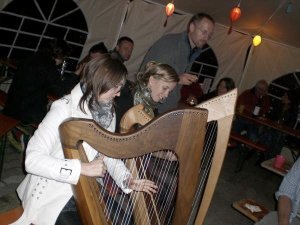
Everyone got a harpful for 4 days! People who are very enthusiastic about harp music(including yours truly) will keep this festival on the calendar. Some of the big names in the community attended: Chris Caswell presented Guerilla Music Theory. There’s also Breton dancing( this is really fun!) led by harpist Clotilde Trouillaud. For people who wanted to pick up a handy instrument enjoyed the tin whistle workshop. Maeve Gilchrist whom we presented in this site was also there teaching techniques.
Other notable musicians:
Peacocks Feathers: entertained with Irish & Scottish tunes & songs during the lunchtime concert in the Atrium.
Debbie Brewin-Wilson lead the 3-day Basically Beginning workshop.
Nicolas Carter on the first of his 3-day class on Paraguayan harp. He’ll also help out Tracy Gorman in the Paraguayan Dance class at 3:30pm.
There’s Billy Jackson in his workshop on Scottish Harp of the 17th century yesterday. Right now he’s teaching Composing in a Traditional Style. By the way I have one of his albums!
Thanks to Scott Hoye who is up to date. He’s the source of this news.
Synopsis: At thirteen, Micaela O’Brien was found wandering a pasture in Ireland, the sole survivor of a mid-air explosion. Now, as a successful investment banker, she will discover that Wall Street has fangs and claws. When international power brokers, creatures hiding in plain sight, threaten her and those she loves, will this heiress to a Druid legacy deny her power and let loved ones die again?A thrill ride of money, monsters and murder across the globe.
According to the author
: 2 DAYS left to get Dark Dealings for Kindle on sale for $1.49. 1/2 royalties 2 Kick #Cancer Overboard.BUY,read,review amazon.com/Dark-Dealings-… Read the novel described as Trueblood meets bluebloods with a 4.4/5 rating on Amazon. Price goes up August 1
Tataratat! The Gothic Celtic in me loves it! Twilight fans sorry but I think Karen Victoria Smith does more than Stephanie Meyer. Nothing is better than Vampires and Celts in one book.
***
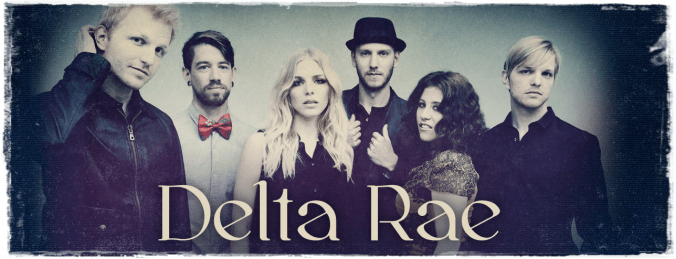
Our featured band Delta Rae
Take a look at this official video by Bluegrass fusion band from North Carolina Delta Rae. I love the concept. It is both funny and creepy. The voice of Brittany Holljes has a powerful quality in a pop sense but with New Age delicacy. There are also male lead vocals occasionally. The music has a knockout rocking quality but with the atmosphere of Sarah McLachlan. It is a band that will appeal to fans of music categorized as folk/rock or country with chillout moments. My favorite track from the band is Holding On To Good because it is really explosive and glorious and the sound just floods through you. So beautiful! But wait till you hear Surrounded, a moving and mesmerizing track that builds up into a glorious release- a crashing wave of sound, angelic harmonies and earth ravaging meteor or emotions.
Members:
Ian Holljes (vocals/guitar) Eric Holljes (vocals/keyboard/guitar) Brittany Holljes (vocals/percussion) Elizabeth Hopkins (vocals/percussion) Mike McKee (drums) Grant Emerson (bass)
Been a fan of Alan Stivell and I tried to learn this song by heart . I found the English translation to this by Bobby Bob and Ellan Vannin. However the beauty of this song really blooms through its native tongue. Breton language is fascinating to study. Too bad I am still struggling with my Irish Gaelic. The one on the video is from Arany Zoltán, a rising singer/song writer from Hungary. Visit http://www.aranyzoltan.hu/ and http://www.youtube.com/user/aranzoltan
The lyrics in Breton are –
Tri martolod yaouank tra la la la digatra
Tri martolod yaouank o vonet da veajiñ
O vonet da veajiñ ge, o vonet da veajiñ
Gant ‘n avel bet kaset tra la la la digatra
Gant ‘n avel bet kaset betek an Douar-Nevez
Betek an Douar-Nevez ge, betek an Douar-Nevez
E-kichen Meilh-ar-Wern tra la la la digatra
E-kichen Meilh-ar-Wern o deus moulhet o eorioù
O deus mouilhet o eorioù ge, o deus mouilhet o eorioù
Hag e-barzh ar veilh-se tra la la la digatra
Hag e-barzh ar veilh-se e oa ur servijourez
E oa ur servijouirez ge, e oa ur servijourez
Hag e c’houlenn ganin tra la la la digatra
Hag e c’houlenn ganin pelec’h hor boa konesañs
Pelec’h hor boa konesañs ge, pelec’h hor boa konesañs
E Naoned er marc’had tra la la la digatra
E Naoned er marc’had hor boa choazet ur walenn
Hor boa choazet ur walenn ge, hor boa choazet ur walenn
You can see that the structure of the song is quite repetitive, so the following attempt at a translation just tries to deal with the operative words in each verse – you’ll have to sort out the vocables for yourself.
In fact, you’ll probably have to sort out the meaning for yourself! I hesitate to attempt any Breton, not knowing how the grammar operates to any great extent.
However, by fumbling through my Breton dictionary, some sort of story seems to emerge – the nearer the end, the more hazy my attempts get, needless to say. Take it all with a pinch of salt!
Three young sailors went travelling
By means of a strong wind they were sent up to Newfoundland
In the vicinity of Meilh-ar-Wern (the mill on the marsh?) they set(?) their anchors
And inside that mill was a female servant
And she asked me where were our usual neighbours
In Nantes in the market our customary chosen circle
I hope you can find a Breton speaker to give you the proper thing.
 funding project in which one of them I decided to post here. Their approach to music is eclectic, blending traditional Breton sounds and other World influences. The music is lively, optimistic and evokes the landscapes of Brittany.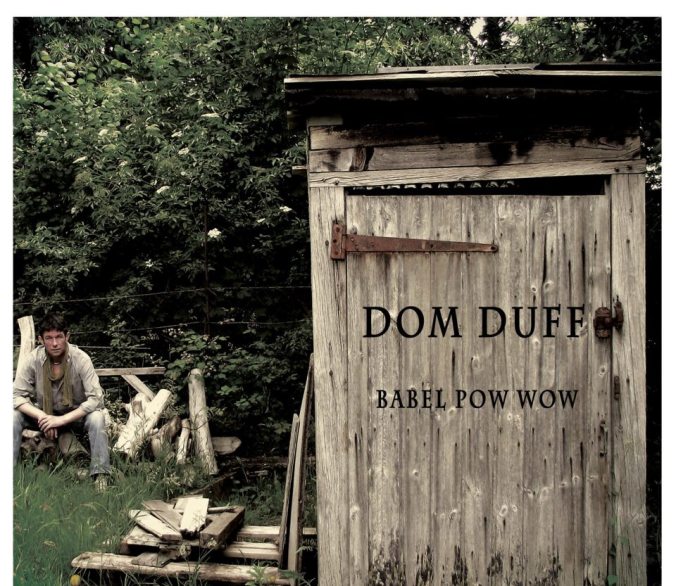



 Celtic Music Fan