A fantastic essay from Fraser Fifield and more updates.

Here is an interesting update that musician Fraser Fifield posted on his Facebook page. I thought that it would be great to share this post for everyone (with his permission of course) to read. And yes he gave his approval:

https://www.youtube.com/watch?v=9v77PHyULoU&list=UU3zm0M_KOO4-qO1cqAiyWbw
“A jig with no melody per se, perhaps.a wee pre referendum musing, feeling pensive at the time I think, but optimistic, stupidly. audio a bit a low side, but you can just turn it up, a fair bit. hope you like. it’s optimistic with a hint of certainty of getting done in and overtones of despair. ”

http:www.fraserfifield.com for more

My newsletter, to show unsubscribers just what they’re missing out on…

Welcome. Enough has happened in the life of this freelance musician, I feel, to warrant sharing an update for any vaguely interested, muse upon an existence which is pretty varied if not opulent, recount some highs and lows of the past year and so draw a line in the sand.

Then step over it and into the future. 2015 looks interesting, but first a non-chronological look at some of what was has been so far, 2014.

(Why? Because I like my work to remain current and vaguely in people’s consciousness at times, it’s healthy given my job, plus there’s good music involved which I’m genuinely happy to advertise).10387424_790070994388029_5241127912082493114_n

I’m happy to have contributed to a variety of nice recordings. Still unreleased, but soon to be, are 2 lovely records by Inge Thomson ‘Da Fishing Hands’ and Sophie Ramsay’s 2nd solo album, respectively. Already filtering through to discerning ears are records by Patsy Reid ‘The Brightest Path’ and Jim Sutherland aka Struileag aka Children of Smoke and one by me and Graeme Stephen lest I forget – Esotero, released this time last year, and still flying off the shelves. And there’s an unmixed record by David Milligan, Graeme Stephen and I, resting on a hard disk for some months now, quite happy, look forward to share that in due course.

A pleasure to play alongside and learn from (and travel, rehearse, eat, drink etc) Angus Lyon/Duncan Lyall Band, Gavin Marwick’s Band, Corrina Hewat’s Band, Graeme Stephen, Dave Milligan, Mr McFalls Chamber, Red Note Ensemble, Allan MacDonald’s ‘Bruce 700′, Big Big Sing, Jerry Donahue and crew, and all others..Thank you all, very much.

And the Eurovision song, for Montenegro, glorious, I didn’t see that one coming. Thanks Slobodan. A lovely song too… No, no I didn’t appear in the final, just the singer and a rollerskater did. I didn’t even leave my own flat…been doing a few bits of remote recording this year – just last week on a cover of You Shook Me All Night Long by AC/DC for a musician in USA. And also last week, in another studio right enough, a kind of sultry Marilyn Monroe version of the Proclaimers’ 500 Miles kind of gobsmacked me momentarily, but I regained composure and pitched in with everything I could blow or squeeze no problemo. They won’t mind me mentioning, it’s not meant for folks like you.

My week in Gavoi, Sardinia, in June, courtesy of the British Council, collaborating and making friends with fellow European musicians, was a small sunny highlight and felt perhaps like something of a holiday whilst being allowed to pursue an interest in making experimental music, without guilt. I’m not an experienced holiday-maker, some would argue a professional one, but they don’t know.

Sad news came regarding the untimely passing of Georgi Petrov this year. He’s missed. A virtuoso player of the Gadulka, he kindly played along with Nedyalko on my 2008 record Traces of Thrace. His warmth of character, stories, good company and the music which resulted was loved by all who knew him.

The musical year started with a chance to play on a couple of songs with Capercaillie on their 30th anniversary gig in the Glasgow Concert Hall. Having gone through teenage years listening to them a part of me felt a tiny bit fraudulent being on stage.. For the 15 mins on the night and only a day or two of anticipation beforehand in typical, loveable, Shaw style, this was really exciting. Later in the year if I hadn’t missed his call I could have got to play my whistle with Kylie Minogue.

The musical year actually started bang on the 1st with Graeme and I playing our part in Lau-Land Edinburgh, which was perfect, my guitarist colleague almost managed to sleep in, but didn’t.

What else…became increasingly politically charged re the Scottish referendum for a while, insulted quite a few people with contrasting views probably, got crushed, returned to normal.

The Martyn Bennett Prize for composition happened for the 2nd year in Edinburgh. This time I had the job of trying to play the finalist’s pieces along with 4 other musicians – fun and challenging. The standard was great but I would urge more composers to have a go – it’s restricted to Scottish based composers (I think) but that’s pretty much the only restriction. It’s got a 1st and 2nd prize of 2 and 1k respectively. It’s a kind of high-brow X factor, not to be taken overly seriously as competitions shouldn’t, but an event that can help motivate new ways to integrate elements of our traditional music in composed music. Fingers crossed it’ll run next year.

Now, looking over that line and beyond the approaching festival of consumerism, is Celtic Connections Festival 2015 and my pal Greg Lawson’s work to arrange Martyn Bennett’s great last album, Grit, for a large bespoke acoustic ensemble. As you do. To be performed in the festival’s opening concert, January 15th. All being well it will (must surely) be quite epic I imagine.

Inge Thomson’s Da Fishing Hands – Celtic Connections 23rd January, Glasgow. Inge and I are also beginning to play as a duo which I’m chuffed about. More info about this soon. But the Celtic Connections gig is a 5 piece and will surely be lovely. The 1st gig of this collection of music/song, on the tiny island of Fair Isle, May 2014, was one of my favourites. Inge and I also play Dec 12th in Kilbarchan, nr Glasgow.

A great opportunity has come along for me to join the tabla maestro Zakir Hussein’s ‘Pulses of the World’ project which will tour in Dubai and India at the beginning of February and in the USA in March. With Rakesh Chaurasia and Jean-Michel Viellon on flutes… shelves of my CD collection just came to life. Not that often I can reel off a tour list like this, so I’ll take this opportunity to:

13th March – Pabst Theater, Milwaulkee
14th March – Purdue University, Fort Wayne IN
15th March – Cullen Theater, Houston TX
17th March – Lisner Auditorium, Washington DC
20th March – Moore Theatre, Seattle
21st March – Chan Centre, Vancouver BC
22nd March – Boulder Centre, Boulder CO
27th March – Painted Bride Arts Centre, Philadelphia
28th March – Carnegie Hall, New York
29th March – Somerville Theater, Boston MA
31st March – Rio Theater, Santa Cruz CA
2nd April – Jazz Centre, San Francisco, CA
3rd April – Jazz Centre, San Francisco, CA

Audiences in the Scottish Highlands (mostly) will get a chance to hear my collaboration with Red Note Ensemble and Kuljit Bhamra (tabla) at the beginning of March. It was nice to meet and try some material out at the recent Sound Festival in Aberdeenshire. The Highland dates will be posted in due course.

I’ll leave it there, just before I begin to tell of a big bit of news, good news, which I had to read a few times when it arrived the other day. But that perhaps would turn this simple newsletter into something else, a short story at the least so, back soon on that.

Nice to write to you. Nothing to sell you directly but perhaps some CDs for Christmas presents, always an option, always a tenner.

Any correspondence always welcome.

All the best,

Fraser


www.fraserfifield.com

***
ATHY “The Electric Harper”

Athy from Latin America.He’s got style, he’s got the funk. He plays the harp like no other. Mix the Spanish soul with Irish tradition and you get Athy Electric harper. He is passionate in propagating the harp as popular instrument and not confined inside the doors of classical standards. I made an interview with him before and he is down to earth and filled with a great sense of humour. It is good to see how his fans are multiplying year after year. He has toured around the world ad have performed with the greats in the world of traditional and contemporary music.He is embraced by fans of Jazz, World, Classical and Folk. Irish musicians hold him in high regard and well, hearing his recordings myself made me a fan!

***

Moya Brennan and Cormac De Barra – Sailing

For those who missed this track the day it came out, here it is. So lovely! Enjoy your weeks ahead friends.

 

Escaping Reality with Esotero

Fraser and Graeme

Traditional Scottish and Jazz. Those are the two styles that define the new album Esotero by Fraser Fifield and Graeme Stephen. It is a work layered in intricate textures. I encourage you to give it more than twenty spins before you say anything what the album.What I am saying here does not even define the whole album because, Esotero has MORE to offer as part of your listening experience. But we can agree that it is an impressive album with loads of surprises.

I like the how space is given emphasis between instruments and tracks. It is almost like stepping into this white room and seeing a few instruments on display. It is easy to get lost in the passion behind the making of tunes like the title track Esotero, The Bank of Time and Immigrant eyes among others.

These two artists go all the way back with an impressive  array of albums to celebrate. I would like to unlock the secrets to the melodic alchemy of Fraser Fifield but it is hard. His approach is always unique and sometimes the way he plays with scales is uncanny. His delivery gives a sense of atmosphere and mystical qualities to each track. And yes, the guitar works of Graeme Stephen completes the alchemy, giving Esotero a timeless and satisfying listening experience for all.

Buy Esotero here: http://www.fraserfifield.com/shop/

According to the French Piper: Interview with Francois of Caliorne


205259_475513602464323_455668118_n

France with its interesting culture and music is definitely a home to bands that are considered avant-garde. Living in France and having a taste for Celtic music would mean that you either go for Breton music or a combination of that and Gaelic sounds. Then there are elements of Jazz and Rock which the French are good at. Such elements can be found in the music of the six piece ensemble Caliorne. With the release of Rock Noz Band, Caliorne continues to define their music and also spread the love of music from France.

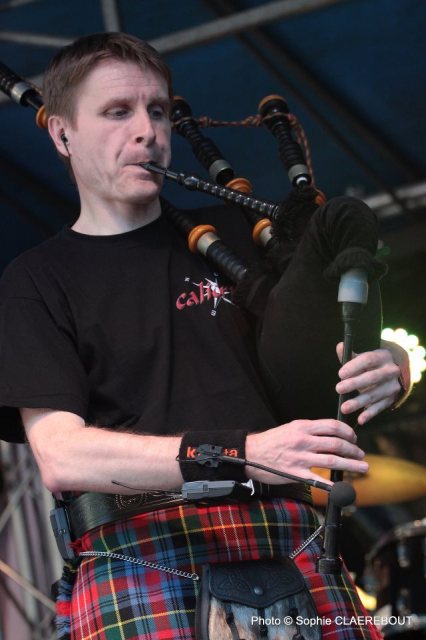
Francois (who also goes by the name Fanch Soixantequinze) is the band’s spokes person. He also plays the bagpipes and other wind instruments. So it isn’t a wonder how he landed in my interview section. It is a pleasure to learn what Caliorne is all about through the words of the piper.

How did you learn to play the pipes that way?

I started playing Highland bagpipe in Paris, where you can either play Breton music or Scottish music. I started with Breton music in a Bagad and after, in a Pipe Band (Paris & District Pipe Band). After few years I wanted to play with friends some french folk music (Groupe Sans Gain). To do this I discovered other bagpipes, tuned for that music. And finally, I met people in order to play Rock, what I always aimed to play To play with Caliorne. I tuned bagpipes on A440 with Equal temperament, rather than just temperament. That’s one of the reasons why my bagpipes melt with other instruments…Finaly, my way of playing is surely the result of all this meetings ! But it is the first time someone asked me.

Who is your main influence in your development as a piper?

So many highly skilled pipers ! Douggie Pincok (Battlefield Band), Gordon Duncan, Martynn Bennett, Patrick Molard, Erwan Keravec, Mickaël Cozien… and most of Celtic Rock Bands with a bagpiper (Wolfstone, Slainte mhath, Sonerien DU, Prydein, The claymore…) . And of course many friends and other musicians you probably haven’t heard of yet!

Do you have an exciting thing  going for your band this year? What are they?

Playing at a lot of gigs ! At the moment we lack notoriety, and we have few. That’s why we recorded “Rock Noz Band” last year, and we hope It will be listened to widely !And of course we will compose new tunes.

What are your favorite tracks that you recorded with the band ?

Well, I like most of the album ! Hopefully! But to answer to your question :Déjanté ( totally crazy), La Kro, Star de la Boite (la “Kro” is a common beer in France, and “la boite” means disco. And the sentence is pronounced almost like the traditional dance name…)Trad ha Rock (from tradition to Rock…) and Friponne (rogue).

What are the top 5 Celtic recordings you are listening to this week.

Here they are:

http://pakerprod.com/fr/album-fr/dar-pevarlamm/
http://pakerprod.com/fr/album-fr/614/
http://www.cdbaby.com/cd/prydein3
http://www.martynbennett.com/Album_Hardland.html
http://www.amazon.com/Nas-Cordas-Pancho-Alvarez/dp/B00005S0MJ

If one goes to France, what are the places in your area where one can listen to Celtic bands performing live?

Well, It is quite easy to listen to Breton music in Paris area, but for non-Breton Celtic music, it is harder. Dropkick Murphy’s played last week in a large hall (Zenith), but it is unusual. At the time of St Patrick day, of course, you can find a lot of gigs…
There is no formal venue dedicated to Celtic music…
The best way is to look at facebook or some website.
Some Pub organize Irish Music Session, every week, like the “Quiet Man”

https://www.facebook.com/events/135977159899005/

Or the Carrs

https://www.facebook.com/groups/356096901070064/

MISC:

About his instruments:

“Most of my instruments are made by talented craftsman, and some of them are almost unique pieces : 1 chanter in C major, 1 veuze chanter with highland pipe fingering in c major, my diatonic clarinet, etc…
http://benew75.blogspot.fr/search/label/Mes%20instruments%20%C3%A0%20vent

Currently listening to:

http://www.deezer.com/fr/album/212387
Amos Hoffman – Evolution
http://www.deezer.com/fr/album/75550
AC DC – Black Ice
https://www.facebook.com/pages/Duo-Jonsson-Coudroy/154672931264004
SuperTramp – Crime of the century
And a lot of unknown albums. They are completely unknown outside France.

What he loves the  most about being in the Celtic music scene.

Feeling the music & sound surrounding me and looking at the dancers moving with the rhythm..

A detailed review of Rock Noz Band via 67 Music: http://67music.net/reviews/caliorne/

http://www.caliorne.com/

http://www.caliorne.fr/

http://www.myspace.com/caliorne-rock-noz-band

Video:

About the video: During our recording in studio of Rock Noz Band, we filmed each musicians when they performed on the same tune. Here is a video of the “Scottish Purple”, with the final soundtrack of the CD.

Gallery

***

Celtic Twist Game:

The Celtic Music Fan would  like offer a free copy of Twist in the Tale to the winner of a competition which will start now. This is how it goes. All you need to do is find an answer to a question which in the animated picture blow. all you need to do is go to their official website http://www.wix.com/hollandandpalmley/celtictwist to look for the answer. A winner will be announced at the end of this month.  Phil and Dave could send it directly to you with a short note of congratulations. How’s that? For those who are new to this album, here is the link to the review I did back in June 27 of 2012.

***

Huzzah!

Cornish Ceilidh band. I found that video above while looking for some Cornish music. Yes the wind blows from Cornwall this week-and Scotland. I’ve never seen any ceilidh band from Cornwall to be honest. So it was quiet a pleasant surprise to find something like that.I am sure if I look further there will be more.

This week, the commotion is all about the Traditional Album of the Year nomination for Trad Connect. So if you haven’t chosen your favorite album yet, then it is time to cast your vote. And please register so you can interact with musicians and bloggers like myself who drop once in a while.

That clip above is from The Big Fat Electric Ceilidh from Scotland manned by Dave Martin. Dave teaches bodhran while maintaining his love for electronic music. The great part about running a site about Celtic music in general is the lack of restriction I have to adhere to. So don’t be surprised if you find yourself listening to something that sounds like Jazz, or electro one of these days. It takes all kinds….

The Peatbog Faeries have a new track and that video has both the great scenes and beautiful music! I look forward to doing an interview with the band soon. Who would you suggest I interview next?

Fraser Fifield: Relationship of sounds and styles(Interview)

Also in this edition: Colin Nea, Therese Honey and Enda Seery

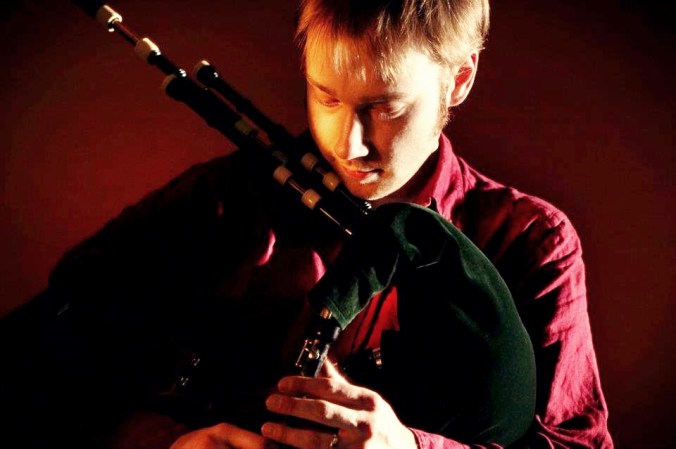
Fraser Fifield: Pic by Barryjohn Bj Stewart

Plays: saxophone/whistle/kaval/bagpipes/percussion/composition

From: Edinburgh, United Kingdom.

About: musician, composer and producer.

With the excitement of an upcoming album, Fraser Fifield talks to The Celtic Music Fan about music and what makes collaborative musical work interesting.

This week’s special attention is given to Scottish musician, composer and producer Fraser Fifield.  I was captivated the first time I listened to one of his tracks. There’s sensitivity, intricacy and a sense of underlying elegance in his musical voice. I think I read and heard his music a couple of years ago, way before I even started writing about Celtic musicians. It is only now that I got an opportunity to communicate with him directly for this edition.

He plays the traditional instruments in a way a Jazz musician would, and then reverse the process with the Traditional instruments. It is like what happens when you put different people in different attires and situations and see how they react or how they look in that environment. This is what he did with music and instruments. I think his striking importance is being able to walk between different worlds and still maintaining the authenticity of his artistry in playing. This edition is about relationships: between different types of music, musicians and instruments.

I think you will enjoy how this interview turned out. I had fun making this one.

What’s keeping you busy these days Fraser?

What’s going with me? Well, the main thing just now is having eventually started recording an album with Graeme Stephen, guitarist and long term colleague – just duo, focusing on live performances basically – meaning played live together, not actual concert recordings..lots of electronics too but hardware boxes used in live performance on the whole as opposed to studio laboratory type of process – which is cool, but not what we’re doing here.

So we started that last week…and will be ongoing as time permits over the next wee while. Just had a flurry of CDs through the door as other projects I’ve recorded on came to fruition – Maeve Mackinnon, Sophie Ramsay and Wingin It…maybe you’ll hear some of these soon

Looking forward to playing London jazz festival with the Take 5 Europe ensemble plus a couple of gigs in Poland one with Maciej Obara 4tet and Take 5 again. Playing duo with Graeme in St Andrews Scotland in a couple of weeks…

Doing a recording session for Angus Lyon this week and hooking up for a small gig with an old friend – wonderful clarinet /sax player Dick Lee..

With John Surman and Tom Arthurs last week on Take 5 Europe. By Emile Holba

 What can listeners expect from this new album in terms of style and sound?

I’m hoping folk will hear two musicians enjoying playing together who’ve built up strong dialogue between them (we’ve been playing together some 16 yrs I think). A general rule seems to be emerging – remember we’ve just started – to avoid layering performances/multitracking ourselves i.e. you’re essentially going hear two musicians playing live together, there’s no click track etc… that’s not too say sonically the record will be simple – early results suggest anything but…this is often just low whistle and guitar but like you’ve never heard.

A bold statement perhaps..but I’m being fairy serious… The live recordings on the soundcloud page hint at the sound of course, but I am enjoying working a little more on our recordings after the initial performance, resampling ourselves in a way, extracting small bits of audio and changing it’s function…I’ll say that much. Will it sound folk or jazz – I’m bound to be asked that… and the answer is I have absolutely no idea..a bit of both, or plenty of both actually. The compositions are mine but compared to my previous records I’d say improvised passages will turn out be more featured.

I think making music is also a relationship between you, your fellow musicians and your fans. What have you learned so far in maintaining this relationship since you started? What are the things you avoid now and what are the things you consider essential?

….Essential in regard to making music with other musicians, for me, is a sense of openness, trust and maybe some kind of mutual understanding of what it is we’re doing, not necessarily verbalized but that the feeling of all being well is present…all makes for a good starting point, at least musically; you could be having the worst week imaginable, but sometimes these things can twist around into good musical moments. Sometimes, hopefully not often, one can’t get into the right vibe to make music creatively for whatever reason, cat gone missing, who knows, but assuming all is fine there should be something you can switch on to be excited about what you’re doing, if you’re not already. Basically it helps to be in good mood is what I’m saying I suppose.

Musical situations I try to avoid are those where none of the elements to my previous answer are present. Also I’ve not been drawn into a ‘band’ situation for a wee while now, which is maybe down to my personality, I don’t know..I kind of miss it in a way, the band thing, but at the same time value the diversity of music I’m currently able to fit on my modestly sized internal drive.

Be nice to audience members if they’re being nice to you…i.e. paying to hear you play….would be a good general rule…

Try and have a relationship with the people that enjoy your music, if you want to that is…unless you have some Garbarek like qualities, and I try to mean that in a nice way, it’s a probably good idea business wise to interact a bit.. which I guess is what I’m doing right now..but I’m sort of enjoying the therapy of answering your questions. How’s this piece shaping up now by the way ?

Oh this is shaping my work nicely!

If you evaluate all the tracks you composed throughout your career, which one has an impact to you in terms of the manner it was composed and the inspiration behind it?

I’ve chosen the track called Psalm from my first solo album Honest Water as it’s perhaps the tune or idea which has had the longest and most interesting journey with me to date. The first idea was to try and imitate the sound of psalm singing from the Scottish Gaelic tradition – a most beautiful and peculiar art form in itself. My approach is a very simple one and one that has worked for me in many situations over the years, the more instruments playing together the better the effect, so great if working with groups of students of varying levels of ability for example.

Most recently I used this idea in the opening section of my piece ‘Playground Tales’ written for the group Mr McFalls Chamber with guests Corrina Hewat, James Ross, Aidan O’Rourke and myself – hopefully a recording next year. So the track Psalm from Honest Water began life as one of five parts of a suite for saxophone quintet titled Traditions – one of the first years of the ‘New Voices’ series of commissions made annually by Celtic Connections, and it’s still running – quite a body of work in there now. My turn was 2001, a long time back now!

I’ve never played the tune much on my own gigs for some reason, actually probably no reason, but have used it often in a variety of other settings, I recall…a group of 7 different European bagpipes at Rudolstadt Festival Germany, recently with Dutch trio the Nordanians, with the Take 5 Europe group this year, it’s served me pretty well, and I think it’s a nice melody.

With Corrina Hewat

If you have the time, the energy and the means to be an album producer, whom would you work with and what types of musicians would you help in producing records?

Well I’m doing that very thing right now in a kind of self-medicating manner along with Graeme Stephen in the making of a duo album together which is actually a bit overdue I feel, but at last is progressing nicely. I’ve always enjoyed being very hands on with every aspect of my own record making, from the engineering through arrangements, performance to mixing. I like having the freedom to work at my own pace with things and review/adjust at will…does end up taking forever sometimes though…and that’s not so cool always.

With other artists I’ve occasionally become involved in the role of producer or perhaps co-producer in some instances – for example where a group has developed a sound collaboratively and go on to then record. I’ve never been great at adopting a workmanlike attitude when it comes to making records. I think its quite a big deal. An example I can think of is with my friend Mick West, a traditional singer from Glasgow whom I first met whilst a student there. I’d played with him in various line-ups of the Mick West Band ever since, so when the chance to make his last album ‘Sark O Snaw’ came round I really wanted to do it, not least because having played with Mick for many’s the year he’d never properly captured the best of his music on record – I wanted to change that, and I think we did, to cut a long story short. It was a labour of love like most records I’ve worked on, probably ending up with a negative hourly rate or something close it, who cares, it’s a lovely document to have.

In terms of who to work with…if they can play well with heart and soul and give and take, and we can get along well, that’s the only ingredients required. I’m pretty happy doing a lot of the work I do for those very reasons.

Take 5 is an ongoing project you are involved with. Can you tell us a little bit about it and how’s it going so far?

It’s been a very nice experience. Firstly Take 5 then this year Take 5 Europe which is new extension of it. It’s about artist development essentially, through talks/discussions/networking (that mostly over one week) and making music with the other Take 5 participants you’re given tools or ideas at least aimed at perhaps focusing one’s career, taking a look over what you’re doing and what you might be doing…it’s positive certainly if anything at all.

This year the ensemble of musicians on Take 5 Europe proved to be a surprisingly cohesive group – not a typical line-up – 2 basses, vibes, drums, guitar, trumpet, 2 saxes + me. They’re a very nice bunch of people and amazing players, in late 20s or 30s – 2 each from Netherlands, France, Poland, Norway and the UK. We’ve been playing at the festivals run by partners of the scheme in Molde, Rotterdam, Coutance, with just 2 performances left to do in November in Poland and London. Playing and hanging out with John Surman on both these Take 5 weeks was certainly noteworthy, great musician and lovely chap.

I know you have played the bagpipes for a long time. But if you were a listener, what makes a bagpipe and amazing instrument?

There’s something primal going on with it that’s for sure. I can’t get into any physics that’s for sure too…I can but agree there is something about the sound that speaks to an enormous variety of people from every part of the world. Being very loud (if we’re talking the GBH here) is surely a bonus.

-Fraser

http://www.fraserfifield.com/

There you have it folks. Be sure to keep track of  his schedules and keep him on your radars. The new projects sound amazing!

Fraser Fifield

***

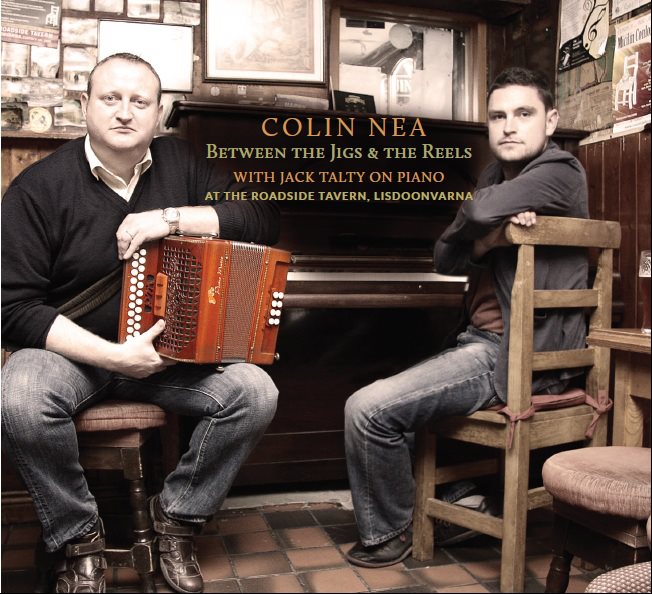
Pic of the day: Colin Nea-Between the Jigs and Reels

COLIN NEA will be launching his CD ‘Between the Jigs and the Reels’ at 9pm, Thursday the 8th November in the Temple Gate Hotel

***

Enda Seery: Website updated and revamped!

The musician/composer of The Winding Clock has introduced a new feel and look to his official website. Visit : http://www.endaseery.com/

***

Featured Video: Therese Honey: Paddy Cronin’s Jig – Jenny Pippin from ‘Summer’s End’

Yes yes! We have a new addition to our list of harpists to watch out for. Therese Honey creates a relaxing wall of strings with with the talent of Jenny Pippin. Have a listen 😀

Track 2 from the 2012 http://www.Waterbug.com release, Summer’s End. Photos of the Dingle Peninsula were taken in April 2011 by Therese Honey and Larry Mallette. Therese learned Paddy Cronin’s Jig from Gráinne Hambly. Jenny Pippin is from O’Neill’s “Music of Ireland,” 1903.
www.theresehoney.net

Teaching Yourself Bagpipes and Other Stuff

I owe this great link to my friend Loic Rathscheck whom you might remember in my earlier interview. He’s a Frenchman so there flows the Celtic blood in his veins. He doesn’t play Celtic music , rather his style is electronic but he shares my passion for almost all types of music. He is a memorable contact because he is the first person I attempted to interview. Anyway, this important link he sent to me is Andrew Lenz’s Bagpipe Tips: Learning Bagpipes without an Instructor. I think the winner in this article is not just his answers but the way he delivered them-with honesty, candour and humor.

“Anyone learning an instrument on their own can be their own worst enemy, with bad posture, poor fingering techniques, bad tuning, etc.”

Check this link out: http://www.bagpipejourney.com/articles/self_taught.shtml

The link doesn’t work in my browser so it might not work with yours. I am just pasting the whole thing here just to be sure you won’t miss anything.

Andrew’s Tips: Learning Bagpipes without an Instructor

By Andrew T. Lenz, Jr., Santa Cruz, California, ©2003-2009


What exactly does it take to learn the bagpipes on your own? This article lets you know the ins and outs of self-instruction, offers some advice and suggests some resources to help you.

Is it possible to teach yourself bagpipes?

Yes—to a point—but it is a road fraught with peril, unfortunately.

What’s going for you.

The bagpipe chanter—the bagpipe part with which you play notes with your fingers—only sounds one note at a time, so there are no chords to worry about. There are only 9 possible notes to sound (not counting a few special somewhat rarely played notes). This means that reading bagpipe music is relatively easy. And learning the basic fingering is simple.

What’s going against you and why you should get an instructor.

You’re going to get a lot of commentary in this section!

I have to say that the idea of a person teaching themselves bagpiping sets off warning bells in my head as it does most pipers. While sometimes it is a necessity due to a very remote location or poverty, in others it’s a case of people thinking that somehow the bagpipes are a “teach yourself” kind of instrument.

It’s not.

If you are even half-way serious about learning the pipes, I strongly recommend that you find yourself an instructor.

The bagpipes come with about as much in the way of instructions as a piano comes with instructions on tuning it, or a guitar on how to play chords. Next to uilleann pipes, the Great Highland Bagpipes are the most complex wind instrument on the planet—four reeds!—this is a real instrument requiring real lessons. Bagpipes are exceedingly easy to play incredibly poorly and can be quite temperamental at an inexperienced hand. Maintenance is complex compared to most instruments. Tuning the instrument proves be quite a challenge to most new pipers—heck, even many experienced ones! That’s one of the reasons the pipes get such little respect sometimes. Too many people try to teach themselves bagpipes, fail, and now here we are with a slice of the general public with a strong dislike for the pipes, oblivious to the fact that they were exposed to very poor piping.

The following may sound harsh. If you want to just doodle with them, in my opinion, you should avoid playing public as you will be representing all the truly dedicated bagpipers that have gone before you, world-class and otherwise. Friends and family fine—tell them you are a beginner—but not the general public. If you think you’re getting good enough to play in public, play in front of an experienced piper or better yet, compete at a highland games to get a truly objective appraisal of your piping skills.

There are no world level pipers that I ‘m aware of who were self-taught. Not that competing at that level is your goal necessarily, but it goes to prove a point. I’ve heard of one Grade I piper (the highest amateur grade) who was self-taught—David Daye, a link to his site is below—so it’s possible to do well on your own if you have a disciplined perfectionist personality with a very good ear for picking out minute sound problems and figuring out how to correct them…it’s very rare.

Anyone learning an instrument on their own can be their own worst enemy, with bad posture, poor fingering techniques, bad tuning, etc. If you are self-taught, try as you might, there’s a good chance you won’t know any better. You might get used to playing a chanter that’s out of tune and think nothing of it. Having an instructor set up the tuning on your practice chanter as well as your bagpipe chanter will have you developing a sense for a true bagpiping scale while you are practicing.

Another thing is self-taught pipers tend to be impatient, as are probably most learners, so without an instructor to hold you back from techniques that you are not ready for, you may press ahead anyway. For example, you could try to learn complex embellishments (series of notes) without even having basic grace notes down correctly. It’s much harder to unlearn a technique then relearn it correctly than to simply learn correctly the first time. To quote one formerly self-taught piper: “Like others, I found what I was doing was a misinterpretation of what I thought I was seeing and hearing.”

If you decide to learn piobaireachd—prounced “pee-brock” and is called the “classical music of the pipes”—you’ll discover that relatively huge departures are taken from existing sheet music. As an example, you may find three notes to be shown to be played even, when in fact the last should be played 2-3 times the length of the others. Granted, you can pick up a lot of this timing from recordings, but an instructor can help you pull every last bit of expression out a tune. This also applies to “light music” (marches, jigs, reels, etc.) though those are played much closer to the printed page. Commenting on his early unsuccessful competition experiences, PM Jim Harrington had this to say: “The problem was simply not knowing how to express the music—but that’s a problem with just about every tune when you’re a beginner with no instructor.”

Having had a bagpipes teacher for years, I can testify to their value. I’m not alone in having an instructor tell me that a bad habit has snuck in, such as my wrists are in the wrong position or an embellishment has a subtle fingering error. Even with an instructor showing you in-person how to do something, you can often go home and practice an embellishment incorrectly. It may sound right to your untrained ear, but at least it’ll be caught and corrected by your instructor as soon as your next lesson.

“No matter how many times you say it… No matter how much you may try to drill it into folks’ heads… A person learning on their own is not going to realize they need an instructor, until after they find an instructor… A slurred D-Throw sounds perfectly fine to someone who has never had it played slowly and correctly for him.”
Andrew MacTao, after 18 months of learning, having starting on his own.

If I’ve convinced you that an bagpipe teacher is a good idea, you’ll probably want to read my article How to Find the Right Bagpipe Instructor.

These’s a saying that goes “Seven generations and seven years to make a piper.” Your instructor will be your link to those past seven generations. The seven years is up to you.

“I already play a wind instrument, I don’t think I really need an instructor.”

I’m going to let someone’s quote answer this one.

“I was classically trained in both trumpet and clarinet in college. Learning bagpipes has been a dream of mine since I was little, and there’s no instrument comparable to pipes in a technical or musical sense. If you want to learn bagpipes at a high level, you need high quality instruction from someone who has learned from a high quality teacher. If I used my classical training on bagpipe music, none of the gracenotes, or even the beats, would be in the right place. Even bagpipe tuning is radically different. I could go on for pages about the differences, but I can’t do anything right without my instructor. Each time I think I understand a new piece, nope, it’s different than I thought.”
B. Hunter, band director in Houston, Texas.

“I can’t afford an instructor.”

Trust me, you can’t afford to not have an instructor. Some bands even give instruction for free. But even if you can’t find lessons at no charge, you are talking about an investment in your future. There are numerous cases where a self-taught “piper” cannot discard bad habits and learn the proper way to play and a frustrated instructor simply gives up on that individual. Often not the case, but it does happen. Get as much personalized instruction as you can afford as early in your piping career as you can manage.

“I don’t live near an instructor.”

Gregg Heath of Belgrade, Montana had this to say after a year and a half of learning: “I realized early on that self teaching was a non-starter. I did it long enough to pick up some bad habits that my instructor is gently helping me correct. I now travel 200 miles round trip once a week for instruction and band practice and it’s well worth it. If you want to play the pipes bad enough you’ll find away to get to an instructor.”

Gregg isn’t that unsual. I’ve heard of numerous students driving over three to four hours to get personal interaction with an instructor, it was so desired. Some cities have several piping teachers. Some counties have none. Maybe not “fair” but that’s the way life is.

“The nearest instructor is really far away!”

Assuming that you’ve looked correctly and there truly isn’t a piper around to instruct you face-to-face, then consider any personalized instruction very valuable. There are ways around not having an instructor within a reasonable distance. And you don’t have to meet with an instructor in-person to get individualized attention.

A tried and true method of remote but individualized instruction is sending audio cassette tapes of your playing to a teacher who then records comments and lessons for your playing. Improvements in technology has lead to newer methods such as swapping video tapes, e-mailing sound files, interactive Internet video conferencing. Another method is to simply use the telephone to engage in a live two-way lesson. One of the first websites attempting to capitalize on the need for remote instruction is LivePiper.com. What’s important is to get feedback specific to you so that you can concentrate your practice on your weaknesses.
Other opportunities for instruction are various piping seminars, workshops, summer schools, and the like which may be within your means to attend.

“I’m moving near a teacher soon, what can I do to get a head start?”

Probably the best thing to do is to simply wait and spend your free time listening to lots of bagpiping recordings. This will help develop your ear.

But if you know who your teacher is going to be, then ask him/her as to what practice chanter he/she prefers and with his/her permission, puchase that brand—but be careful, he/she may want you working on nothing! (Or if you have a practice chanter already, ask if him/her if it will suffice.)

If you don’t know your instructor, purchase a good quality practice chanter made in an industrialized nation (Scotland, USA, Canada, etc.). Buy a rank beginner’s tutorial book—check with your bagpipe supply shop. Learn the basic finger positions then learn to read bagpipe music and correlate the two. (Avoid learning combinations of notes, i.e. embellishments.) Avoid playing tunes, but if you can’t control yourself, please ignore the gracenotes for the time being. Playing tunes can introduce the possibility of changing notes incorrectly resulting in “crossing noises”—most common are in changes from a lower hand note to a higher hand note or vice versa—which an instructor will then have to go back and spend time correcting!

Remember: the more you push ahead wihout a teacher, the more risk that you’ll learn something that you’ll have to undo later.

Things to do to accelerate your learning

Listen to a lot of professional solo bagpipe recordings. Get as many CDs as you can get your hands on and listen closely and critically.

Go to highland games and piping performances/competitions. Given the choice, listen to the more advanced pipers. Though it may be inspirational to hear lower grade pipers competing also—”I can do that!”

Read my article on How to Become a Rotten Piper then do the opposite!

Instructional materials

Here are a few recommended items for teaching yourself bagpiping (there are other good ones).

John Cairns’ Multi-volume learning program:
http://www.bagpipesolutions.com

For bagpipe maintenance and tuning, Jim McGillivray’s “Pipes Ready” and “Pipes Up
videos and for detailed excersizes for embellishments, there’s his “Rhythmic Fingerwork“:
http://www.piping.on.ca

Archie Cairns’ books and CDs on learning piobaireachd:
http://www.archiecairnsmusic.com

Pipe Major Bill Robertson’s Bagpipe Tutorials (Light music and piobaireachd):
www.bagpipe-tutorials.com


***

Here’s another link to a  video he sent me. Wow! Red Hot Chilli Pipers having a Scottish time at The Ferry in Glasgow

***

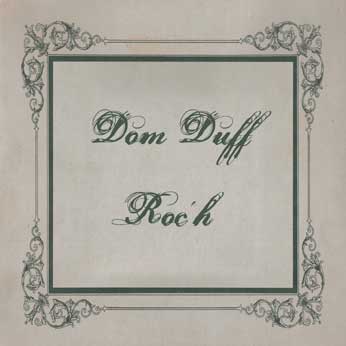
I voted for Dom Duff’s Roc’h in the Grand Prix du Disque . Dom is an amazing musician from Brittany who continues to bring the Celtic Breton tradition to the fore by collaborating with only the best musicians and writing primarily in Breton. I wish he wins because I think Roc’h is an album of eloquent achievement. You can also vote for him through this link:

http://www.letelegramme.com/arche/page.php?sk=prixdudisque%2Fprixdudisque.sk

***

Wolf Tones-Song of the Celts

Giving you the joyful gift of this beautiful song by Wolf Tones. Look at all these nations bonded together by a common culture.

***

Calum Stewart, tullochgorum & varations…

I love the way he breathes life into the wood instrument. Calum has been recording with Welsh band Mabon and has proven that he is one of the ambassadors of Celtic music to the world.