I made the decision to not use any other instrumentation at the beginning. There is a sound you can only get when you play solo and this is what I was after. In the past, especially when I worked as an electronic music producer, I was using arrangements full of different layers with various instruments but for this album I wanted to work with only guitar and voice.
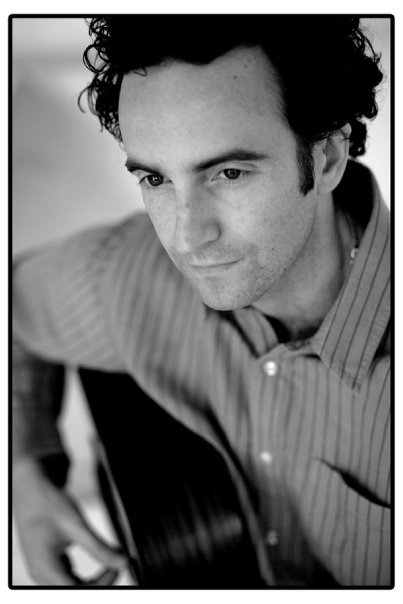
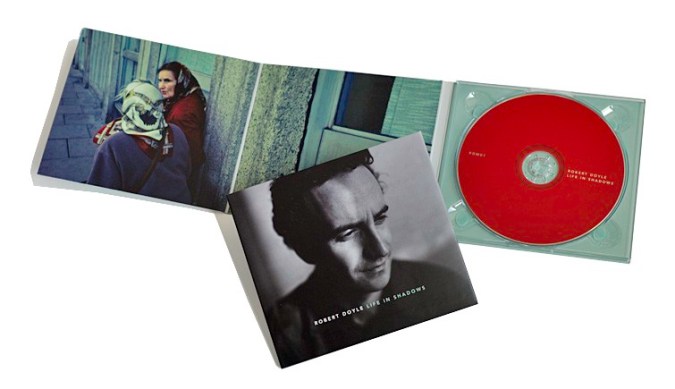
Robert Doyle’s guitar takes a bigger shape in “Life in Shadows’ making it seems like you are inside its body. You can feel this when you listen using headsets. This recording is able to capture every nuance in the tracks making it an intimate and almost a spiritual experience. His mellow voice is the perfect partner to his solo guitar – spare, minimalist approach-no other instruments, just the two. The cover also expresses that simplicity being black and white, uncluttered by other designs. Taking this recording home is like taking a friend with you for a quiet night over coffee talking about life’s realizations and woes.
I suggest you listen to this in different situations and settings until you find that atmosphere that works. I found mine in the workplace during break at 5 AM(since I work at night) with hushed voices and a big table in front. Next time I will bring this recording while riding home or by the beach. I might get another ‘flavour’ out of it. In the bedroom all alone, I find it speaking to me in ways I have never known before. Every recording takes a different character depending on the situations you are exposed to while listening to it.
Life in Shadows is elegance and honesty in one. Robert’s way of playing is getting to be addictive.He adds depth to his vocals. He has a way of expression, going from a breathy crooning state one moment to a passionate rendition but never losing that nice warm baritone. Here he opens up to CMF about this albums and all things musical.
For the complete information on the album tracks, please see this link: http://www.robertdoyle.net/album.html
How long did it take you to record Life in Shadows?
The album was recorded over seven months. There were five recording sessions in JMR Studios and three in the D1 Recordings studio here in Dublin. The sessions were usually quite short, around four hours each, and I spent about a month getting ready for each of them. I worked with an engineer on the sessions in JMR and recorded the D1 sessions myself. In general I prefer to work with an engineer but for some of the sessions I wanted to work alone.
The album was mixed and mastered over two days in Suite Studios and Summit Studios in Dublin
I love how this record combines spare arrangement, good acoustics and a balanced emphasis on vocal and instrumental music. One can simply close his eyes and imagine you playing in this white room because of its amazing clarity.Was this intentional?
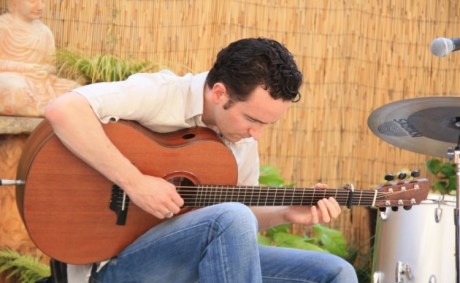
Before starting to record I did spend a lot of time deciding on the recording techniques that would be used. This was my first time recording with the Frank Tate guitar which I’ve been playing for two years now. I wanted to try to capture the unique acoustics of that instrument in so far as possible. Also, since recording the Trasna na Slí EP in 2008 I’ve been working on my voice and hopefully that lends to the clarity on the album too.
I made the decision to not use any other instrumentation at the beginning. There is a sound you can only get when you play solo and this is what I was after. In the past, especially when I worked as an electronic music producer, I was using arrangements full of different layers with various instruments but for this album I wanted to work with only guitar and voice.
Fingerstyle guitar, others have played it but you gave it a name and recognition in this release. Tell me more about you French-Algerian teacher Pierre Bensusan.
Fingerstyle is a very general definition for an approach to playing the guitar. There are many variations to the style but broadly speaking it is a mix of classical and flamenco technique. I’ve been influenced by many fingerstyle players over the years – Robert Johnson, James Taylor, Djelimady Tounkara and many more. Pierre Bensusan is one of the all time greatest exponents of the style and he has pushed steel-string acoustic fingerstyle guitar further musically than anyone else in the last thirty years. I’ve been lucky enough to spend time as a student of his and also worked as road manager for two of his recent Irish tours.
I think it is important though to not get too caught up in the style of guitar playing. Hopefully it’s the music which people will be listening for.
This album has been getting good reviews from all around. I believe that music and the how the album has been artfully crafted go hand in hand.I see this combination in Life in Shadows. We can give credit to your being a music producer in the past. What have you learned so far in terms of music production? Can you give us a glimpse to this world that is seldom seen but is the biggest influence in how music is made?
When I was producing music in the past I was working solely with electronic sounds and making dancefloor records. A lot of what I learnt then wasn’t transferable to working with this style of music and I reluctantly took on the role of producer on this album.
As a producer you need to be able to stand back and listen to the music very objectively. When you’re writing, arranging and performing the music you become very close to it and it can be difficult to get that objective viewpoint from yourself. Of course if you’re a musical genius like Stevie Wonder then you can do everything yourself! For me it was more difficult.
What is the process of creating music? Do you get inspired by a particular season…the time of the day? Or the muse just comes unexpectedly?
The inspiration is from everywhere and is always there. After the initial idea the process of writing and arranging can be long and drawn out and often you might end up with something completely different to what you started with. That is definitely true for some of the music on this album. I had been working on some of it for years and then other pieces came together over a few days. The arrangements are continually changing and some of what I recorded on the album I’ve already changed.
What’s your next goal musically?
There is some music I was working on that I didn’t get finished. This was partly because I ran out of time and then also because my technique wasn’t good enough to play some of the arrangements I had written. So I have to spend some time working on technique so I’ll be ready to play this music.
I’m also looking to start work on the writing and arranging for the second album. I know this will take a long time, probably two or three years, but I’m looking forward to getting into it.
How do you see yourself 10 years from now?
I want to still be playing the music!
What’s on your tour schedule before this year ends?
The next concerts will be in Scotland next Spring and then hopefully there’ll be some European shows next summer. All the dates will be announced soon on www.robertdoyle.net.
Looking back, tell me about that moment where you had this epiphany that music’s gonna be a big part of your life?
There wasn’t one moment. When I was very young there was always music being played in my house and especially a lot of reggae. Bands like Steel Pulse, Black Uhuru and of course Bob Marley & The Wailers. Hearing this music made me want to get involved and I started to play guitar when I was about 8 or 9 years old. I kept going and have never wanted to stop since.
Are there artists you wish to collaborate in future projects? And who are they?
There are traditional and jazz players here in Dublin that I want to begin to work with. Hopefully some of these collaborations will make it on to the next album.
Last: message to your listeners and how are they going to get their copies of Life in Shadows?
The CD is being distributed by Claddagh Records and is available on their website and from shops all over Ireland. The album is also available to download from iTunes, Amazon and eMusic. I want to thank everyone out there who has been supporting me and this music and hopefully they’ll be able to come to see one of the next shows.
Lantern Centre, Dublin



 Celtic Music Fan