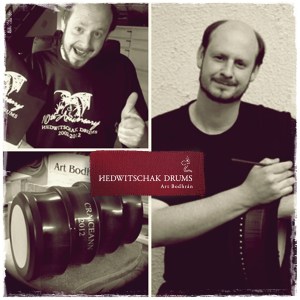
Christian Hedwitschak and The Evolution of The Bodhrán (Interview)

Christian’s drums have added a new glamour to bodhran making . The beautiful veneers  on his shells, the elegant fittings, and the high quality finishes make his drums a must-have item. He is one of the big innovators and is always seeking how to improve the bodhran into an ultra modern drum. He uses the latest materials in shell design to keep ahead of other makers. His ideas have had great influence on the bodhran as we now know it….an instrument equal in prestige to any other musical instrument.
– Seamus O´Kane

From a “percussive instrument” to a “tonal-like instrument” the heartbeat of Irish music has come a long way.

http://www.bodhranmaker.de/

I know Christian Hedwitschak through his bodhran designs for Canadian award-winning percussionist Jacob McCauley. These are huge instruments. They are stunning in their unique designs. They also make deep tonal sounds. Any bodhran player will go gaga over the look and feel of the Hedwitschak bodhrans.

Christian has been a master cabinet maker before venturing into making bodhrans. Now his own line is known all over the world. His Philosophy states: “Being a master cabinet maker and also a bodhrán player, my aim is to build high quality instruments with several special features.

As an instrument manufacturer three things are important to me: the quality in the choice of materials and the construction of the instrument, the responsibility I have towards the environment and an individual service approach.”

He is celebrating his 10th anniversary in the business after making over 4,000 of them.

Why is the Hedwitschak bodhráns so different from the rest in the market?

I’d say I dig deeper, and go the “German” way in analyzing each part of the instrument. I do sound analyses in the sound studio. I work together with some of the best bodhrán players of our time and always want to improve every single part ;o)

As for the custom orders, I really want to fulfill the customer’s wishes in a way that makes sense. Some of the “custom makers” these days just do everything that the customer is asking for. Just because it’s possible to make. I always try to combine customers’ requests with the most logical construction / material of choice etc.

The first thing  I do when a customer comes up with a new idea is to find the core of his aim, what is the important thing we need and then  we start and build the whole drum around it. This can be about a specific sound, size or just an optical thing.

I also say `no’ if I see a customer is only looking for decorative things or don’t have the experience and just wants “the best” because it is the most expensive ;o)

Yea, I think this is good to point out which  may differ to most of the other makers. I still see there are lots of mysticism involved in bodhrán making and some of the makers use this as a part of their marketing strategy ;o) I’d say it’s all about the Physics, the Science, the experience and the craftsmanship which comprise a lot and maybe just 1 % mysticism ;o)))

Let us talk about the requests you get for customized bodhrans. This must be challenging in terms of design and time constraints?

Yes. For example the deep drum for Jacob McCauley ;o)

But the most challenging is to create a signature line bodhrán. Because it isn’t just about creating a drum which is fitting 100% for the customers, it also means that this drum is exactly in the same quality that has to be reproduced again and again. So when I am working on a signature line drum- which can be really a work for a couple of years with all the testing and experience until it can be launched- I have to keep in mind right from the start that I have to find techniques to copy exactly this quality again and again for over a period of few years.

So this also contains the means of finding the materials and keeping the suppliers consistent in the quality of materials and the ability to deliver the right measurements.

For example it was a huge challenge to get enough Lambeg skins for the RolfWagelsEdition bodhran.

Do you think the market for Celtic music instruments is more lucrative now compared to 5 years ago?

Well I couldn’t complain about the demand for my drums over the past 10 years to be honest. But I think it’s a different market and a different thing to what you might mean now. But what I see now is that big companies like REMO, Meinl, Waltons are entering the professional Bodhrán market now as well (not just tourist stuff). And this is a new development in the past few years. The bodhrán is right in the middle of the change from a special instrument to a world instrument. Also the amount of bodhrán players has increased unbelievably. So yes, in this case I would say the Celtic music market is more lucrative than say 10 or even 5 years ago.

Do you think, the style of playing has evolved as well to accommodate the new shapes and sizes? Before, there was one design. Now there are many designs.


Yes, definitely. I’d say the general development went from a “percussive instrument” to a “tonal-like instrument”. It means the drums made these days are (in general, of course) more civilized and more musical, more tonal than years ago. Bodhrán players are now listening to tune keys and key changes.

What is the most effective way of marketing your bodhrans? How do you go a step ahead of the game?

Recommendations from players!


***
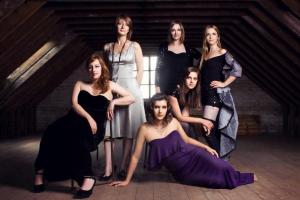
The Shee: Be Dazzled!

Dazzling music from the UK 

A magical listening experience happens when you combine a group of young women with both vocal and instrumental prowess. Their amazing stage presence and dazzling technique of playing the instruments have won them followers from all over the world. The Shee  released two albums: A Different Season and Decadence. I wish I could write more about them but I have little resources. If you want to catch them live then you better be there on Friday 29th of June 2012 Sark Folk Festival, near La Moinerie, West Coast, Isle of Sark, Channel Islands.

Members:
Lillias Kinsman-Blake – flute/ fiddle

Shona Mooney-Fiddle/Viola

Rachel Newton-Harp/Voice/Fiddle

Amy Thatcher-Piano Accordion and clogs

Olivia Ross-Fiddle/Voice

Laura-Beth Salter-Mandolin/Voice

Online resources to help you:

Myspace   http://www.myspace.com/theshee

Facebook: https://www.facebook.com/pages/The-Shee/232191416883

Website: http://theshee.webmasterdave.net/

‘An all-female revelation…fresh, feisty music’ fRoots

‘The Shee… are brilliant; their version of Tom Paine‘s Bones is one of my favourite songs of the last 12 months.’ Mike HardingBBC Radio 2

The Shee are an exceptional all-female band showcasing three powerful vocalists and an astonishing level of instrumental prowess. Their diverse range of individual musical influences combine to produce an adventurous brew of Folk, Scots, Gaelic and Bluegrass, earning them considerable recognition along the way with high profile performances at festivals including Cambridge and Celtic Connections, as well as concerts across Europe and Canada. Their debut album ʻA Different Seasonʼ was released in 2008, followed by nominations in both the MG AlbaScots Trad Music Awards and the BBC 2 Folk Awards 2009.

CONTACT US:

mail@theshee.com

A Closer Listen:Fine Friends by Sliotar


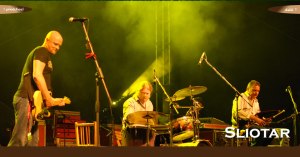
The orange cover artwork shows the silhouette of a bare tree with birds on its branches. One should be aware that experience and wisdom can bring about something excellent. I had the pleasure listening to Fine Friends by Sliotar. A band interview is coming out soon.

The few chords of  the opening track remind you that Sliotar  can pack a wallop. Stick the Kettle On is an instrumental tune with captivating grooves. The uilleann pipes of Ray MacCormac remind you that pipes replace electric guitars here. A quarter to two minutes of this song will send you pogo dancing with gusto.

All Too Real showcases the band’s songwriting style that has that adult alternative twist. Even JP Kallo’s singing style fits the format. For those who like their Irish music more contemporary and radio friendly this is a fine example.

All Around Lough Gill is another instrumental tune showcasing the tin whistle. The drumming of Des Gorevan maintains its crunch all throughout the album without being too over powering. It took me several listens to this track alone to note that we are dealing with complicated drum styles here. Listening to music is like detective work. You don’t see pieces of evidence unless you look further and really pay attention.

May Morning Dew is sung without accompaniment. The strong sometimes gruff vocals maintain that expressiveness. The lyrics and the reverb created by either the room size or mixing have that compelling combination.

One Chance is a personal favorite. I like the sunny melody here. JP sings ‘Another Monday morning, coffee keeps you going, running late for work’  I think the Sliotar should expand on this direction more. I hear keyboards. I hear that nice editing effect applied to the last part of the chorus. Whoever did the sound engineering here has done an excellent job. I give this a high- five!

Rays Heel catches you by surprise with its unpredictable arrangement. It begins with that stately tempo, which calls to mind an idle walk , then around 2:50, it explodes into that fast jig that again gets you on your feet.

I could not stop smiling to  Rock-A-Bye Baby. It has that ingratiating appeal in its simplicity and intimacy, stripped of the drums. A perfect song to listen to when you are depressed and you want comfort. ‘Rock-a-bye baby..rain falls from the autumn sky..another wind blows hard and cold..let me keep you warm’ …Catchy!

Tinkering on the Bridge begins with the uilleann pipes and builds up into that foot tapping jig. It changes tempo at 2:05. The energy of this track really makes you rock your body.

Take it As it Is follows the vibe of  track 7 but with the drums. This is one hell of a tear jerker.

Whiskey in the Sauna makes me imagine that I am catching butterflies with my fingers or doing a kung fu/ Arabic dance steps on a Saturday night after meeting kindred spirits. Have you tried drinking whiskey in the sauna?

The album closes with the solo vocal track Fine Friends. It reminds you that after the laughter, everyone must part ways.

The album Fine Friends, also tells us that after listening to all the tracks, you will surely come back for more.This album deserves more listens because like good friends, the songs provide company that are enriching in all aspects.

About Sliotar

Sliotar is a three piece band based in Dublin playing modern folk music.
The roots of the tunes they play come from the music of Ireland,
but in the past few years the group is relying more and more on original
compositions. Sliotars fourth album, Cirque de Sliotar, has finally captured
the modern sound that has been in development and has been an obvious
at their live shows. Sliotar has been around now over twelve years,
eight with the current line up, and they have one of the longest running
residencies in Dublin in the Porterhouse. Also in the past few years
Sliotar have changed their way of touring, resulting the band travelling
all around Europe and even further. And still the Sliotars best asset is
the live show. Around 200 concerts every year keeps the band tight and
the energy of their live show is something that can only be experienced
and is not for the faint hearted.

You can buy Fine Friends here: http://www.sliotarmusic.com/?page_id=44

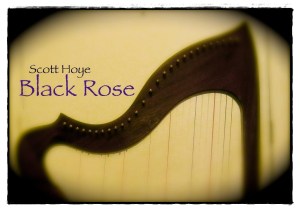
Black Rose by Scott Hoye(Track by track album review)

Black Rose: An album  of moods, textures and layers.

I am listening to Black Rose, a Cláirseach harp and vocal album by the  American Celtic  musician Scott Hoye. It has all the satisfying elements that you can find in a traditional album. Yet it has the experimental quality of a New Age  or Ambient album. There is a good balance between instrumental and vocal tracks  here. We find songs that are familiar, including Eleanor Plunkett. His track by track arrangement is eclectic. I hear strains of Liszt in Ultima Thule while other tracks like Oh Rainy Night  just oozes with folk/rock vocal harmonies. Black Rose is an album filled with elegance and emotional beauty. And his influences are very refreshing.

Eleanor Plunkett is played the way I remember Clannad did it in the 70s. It has that same down to earth appeal yet with elegance in its simplicity. It is tied up to Fanny Poer which has percussion and whistle. The ambiance is live. This is exactly the  kind of sound you hear on live acoustic performances.

Scott used to be part of a rock band the  Seranati. Think of Jethro Tull and Traffic. This is evident in his powerful voice that has the crunch of an electric guitar with its remarkable range. But he is being subtle here as he incorporates the Irish Sean Nos style of singing .The Flower of Magherally is rendered in a capella. I heard several versions. One is by Altan and the other is by Anuna. I have to confess Scott’s singing stops you in your tracks.

The South Wind takes us into another instrumental journey. This time we hear the delicate playing as his fingers move from one string to another with an experienced grace. The notes off the harp twinkle like little crystals. Then the tune moves into the poignant melody of Carricfergus. Here the whistle has never been so bitter-sweet. I love how these two instruments complement each other with such subtle ardor.

Black Rose which is the title track is another a capella tune. Again we hear Scott’s strong but expressive voice where he dips from woeful highs to smoldering lows. Partly Gregorian, partly rock, his singing is really magnificent.

A Neansai Mhile Gra  begins and ends with the kind of delivery that is expressive and simply beautiful. This track is very visual. This is the same kind of element you can find in his Celtic band The Spriggans.

Oh Rainy Night takes us into a rock twist with its engaging vocal harmonies. This is the style where he shines. Scott isn’t really for tamed emotions when it comes to singing. Like a wolf that needs the wild, his voice is a force of nature, so stormy yet beautiful with its power.

Where Time Stops is gentle as of a balladeer telling a story. “ I can show you a place where the time stops”..he sings with such ease of expression that when he moves to the chorus with layered voices it becomes epic. I’d call for more rainy afternoons with this song. Like a walk in the fields when the downpour stops, watching the leaves glisten. This is  the  kind of beautiful imagery this song brings to mind.

Sad Nika brings back that Sean Nos air that track 2 and 4 have. With varying arrangements, Scott has created an album  of moods, textures and layers without having to call for a lot of collaborations.

The last track Ultima Thule is a long piece with an almost operatic quality. It is dreamy, hypnotic and it is the kind of music you would like to hear when you are waiting for the rain to stop. I think without this track Black Rose would sound incomplete. Everything about Black Rose simply go together like  forks, knives and spoons. Dinner has been served. And yes it is a rewarding listening experience.

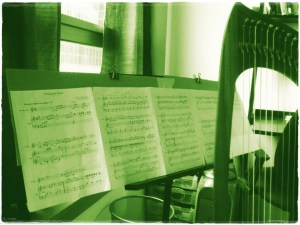
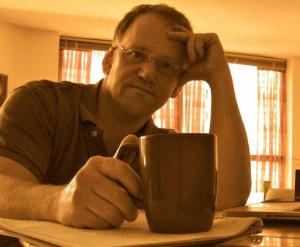
The composer at work.

Blurb about Black Rose from liner notes:

Black Rose has been many years in making. Several of the tracks were written long ago for two other projects, Seranati, a progressive rock group, and The Spriggans, a Celtic ensemble. Both groups performed and recorded in the 1990s in the Detroitarea. These songs did not see the light of day then, and they have simmered on the back burner of my mind over the years. I have re-imagined them for this, my first solo recording. Black Rose has slowly taken shape, like a musical journey with many vistas along the way. It is a fusion of many of the things that impassion me: traditional Celtic, pop, folk, and ambient musical styles.

Black Rose, the tune, was written for a friend when she had hit upon some sad times. I had initially imagined it as a prelude to a tune called Beauty’s Daughters (a.k.a., Lord Byron’s Stanza’s for Music II) crafted by my self and guitarist Patrick Penta, and played by both The Spriggans and Seranati. The refrain was written without my knowledge of the term Black Rose being attributed to Ireland; a sort of code word for the longing for a independent country during the British rule. This was a happy accident, and I humbly offer it up as a new, Sean Nos, or “old style,” a cappella song, like those popular in traditional Irish music. Two other songs here fall in this category: The Flower of Magherally (a traditional Irish tune) and Sad Nika. My friend, singer-songwrite John Hammink, wrote Sad Nika after a hiking trip in Europe. He wrote it for me to sing while I was a member of The Spriggans. I am exceedingly happy to be making it available here now. Thanks so much for waiting, John. Hope you aren’t disappointed with the effort.

Oh Rainy Wind and A Place Where Time Stops were both written for Seranati. Oh Rainy Wind describes my life walking to and from bars with various women, or just walking into and out of pubs on long nights. It was written at the behest of the keyboardist, Stefan Economou. Stefan desperately wanted to sing more bright, pop, rather that dark, blues influenced tunes. Here is your “Beatles” tune, Stefan, re-figured as a three-part, a capella, drinking song.

I like to think A Place Where Time Stops was influenced by Sufi and Hindustani religious, devotional poetry and spiritual traditions. I was also between girlfriends when I wrote it, so I can’t deny the process of sublimation in its inception. Singing in a rock band did have some fringe benefits, I suppose.

Ultima Thule is an improvised theme with multi-tracked harp and whistle. My friend Bryan Moore, sculptor and director of HP Lovecraft film and fandom fame, inspired it, naming his new home after the term. “Ultima Thule” is an idea from the ancient Greeks—the most distant, northerly island, geographically, from their perspective. Perhaps Hibernia? Albion? Who knows? By the time the Romantics referenced it in poetry and lieder, when the world had been fairly well mapped, it was an imaginary country; a land of the dream realms. I thought the pentatonic setting would give it an ancient flavor, as well as lending itself to improvisation.

Eleanor Plunkett/Fanny Poer: two tunes attributed to the 17th century, Irish harper, Turlough O’Carolan. These were both written as slantes, or tributes to two of his patrons. I attempted to give a more “archaic” sound to the arrangement with the inclusion of the descending arpeggios. The second tune includes whistle and djembe, an African hand drum, rounding it out with a full ensemble quality.

The South Wind/Carrickfergus: The first tune is attributed to O’Carolan, but sounds more like a simple folk tune to me, so he may have just grafted his own poetry to an older tune, or it was never really a part of his repertoire. Carrickfergus is a permutation of the Scottish tune, “The Water is Wide.” Dominic Behan, Brendan Behan’s brother, first recorded it, and attributed it to, of all folks, Peter O’Toole who learned in, of all places, a pub; fine couple of folks for a harper to be vicariously connected to.

A Neansaí Mhíle Grá: is a simple instrumental version of this Gaelic love song for the harp.

Thanks to the following for their support and inspiration: Ma & Da and clan Hoye; Dick Anderson of Woodsong Musical Instruments for creating a superior harp that has held up all these years; Eric & Cynthia Cathcart, Rachel Hair, Steve Toth, & Chris Caswell for recording tips, and encouragement; all Spriggans great and small (you know who you are); wirestrungharp.com, my Soundcloud cronies and FB harp associates; John Hammink for writing such a great tune and waiting so long; Regina Harris-Baiocchi for kind words and perspective; Delhi street food vendors, just because you deserve recognition, and Atul Mohan for pointing me in their direction, and providing encouragement for this project; the worldwide Khanna tribe (cheers!), and, especially, my wife Shabnam.

You can purchase the album here: http://www.cdbaby.com/cd/scotthoye

visit: https://www.facebook.com/SCOTTHOYEMUSIC

https://www.facebook.com/groups/celticharp/

and http://www.wirestrungharp.com/

Chat with Iolo Whelan of Jamie Smith’s MABON

Jamie Smith’s MABON:  Concerts, changes and the new album.

I posted my first article about Jamie Smith’s MABON in May 5,  2010. Back then the band were known as Mabon. They  appeared in  posts as it is hard not to notice them. Everyone  was either tweeting about them or just posting status updates with youtube videos of the band.

The music is a mix of all the influences from the seven Celtic nations. That is why apart from being a Welsh band , they officially label themselves as playing  original, Interceltic, world music. To quote from the band: ” it draws inspiration directly from the traditional folk music of the Celtic countries. This is not Welsh music, nor Scottish or Irish; this is Interceltic music, a true exploration of forms and styles found in Celtic music and their forging into something bold and new.”

It is interesting to observe how this band continue to grow in their sound. After three albums(one is  alive concert)  they are working on the latest album. It is an honor to catch up with Iolo Whelan the drummer and official spokes person for the band to gather thoughts that very few know about yet. I am glad to know one thing and that is(sound of trumpets)……the name of the new album!

Band members

Jamie Smith – Accordion, Oliver Wilson-Dickson – Fiddle, Adam Rhodes – Bouzouki, Matt Downer – Electric & Upright Basses, Iolo Whelan – Drums and Percussion: Calum Stewart (special guest) – Flute & Pipes


Iolo interview answers for The Celtic Music Fan, May 2012.


Website: www.jamiesmithsmabon.com   FB: www.facebook.com/jsmabon


What’s the best part about touring with the band?

We are very fortunate in this band that we get to travel: as well as touring in the UK, which I love, we’ve also traveled in Europe, Canada, Australia and Mexico.  When we travel, we meet so many wonderful people, and see so many amazing things.  I always feel when you visit another country as a working musician, you see a very different picture than if you were a tourist.

As a brilliant example, I remember the first time we went to Poland: we were in the country for less than 24 hours, but by the time we left, I felt as though I had had an amazing insight into Polish life, Polish culture, Polish people’s lives, which will stay with me for ever.  It’s the same everywhere we go.

And apart from the travel of course, there are two obvious but very important things which I love about working in this band – the friendship and the music!  Playing with great musicians who are also your friends makes any performance a joy.

Tell us about the new project you are working on at the moment.


For us, this year is all about our new album, Windblown.  We were preparing  new material in the winter, and we’re recording it over spring and summer ready for an album release tour in the autumn.  Our last album was recorded live, so it’s a while since we were in the studio, and it’s interesting to see how things have changed.

The biggest change is the inclusion of songs in our repertoire now as well as the established instrumental aspect.  I was interested to see how the two things would sit side by side on the new album: and I think because we treat our songs the same way we treat our instrumental material, they form one unified collection very well.

We’re very excited about the way it sounds so far and can’t wait to get it out there for our friends and fans!

Has there been a change in the traditional Welsh music scene recently and what are they?


I think if there is a change in the traditional music scene in Wales today, it is a new confidence amongst musicians and bands.  I feel that more bands are happy to do their own thing and chart their own course.

Some are returning to the roots of the music and further exploring that material at its oldest sources; some are still mixing traditional material with rock and pop influences; others are exploring new realms of fusion with a broader palette of genres.  Our approach is to work without a specific niche or brief, and to make music as we fancy, taking in different influences from all the great music we hear, and seeking whatever sound we enjoy in our own original music.

Maybe that confidence in the Welsh folk scene is reflected in the appearance of more Welsh roots bands on the world music stage: Jamie Smith’s MABON, 9Bach, Calan, Burum, Catrin Finch and others are appearing more often on international stages now.  Indeed, I think some of these bands receive more attention on roots and world music platforms internationally than they do in Wales – maybe with time that will change too!

How do you define the music of Jamie Smith’s MABON and what are the things we will be expecting from the band this year in terms of concerts and collaborations, if there are any?


We describe our music as original, Interceltic, world music.  Original because, even though we work in a roots field and with trad music influences, our music is mostly composed by our accordionist and lead vocalist Jamie Smith; Interceltic because our primary influences are the cultures of all the Celtic nations; and world music because we do not feel we need to restrict ourselves to that field, and because our brand of original roots music sits so well on a world music stage.

Our main focus for this year is our new album, as I mentioned, and while that keeps us looking inward for a while, we will also be featuring several new and established collaborators on the recording.  Old friends Calum Stewart and Will Lang will contribute on wooden flute and on bodhran respectively, but our friend and recent collaborator Tom Callister will be guesting on the album too, as well as some other very special musicians yet to be revealed.

We’re hoping, after some festival appearances this summer and our album launch tour in the autumn, to be taking plenty of bookings for 2013’s festival season.  Hit our ‘Like’ button on Facebook or bookmark the concerts page of our website, and you can you can keep an eye out for a gig or a festival near you this year, next year and beyond!

You are the skins man and what can you tell us about the drums that we don’t know yet?


I often say that mine is the best seat in the house for any concert, but a Jamie Smith’s MABON concert in particular provides really interesting challenges.  For me, I feel my task is to support the melodies and the songs without getting in the way.  The sound of the accordion, fiddle and bouzouki is so full that it can be easy for the bass and drums to distract from that fullness, without adding anything special in its place.

So I tread a fine line between lifting the music and spoiling it, and I enjoy having to make those decisions from one moment to the next: I hope I get it right enough of the time!  There are many challenging roles out there for a drummer, but I’ve been doing this gig for twelve years now, and it’s still constantly stimulating, and fresh and somehow different every time.

One of our most faithful long-term fans told me last year that he can listen to us play a piece of music which he’s heard countless times before, but will hear something new or different in it each time he sees us perform – that gives me great inspiration for every concert we play.

You can buy albums of the band here: http://www.jamiesmithsmabon.com/shop/

Today in the Celtic world….

New album from an American harpist!

Congratulations to harpist friend Scott Hoye for releasing the album called Black Rose today! Listen and buy the album here: http://www.cdbaby.com/cd/scotthoye