 Scotland: July is the month that the whole Hebrides will be rejoicing as Celtic bands from all parts of the world gather to celebrate the Celtic legacy of music. Check out http://www.hebceltfest.com for more info. The News section offers updates of what to expect. The Festival 2009 tab will give the the overview of this event. All these can be found on the tabs located on the left.
blog
The Carnyx:An Ancient War Trumpet.
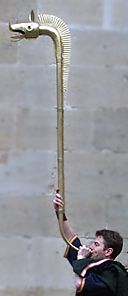 Imagine living with the Iron Age Celts. Imagine hearing them taunt the Roman soldiers with the strangest fear inducing sound. The Celts have always been known to use music even in war. Music was not only for Bards but also for soldiers.
This is evident when an excavation unearthed one of the best finds of this century. And that’s through the discovery of this wind instrument called the carnyx.This link further explains the discovery. Some simplified details can be found here.
The video below shows how it’s being played.
Celtic Music Event in France
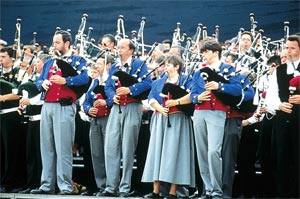
For those going to France here is a link from French News. We would be expecting this type of music along with other regional flavors.
Another Irish and Celtic Music Podcast Site
 Hi folks. It’s a lovely Monday, the first working day of the week. As usual what’s morning without our daily doze of Celtic music? Here’s another podcast link hosted by Marc Gunn. It is extensive because it covers all types of Celtic music under the umbrella name. It also showcases acts coming from the seven Celtic Nations. Point your browsers here to listen.
How to define “Sean-nós” style of Singing.
Sean-nos or “old style’ of singing as Gaelic suggests has been part of Irish music for ages. I would pull reference to singers like Iarla O’ Lionaird and,Mairéad Ní Mhaonaigh of Altan among the many. According to shamrockirishmusic.com, sean-nos can be:
1. A bare voice (not ‘sweet’, with a certain ‘natural fierceness’).
2. No vibrato.
3. No dynamic. (loud/soft)
4. Emotion is expressed through the use of vocal ornamentation, which varies from singer to singer.
5. Free, non-metronomic rhythm used by the singer.
6. The meaning of the words dictates singing from the heart, with ‘soul’. (Without dynamic – see above).
7. Often there is an emphasis on the consonants l, m, n, r to facilitate the free rhythmic pulse and to create a drone effect.
8. Occasional nasalisation.
9. Music takes precedent over the lyric.
10. Often extra meaningless syllables are introduced, e.g., “Thug (a) me”.
11. The use of the glottal stop/dramatic pause.
12. It’s unaccompanied.
13. The melody varies from one verse to the next, and from one performance to the next. This is often referred to as the ‘variation principle’.
14. And last but not least, the singing is in the Irish language.
The whole article can be found here.
Here is an example of Sean-nos singing. And of course my personal favorite Iarla O’Lionaird
 Celtic Music Fan