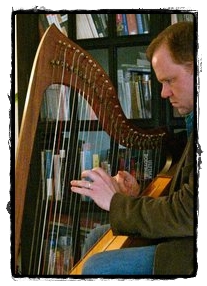
Fiach Moriarty In The Studio Making A New Album

New album is coming along nicely. Off to studio today to record-Fiach

This video you see is just the beginning of what’s to come. This song is from his debut album “So I”. Fiach Moriarty is busy with the new studio album-no title available yet but I will keep you updated.

A one take/no edit video.
Just to explain this video a bit; myself and Bob Kelly came up with this concept about a year ago in Hourican’s bar on Leeson St after a conversation about Samuel Beckett. We wanted to do something a bit different and challenging that would not be easily done. So we hatched a plan to learn a song backwards and from there it grew and developed. We then decided to make it a walking video and mapped out a route. The route involved getting lucky with traffic lights, cars and indeed human traffic and all in one take as well. It also involved me walking backwards throughout. So what you see is the reverse of me walking and singing backwards, which makes me look (slightly) normal and everybody else in backwards mode? Lost? Thought so, watch the video and it will become clearer.

We enlisted the help of Aoife Scott, Philip Graham, Trish Fitzpatrick, Marcus Lamb, Déaglán Mac Samhráin, Rebecca Flynn and Enda Reilly to help us achieve what you see here.
So here ya go folks, ‘Lullabye’
Cast in order of appearance:-
Fiach Moriarty – Himself
Busker – Enda Reilly
Photographing fan – Trish Fitzpatrick
Ferryman – Deaglán Mac Samhráin
Dancer – Rebecca Flynn
Businessman – Marcus Lamb

Crew:-
Steadycam Operator – Philip Graham
Best Boy Grip – Aoife Scott
Producer/Director – Bob Kelly

Song appears on debut album ‘So i’ recorded and produced by Keith Lawless in Studio 2 Kinsealy.

Vocals, Guitar & Piano: Fiach Moriarty
Keys: Keith Lawless
Upright Bass: Steve Mogerley

Scott Hoye Talks about His Home Recording of Black Rose (Interview)

Between O’Carolan and Indie music  is a gem of many facets: The home recording of Black Rose by American singer/harpist Scott Hoye.

Scott Hoye is my guest for this week. His album Black Rose is out in the market. It was also the start of my comprehensive journey into the world of harp music. It was an interesting learning experience. There are many harpists around the world. The harp community is growing. Within the community is a wide range of eclectic music. Every artist has his or her own unique approach in terms of style and  arrangement.

Scott Hoye embraces the two worlds of Celtic rock and New Age music. His time with Seranati and The Spriggans contributed to the edgy style of his compositions. On the other hand, his inclination for ambient or meditative music contributes to the spiritual nature of his tracks. It is the kind of balance that is both surprising and essential. This eclecticism enables him to morph into genres. It is no surprise his answers in this interview are well thought of and very informative.

At last your debut album Black Rose is finally out. This is your first solo project outside The Spriggans and Seranati. How do you feel about having this harp album finally?

My experience in creating and releasing Black Rose is twofold. I am extremely proud and happy with the end product, but as the only producer of this album, I can still hear all of the minute aspects of it that I could work, re-work, and work some more to “perfection”. However, you have to tell yourself at some point, “it’s time to kick the eagle out of the nest so that it can fly, live a life of its own”, so to speak.

The experience of recording itself was extremely rewarding, with a lot of learning curves for me. I had to put together a home studio, purchase gear, learn about engineering and mixing, write, arrange, perform all of the instrumentation and vocals, and research mastering, marketing, and distribution. I wore a lot of hats.

My goal was to work creatively, within a limited budget. The technology has changed so much since I recorded with Seranati or The Spriggans. One can literally make decent recordings at home, and work with an engineer for mastering. My goal was to work with as little as possible. Black Rose was created with one microphone, for example. I learned to use that one microphone to get a rich, mellow sound from my harp. It was also recorded in a very dry environment to control for extemporaneous sounds. That required me picking the brains of other people to work with creating a nice, resonant sound during mixing. But, I am probably digressing a bit here, and obviously this shows how excited I am about the process of creating with studio equipment, back to answering your question.

Knowing that songs I wrote fifteen years ago are realized in some fashion feels great. Knowing that I can record and produce music for people to enjoy is also gratifying. I don’t look at Black Rose as a harp album. It does feature the harp, but I set out to make a good album, not a good harp album. I hope that the variety of sounds (vocals, harp, whistles, and percussion) translates into that good experience for the audience.

Here is a link to an article I wrote last year on my recording process: http://www.wirestrungharp.com/revival/home_recording_harp.html

This is brilliant! Home recording is really the trend these days

Thanks! Glad you like it.

That article about Home Recording With a Harp is great to read. I think it is a great source of information for those wanting to start their own home recording. That essay tackles the challenges in terms of the instrumental aspect of home recording. Tell us about the vocal aspect. Your album is rich with vocal experimentation. Oh Rainy Night is an example of what you did with layers. What were the challenges doing that song as well as your approach in terms of the singing style?

Oh Rainy Night was a difficult song for me to re-conceptualize. I had originally written it for Seranati. I imagined it would be sort of like a Beatles song, either ala Revolution, or something off of Rubber Soul. Or, we would at least try not to do it so heavy handed, ala Robin Trower or Black Sabbath. This was the biggest stumbling block for me, as I couldn’t get a stop chorus of guitar, drums and keyboards out of my head. It came down to just laying the lead vocals down, and going from there. I re-imagined it with a harp accompaniment and percussion. Well, the key I liked the vocals in was C sharp major, a very lousy key for the harp to play in; lovely for keyboards. So I wound up say, “to heck with it”. I didn’t want throw out the tune entirely, and decided that a cappella was probably the strongest bet for the tune to work. I think that was probably the best choice.

As for the recording aspects of that song, it was simply adjusting the gain to meet the right level for my very loud singing, and recording the other parts. I wrote the alto and bass section in vivo; while I went along.

I like the mash up between Eleanor Plunkett and Fanny Poer. The result was really refreshing. It could have been a pairing of other songs but why these two?  

Simply put, O’Carolan wrote some of the loveliest harp music. A lot of tunes are attributed to him, and since they were passed down via the oral tradition among harpers, we don’t know which tunes are really his. These two tunes, in my estimation, are elegant, and appear to be a hybrid of Irish music and the baroque music of the English (Anglo-Irish) courts that he was fond of emulating, so I’m pretty sure they are his. The reason I chose to record them is because they are simply beautiful.

I chose to pair them up because they complement each other. Eleanor Plunkett is sad and plaintive. It ends on the dominant degree of the scale, having a strange sense of, or lack of resolution for the listener. Fanny Poer is festive, and it lands right on the tonic. In essence, the sounds move from sad/reflective to festive/happy. Limiting Eleanor Plunkett to solo harp adds to the sense of inner reflection; adding whistle and djembe to Fanny Poer built up the tension and the added color for the arrangement, allowing me to add and remove instruments as the first and second sections played out. I think that using the djembe rather than the bodhran provided a different take on the tune. When paired with the whistle, there is, I think, an almost a Caribbean flavor. The break from the harp at that also provides variety.

Mind you, I didn’t think of arranging these two tunes outright. Rather, I approached them one step at a time, and thought about how the arrangement could be crafted for the most possible interest and variety for the listener.

There is this huge wealth of music within the harp community. I also noticed the support you give to each other as musicians. Do you think that the harp (most specifically the Clarsach) has already attained the same level of mass exposure like say the fiddle or bodhran or do you think it is still heading that way and you as well as other artists are smack in the middle of that turning point?

Good question. I don’t believe the clarsach has attained the same level of exposure as fiddle, bodhran, or guitar for that matter. I think that the reason is twofold. The other instruments are spread wider at this point in other styles of music and just more culturally accepted; “monkey see, monkey do”. I think the other reason is portability. Hauling a harp takes dedication, endurance, and planning. You can easily toss a violin in a case and go. 😛

I do think that the harp is on the edge of really taking off as a more main stream instrument. Lots of great players are doing incredibly innovative work: Jochen Vogel, Rachel Hair, and Catrin McKay to name a few. Apparently, the Scottish scene is booming right now, and lots of young harpers are taking up the instrument. I hope that the wire strung harp comes up alongside the gut and nylon strung as well. I know there are great players on wire who are exposing more people to its voice. It really has a distinct sound, and it, along with the pipes, span the bridge back to the origin of a lot of British isle Celtic music. I hope this second wave of the “Renaissance of the Celtic Harp” includes equal growth for the wire strung.

A Place Where Time Stops is a track that somehow reminds me of   Flight of Dragons. I think it is the flute and the mellow singing. You also mentioned that this track has been influenced by religious and devotional poetry. It must have been an interesting period in your life. Please tell us more about it.
Future Bard

Well, it was an interesting time. I was working quite a bit as a musician and working day jobs in an unrelated field, selling books, and access to a great deal of reading material. I have always been interested in world religions and various takes on spirituality. I’m a member of the Anthroposophical Society, not very active these days, and not very orthodox for that matter. I find that spirituality is a pretty big part of who I am on some level, but I do have a more practical side as well, and try to balance the two out.

The theme in A Place Where Time Stops is based on the idea of the Beloved singing to the soul, so to speak. I suppose the Sufis sing to the Beloved as the spirit or God, attempting to work them into ecstasy. Some Hindu devotional hymns or chants are of Krishna singing to Radha, God wooing the soul. I suppose that the dialog in this tune works more from that angle. The ambiguity of the lyrics allows for the song, I hope, to translate as a simple, tender ballad or, if you take into account the sort of grandiose statements like, “I found an ocean, and you found a stream”, it can be seen as something more. At least I hope that is what comes across.

The first verses and chorus were written in 1995. I flushed the song out a bit more as I re-worked it for the album.

By the way, I just checked out Don McLean’s tune. I’ve never heard it before. Charming! I do believe that it was probably influenced in some way by Gentle Giant, or other prog rock bands that used recorders or winds in their work. All in all, I think it was a song that just fell together well as I was flushing out the parts during the recording process.
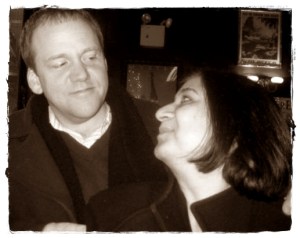
With wife Shabnam

Do you have any plan of releasing Black Rose through physical media?  

Yes. I plan to roll out a physical CD in the fall. I hope to have it available for purchase both directly from me and through an on-line distributor.

***

You can download this track for free. Please support our independent artists by buying the album or re-posting this article in other social media.

http://www.scotthoye.com/

http://soundcloud.com/scott-hoye

http://www.reverbnation.com/scotthoye

https://www.facebook.com/scott.hoye

https://www.facebook.com/groups/celticharp/

Chicago based harper and musician Scott Hoye was a founding member of the Celtic ensemble The Spriggans, as well as the progressive rock band Seranati. His repertoire includes traditional and original tunes on Celtic harp, vocals, whistles, and percussion. Scott gathers inspiration from traditional sources of Irish, Scottish, other Celtic, and folk, and world music, while mixing them together with contemporary sounds to create a new, sonic brew.

Our Free MP3 Download for Today: String Theory


Ideas!

I was eating dinner while looking at my site. I know, it isn’t a good habit to have your laptop on your dining table along with your food. I know I am already risking something by telling you about my personal habits. Anyway, I kept looking, chewing and thinking. I was asking myself, what people could possibly want from my site apart from getting the music news. I know that bands will peek every now and then to see if I have written something about them. I know that fans will check to see if I have written something about their favorite bands. Yes there are videos, but these videos are only appealing as far as the musical preferences of my viewers permit. I have interviews scheduled as a weekly thing. My reason for this is to give bands and musicians the opportunity to have more exposure. I do have pending interviews but I need to stick to my schedule to provide everyone the same opportunity.

I am sure you don’t come to this site for the following reasons:

  1. The weather forecast
  2.  Fashion trends
  3. Health tips
  4. Romance counseling
  5. Stock market reports
  6. Tips on how to get even with your neighbor who plays the same annoying album over and over again.
  7. Self defense advice
  8. Recipes. Hmmm…No.

Something occurred to me. People like to visit websites not just for information, but they do appreciate being offered freebies too. It’s nice to be able to have visitors leave my site with something they can keep. I think digital downloads are a gift that is always appreciated. I will have to ask the bands I have already interviewed to see if I can do this as a part of a weekly freebee give away. I can’t commit to doing daily updates since I am working on this alone and committing myself to something that might be too hard to carry out might tarnish my reputation in the blogosphere. I think that this download offer will work. A weekly free mp3 (I don’t know how many I can give away) is what I will be offering you.

This idea isn’t new. Marc Gunn has been doing this way before I launched this site. But you, my readers, are important to me and I think you should have something you can keep with you when you come and visit this site. In return, I would like to ask from you to share the word about the bands you download especially if you like their music. Please spread the word about this website too, so that it will get more traffic. The more traffic it gets, the more we can help expose our favorite musicians. So what do you think? It’s fun to share together!

My choice this week is Mike Vass whom I had the honor of featuring before. This track is taken from his album String Theory.

Scottish Musician and Composer:
http://www.mikevass.com

Biography


Winner of the inaugural Neil Gow International Composition Award, Mike Vass is fast gaining a reputation as one of Scotland’s foremost tunesmiths. His compositions frequently appear in the recordings and performances of some of the UK’s top name acts; most notably luminaries such as Brian Finnegan, Corrina Hewat, and Mairearad Green.

Mike is regarded as one of Scotland’s finest fiddle players, in great demand as a performer, composer and teacher. He has toured extensively in the past few years with leading Scots Song band Malinky, in a duo with twin sister Ali, and with International super group Fiddle Rendezvous, featuring Bruce Molsky, Maryann Kennedy and Gerry O’Connor.

Mike’s New Voices Commission ‘String Theory’ debuted at Celtic Connections in 2010, and was described as ‘the most direct and honest since the idea was first conceived … precision, subtlety and attention to detail’. One of the highlights, the avant-garde piece ‘Man’s Search’ inspired by Viktor Frankl’s best-selling book, was described as ‘utterly compelling’ and ‘one epoch-making composition’. ‘Man’s Search’ was subsequently featured by the Victor Frankl Institute in Austria to commemorate Frankl’s birthday.

Mike was nominated as ‘Best Up and Coming Act’ in the 2007 Scots Trad Music Awards, along with pianist/singer twin sister Ali, and won ‘Best Folk Band’ with Malinky in 2010. A runner-up in the 2007 BBC Radio Scotland Young Traditional Musician of the Year competition, Mike was subsequently invited to tour with the 2008 finalists as an accompanist. Although barely 5 years into his career, Mike has already featured on more than a dozen recordings, including Volume 1 of The Complete Songs of Robert Tannahill, produced by Dr Fred Freeman, and Malinky’s acclaimed fourth album Flower and Iron.

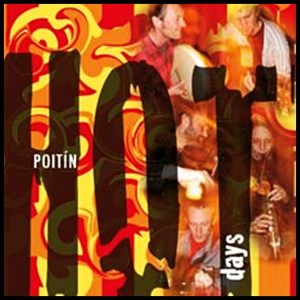
Hot Days (Album review) and Appalachian Still

Hot Days (2006)

Always expect energy when you listen to a Poitin album.  These guys always deliver goods with gusto. Hot Days is an album that looks the way it sounds (note the chili pepper red cover that screams hot hot hot!). The introduction of the didgeridoo and the soprano sax are pleasant surprises.  The album has everything that jumps and grabs you from behind.

Step It Out has Jeremy King’s superb vocals. Precision and tight musicianship are the things the band is known for.

For to Free. Wowwowow! The didgeridoo addition here is something I truly dig.  It is the right ingredient to the track! It makes you feel like you are in Australia, wearing a kilt and jumping with kangaroos. It begins with this ambient sound of an old vinyl record    being touched by a needle.

Who Are You is a fast traditional song. Every nuance is captured in the recording. The crisp vocals and resonant fiddle jive together with the fiery guitar strums. This song makes me feel like a young man ready for action.

Springtime Frolics is a track I can sum up in one word: stunning. These guys record their albums live. Such precision is not easy to master. I read somewhere that they would do it over again if ever something goes wrong. It’s like me writing this review, having a lot of re-editing to do when the grammar goes wrong wink wink.

Crazy Man Michael starts a capella and then blossoms with a guitar. It is a great title track. It sings about a tragic incident. You know, I read that if you have some Irish in you, then you will understand that the more painful the song is, the more the singing gets better. With its bare arrangement, the vocals gain the dramatic effect making it one of the most memorable singing styles I have heard in years.

Hot Days is a track which begins with both the high and low whistles fencing each other tenderly. The mournful notes progress into a beautiful track with rich arrangements and incandescent beauty which calls to mind a phoenix rising from its ashes. The second half of the track jumps into a jig with an explosive chorus of other instruments.

Midsomer is an energetic traditional track that won’t let you stop tapping your feet.

A Bucket Full of Mountain Dew is another traditional track with fast singing.  There are amazing vocal harmonies and a beautiful melody.

March Flowers is a jazzy jig which begins with the acoustic guitar, then the whistle and then other instruments join in. It has this swaying rhythm to it. It makes you think of seaside and relaxing afternoons. I noticed that there is a consistency of clean recordings all throughout the album.

For to Free really frolics into your mood and into your subconscious.

I Was A Young Man is a fast ballad about coming of age. There is great bodhran playing on top of the fiddling. The didgeridoo encapsulates the track like fine moth’s wings. It’s awesome!

Saxet is a jazzy traditional track with a vibe that smells of beer and chips. It is also a sexy track.

Curragh of Kildare ends the track with its amazing fiddling. Hot Days is an album that makes you realize that some very talented Irish music players are also found in the Czech Republic. This is world music at its finest. You can buy Hot Days here: http://www.cdbaby.com/cd/poitin5


Sources:

www.reverbnation.com/poitin

www.poitin.czwww.myspace.com/poitinkapela

www.soundclick.com/poitin

***

Get to know Appalachian Still

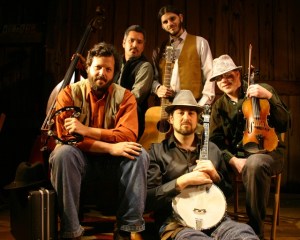
Guys who are into Bluegrass and anything Americana might want to get themselves ensnared by the music of these six guys bringing you nothing but the freshness of homegrown freshly brewed American music. The  good vibes of Bluegrass and Country music have made their way into my chest and now my head is moving back and forth while listening to tracks like Deep Ellum Blues and I Know You Rider. The band, Appalachian Still, is from Northampton Massachusetts and they have been around since 2005. Bring on the croissants, this is going to be a great day! Just give them a chance and who knows? You might get hooked, head over feet.

Members

Andrew Woodland: Clawhammer Banjo, Vocals & Management
Jared Libby: Guitar, Vocals, Recording & Engineering
Sean Mallari Upright Bass
Sam Barnes: Fiddle
Ivan Ussach: Drums/Percussion
Peter Nabut: Sound-Man

Sources:

http://www.myspace.com/appalachianstill

http://www.appalachianstill.com/

https://www.facebook.com/appalachianstill

Chris Caswell: Harp Builder, Multi-Instrumentalist and Music Teacher.

This is the right way to play the Celtic harp….

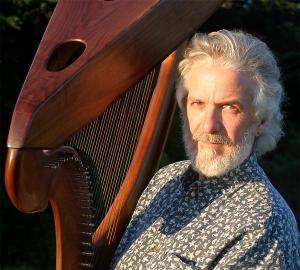
Occasionally, we are blessed with someone who has an eye for beauty and a  hand for musical expression. Chris Caswell embodies the nature of a true bard. Apart from being a versatile musician (playing flute, penny-whistle, harp, bodhran, and bagpipes), he is also the builder of Caswell harps. He started making harps in 1972 while also serving as a session player for other bands. His designs are unique and breathtaking- like his own music. He is also a music teacher around the San Francisco Bay area.

I got the time to sit down and really listen to his tunes this evening. He gives multiple expressions to the harp in a way that it sounds like different instruments. At times it reaches sublime spirituality especially when he does those arpeggios. There is something ‘quiet’ about his music that speaks to you. One of my favorites is The Wild Geese taken from his 2001 album Holy Wood. The relaxing beauty of his tunes makes you sit back and relax. He has unique harp interpretations of bagpipe tunes like in the case of Catriona’s Lament (piobaireachd). There is no arguing. The harp makes a unique sound that could never be achieved by other instruments.

Chris continues as a musical asset through building harps, playing tunes and handing them down to generations upon generations of Clarsach musicians telling you: this is the beautiful way to play the Celtic harp.

References:

http://caswellharps.com/

http://chriscaswell.net/

http://www.facebook.com/ChrisCaswellHarp

http://www.myspace.com/chriscaswellharp

Artist bio:

I began making harps in 1972, first with Jay Witcher, then by 1977 in my own shop with Terry, my wife for 20 years (who was working at Witcher’s before I got there!). Over those years, my sense of calling has become only richer and clearer. In fact, the last few years have resulted in more new and possibly significant ideas than ever.

I always say I never make a harp I wouldn’t play myself. In fact, I tend to design new models to fulfill what my inner ear says is possible. This goes hand-in-hand with my own growth and experimentation as a player. Here, as best I can, is how I describe this calling:

Tradition

to make harps designed from the heart, and in the lineage of the ancient Celtic harps

Innovation

to continue to evolve the harp for a new generation of players, and for the future of the instrument itself

Excellence

to combine fine craftsmanship with a passion for its sound and esthetics, bringing each design into the realm of art

My aim during the making of every harp–from the least expensive to the most–is to connect with life directly, and experience a taste of my existence. My sense is that this translates into something in the instrument itself.

My goal isn’t to make lots of harps (though I have and, God willing, will) but to make harps that respond to their players’ desires, becoming a vehicle for the magic of music in each of us.

It’s a great blessing in my life that I continue to have an opportunity to follow this passion, and that this passion is as bright as ever. I invite you to be part of it by following your own desire. If you have a harp you love, wonderful. If you would like another to fulfill something you want to hear, contact me.

If you’re brand new to the harp, I will do what ever I can to put the right instrument in your hands, and support you as you blossom. Remember–Yes You Can!

“Yes You Can” is my way of saying :Don’t put off that which you know in your heart to be right for you! We all can find reasons not to do what we know will make our lives richer.

Life is precious and we must support that which connects us to the deep part of ourselves. If playing the harp helps you do that, then I am here to help you.

All best wishes,

Chris Caswell 

***

Updated: I am posting the last exchange I had with Chris after this article was released. This was around June of 2012. You can tell he was a man of humor and great spirits. You will be missed Chris.

Hi Baxter,

Thank you so much for the kind review!

You might not have seen a recent FB posting of mine that you (or rather, the review) might benefit from. I’ll copy it to you here:

“Finally, I can go public with a bit of news I’ve been sitting on for about nine months!

I was contacted back then by an editor for the BBC who had found my recording of pibroch (piobaireach) on the metal-strung harp and intended to use it in an upcoming documentary. It looks like they’re ending up utilizing three of the pieces off my Holy Wood CD – Catherine’s Lament (the pibroch), the McLeod’s Big Tune, and Rowing from Islay to Uist.

Here’s the email I got this morning:

‘Hi Chris,

just a quick heads up to say that the Cairngorms show is finished!

It’s now called “Cairngorms – A Year in the Wild” it’s part of a three part series. Our date for transmission is as yet unconfirmed but it looks like a Sunday in July for the UK.

I can tell you your music has been used to illustrate some lovely material round the River Dee, and a very special piece contemplating ancient pines that our poet/nature writer Jim Crumley calls Wolf Trees…

I am still intending to send you a copy of the material but our production manager is reluctant to allow anything out until it has been broadcast. Hopefully this is enough to be going on with for you in terms of publicity efforts.

Thanks again for allowing the use of your music!

all the best,
Stuart’ ”

Also, I’m a little confused by the last sentence. It seems to make me sound like I’m telling people the “right” way to play the harp. That’s not something I’m comfortable with.

Regardless, thanks again. Best wishes for your blog.

All the best,

Chris

Hi Chris ,I know what you mean now. I altered a word in the last sentence. I hope it makes you comfortable now

12:58
Chris Caswell: Thanks! That does feel better. Thanks again for the review.

12:58
Baxter Labatos: Hahaha all the best Chris! you are welcome.

***

A memorial service for Chris is planned for this Sunday, Feb 10 at 6:00 pm, at St Monica’s Church in San Francisco, Geary & 23rd Avenue. His friends are welcome.

http://www.facebook.com/ChrisCaswellHarp