Listening to this right now. This is a great online station with all the traditional songs that will help you through the night(and day). Artists like Delia Keane, Eileen Ivers and so much more. It is Celtic music heaven !
Thanks to Jeremy Poitin for the tip. His band Poitin and Sliotar are playing together at Zach’s Pub Czech Republic. Don’t miss this wonderful event.
Sharing a craic and clowning around before the gig! Poitin and Sliotar @ Zach’s Pub. Two huge bands in the Celtic scene right now. Don’t miss their gig later (Tuesday 17 July) at Zach’s Pub, Pilsen, Czech Republic……
Meet Pafka Steidl, also called by the name Pavel. He is the lead vocalist of “Cheers!” They are one of the new bands that bring something exciting to the music scene in the Czech Republic. His sense of humor shows between their live performances. Vocally, think of The Pogues and Horslips rolled into one.
The band has an energetic sound. There are elements of punk, folk and that distinctive Czech way of interpreting Irish music. It becomes a new sound altogether. Everything about their music is precise. The execution is tight. The result is a musical identity that is something to watch out for in years to come, and see how it develops.
Why the chosen name for the band and what do you think makes your band stand out from the rest?
I’m sorry, it’s quarter to three in CZ right now [:D] well, the name just came up pretty simple – we were sitting in a pub with our fiddler Filip and questioned ourselves “how?”. But the answer showed up suddenly with another beer and that’s it. The rest of the band liked it and we are Cheers!
“What do you think makes your band stand out from the rest?” – There are many bands around the world that play the same kind of stuff and each of them are different and special in a way. Do we stand out from the mainstream? – definitely. Do we stand out from the group of other Celtic-folk-punk bands? – No, not really. Personally I think what makes a difference is that we play our songs and try not to “interpret very hard.. or be a covers only band”. And that makes it easier to answer the question. We don’t stand out, we keep the row with other original folk-punk bands no matter how lousy we might sound.
I listened to a few tracks off your bandzone page. There is this noticeable fusion of folk, blues and punk – interesting combination. You don’t get to hear blues and Celtic in the same sound often. Anything you can say about this interesting combination?
Really? I didn’t notice [:D] Blues, ok, you’re probably talking about Tea Cup. The song is a bit different than the rest as I wrote it some time ago and not for the band but we managed to fit it in. But the blues practically is a folk music. That spirit of whining about unfortunate love or lose fate is common to blues, punk and Irish poems. And music is still about feelings (thank goodness).
I spoke to Jeremy King (of Poitin) and he thinks your band is going places. I am glad I got this interview based on his suggestion as he is the authority in current bands in your country. Have you collaborated with Poitin already? And if you did, how was the experience?
Yeah, Jeremy does a lot for our band and we kind of admire that guy. We used to attend Poitín’s concerts and dreamed about how awesome would be to can play Irish music. Who could of imagine, that a few years later we’ll meet each other on the same stage. Jeremy King is also the godfather of our first single CD, by the way. We’ve collaborate with them officially twice for now, but I’m sure that more’ll be coming, as the Poitín is one of the few bands in Czech Republic playing trad Irish so traditionally. And it’s always nice to play a gig with them. It gives us the right feeling we are on the right place if you know what I mean…
Yes I see what you mean. So in terms of news or about an EP (or an Album), what can we expect from your band soon?
For now, we skimp money and look for a studio, which’ll have the capacity to record live. Our first experience with today’s way of recording wasn’t very good. The mood of songs just disappeared. But during autumn, we’ll probably make a full CD and let you know, of course. I’m really happy that Jeremy told you about us and you’re interested. Maybe there’ll be someone to hear the future album after all [:D]
Tell us something about your band mates.
There are seven of us:
Honza (Jenda) – he’s our el. guitar player with an attitude. Man got a kid already but still didn’t grow up from being a kid himself. He’s an important part of our spirit.
Káťa (Kate) – she’s the girl with a flute, soft singing and my soulmate. We started to play together a few years ago in another band. She’s also into Irish music and stout.
Filip – I met him on archaeological studies. He plays fiddle and likes to fiddle with people around him. There are a few rumors about him that came up pretty naturally. He’s the funny man.
Jára (Fredy) – accordionist, young man, dreamer and goody two-shoes. If something needs someone’s sacrifice for a greater good, he’s the volunteer. He never missed a session as well.
Pája (Paulitta) – Girl that shakes with other men’s hearts. She’s our bass and my schoolmate. Her second name “Veselá” means “cheerful” in Czech and she keeps it.
Přéma (Popeye) – “He’s strong to the finich ’cause he eats his spinach” If you need a calm sensitive precise player who is able to listen others, look no further. Přéma’s got a family and that’s his number one in his life. And I think we fill the rest very well :0)
Pavel (Pafka) – That’s me playing acoustic guitar and singing and I’ve already had my moment. But still, I want to say A BIG THANK YOU for your effort, guys!
Cheers! is paying live all over Pilsen. Pavel always makes a good craic regardless of the situation and I am sure Cheers! Will gain more and more followers in a matter of time.
Mike Parker 16thC. style gothic harp with bray pins on some notes. Bass ronde misattributed to Beatrix of Dia,
I heard Bill Taylor perform music using his bray harp (also known as gothic harp) and it was something. These harps sound like they are buzzing when you play them. So totally different from the harp sound we came to know. According to the BBC 3, these harps were popular among the Scots of the lowlands and this was commonly played in Welsh society. Along with the Clarsach, these two became popular from the 14th up to the 18 century. I can’t find any video of Bill Taylor playing the bray harp for my example so I am using this video by Mike Parker. Just check this info I got from Ardival Harps:
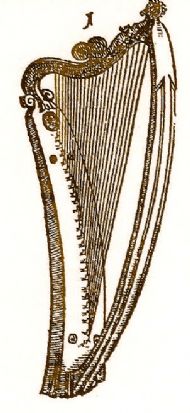
Bray harps, also referred to as “gothic harps”, are characterised by their long, slender shapes, which resemble the wings of angels. But the real difference is in their sound: they buzz.
Said to “bray like donkeys”, these harps are fitted with tiny L-shaped wooden pegs called bray pins. These bray pins hold the strings in the soundbox and also lightly touch them. This light point of contact causes the buzzing sound as the string vibrates.
Although it may be a strange sound to us today, this was the familiar sound of the gut-strung harp across Europe for several hundred years, played between the 14th and 18th centuries, and heard in Wales into the early 19th century. They were the classic harps during the Renaissance, and described by Michael Praetorius in his 1619 publication as “the ordinary harp” (illustrated right).
With the wire-strung clarsach being the choice instrument of the Highland Gaels, the gut-strung bray harp appears to have been the harp preferred by the Lowland Scots. Bray harps have long strings, with often narrow spacing, and over time tend to develop a slightly arched back due to tension of the strings. Evidence from the Welsh manuscript of Robert ap Huw points to their use with fingernails; otherwise, classical fingerpad technique is also appropriate. http://www.ardival.com/index.asp?pageid=200766
For those who aren’t part of The Celtic Music Fan via facebook, this is a good link. If you think you know all there is to know about Welsh music, wait until you listen to this radio show. The hosts gave informative materials and also played samples of the music throughout the show. Composer Robert ap Huw chronicled the music of his time and made his own odd tablature which became a source of debate and amazement among musicologists. I am attaching the link here. Facebook makes music blogging so easy..and yeah this neat screenshot app helps a lot.