Ah, Ireland — land of saints, scholars, and scandalously talented musicians. If you thought you’d heard it all when it comes to Irish music, hold onto your pint because there’s a new band shaking up the scene. Enter Kingfishr — a trio who are absolutely making waves (and I’m not just talking about the Liffey). These lads are rewriting the rulebook, and trust me, if you haven’t heard them yet, you’re missing out.
They’re not just dabbling in folk — Kingfishr are the future of Irish music. No, seriously. If you took the timeless elegance of Planxty and mixed it with the vibrant, foot-stomping energy of The Bothy Band, then sprinkled in a generous dash of contemporary cool, you’d land somewhere near what Kingfishr are doing. They’ve got that classic trad heart but wrapped in a sound that feels fresh and now.
Their music’s got the kind of irresistible pull that makes you want to grab a fiddle, a bodhrán, and maybe even your gran, and start a session in your kitchen. But it’s not just about the craic — they weave stories through their songs that make you feel like you’re sitting by the fire in a cozy Irish pub (where everyone somehow knows your name), while also taking you on a journey to places unknown.
If you’re a die-hard fan of Planxty’s rich melodies or you can’t resist The Bothy Band’s wild rhythms, you need to give Kingfishr a spin. They’re carrying the torch, but they’re also adding their own spark — making something that feels both timeless and brand new.
In a world that could use a bit more warmth, wit, and wonderful music, Kingfishr are the band to watch. Or rather, to listen to.
So grab yourself a cup of Barry’s tea (or a pint of the black stuff), cue up their latest tunes, and prepare to fall head over heels. Sláinte to the new kings of Irish folk! 👑🎻
In a world where Irish traditional music is often boxed into expected forms, No Name Trio offers something far more daring. This is not just another trad session. This is a convergence of three virtuosic musicians—each with their own deep roots and distinct vision—coming together to shape a sound that is grounded in heritage yet fearless in exploration.
When I first hear their music, it left a lasting impression. There’s a gravity in their music that’s rare: compositions rooted in Irish tradition but blooming with inventive structure, unexpected instrumentation, and a spirit that seems to honour the old ways while chasing something completely new. These are not musicians trying to impress with tricks; they’re musicians telling stories—sometimes ancient ones, sometimes newly written, but always resonant.
Jason Turk is the group’s sonic architect. A full-time musician, composer and teacher from West Waterford, Jason has an academic mind paired with a fiercely creative heart. His work with “The Young Irelanders” brought his music around the globe, but it’s his solo innovations that captivate me most. I’m especially fascinated by his efforts to merge music with responsive light design—creating live performances that blend visual and sonic energy in real time. His software-controlled lighting system, shaped by the tempo and character of live trad, is not just technical wizardry; it’s an extension of the music’s emotional landscape. It’s rare to find a musician so steeped in tradition who is also so future-facing.
Conor O’Sullivan, a Cork-based singer-songwriter and instrumentalist, brings lyrical depth and quiet power to the trio. He’s toured internationally and shared stages with many of Ireland’s finest, but his own songwriting speaks volumes. Fifty For Electricity, his latest solo album, reveals a poetic sensibility that channels the melancholy beauty often found in the best of Irish folk. His lyrics evoke shadowed corners of the human experience—both tender and unflinching—and his voice carries the weary warmth of artists like John Prine or Kris Kristofferson. I hear in Conor’s playing a kind of gentle defiance: the courage to stay honest, to stay soft, even when the world hardens.
But if I’m honest, it’s Karl Nesbitt who stands out as my personal favourite among the three. Simply because I’ve written blogs about him back in his first EP, The Good News. A multi-instrumentalist, composer, and producer, Karl’s work seems to defy category. Whether on flute, whistle, bouzouki or bodhrán, his phrasing is clean, deliberate, and full of nuance. He’s worked on over 20 commercial albums, and his contributions as arranger and producer have shaped some of the finest contemporary recordings in Irish and folk circles. What truly impresses me is his ability to say more with less—never overstating, always allowing the music to breathe. There’s a refined intelligence to Karl’s playing that demands attention but never asks for it. His past collaborations with artists like Iarla Ó Lionáird, Sharon Shannon, and the Berne Symphony Orchestra only hint at the breadth of his artistry.
Together, No Name Trio builds a dynamic musical space where all of these influences converge. Their live shows are captivating: equal parts intimacy and spectacle, with each musician shifting effortlessly between instruments, moods, and tempos. Their set at Maureen’s Bar in Cork on Wednesday, May 29th (8:00pm) is already marked on my calendar. Tickets are still available, and I strongly encourage anyone with a love of progressive Irish music to be there. These aren’t just concerts—they’re conversations between past and present, body and spirit.
A full-length album is eagerly awaited. I’ve heard whispers, but nothing official yet. Judging from the quality of their live material and the pedigree of these musicians, it’s sure to be a landmark recording in the evolving story of contemporary Irish music.
Until then, I’ll be following their journey closely—and returning often to Karl Nesbitt’s back catalogue in particular. For those who believe that tradition lives not by preservation alone, but by evolution, No Name Trio is a group worth knowing.
Upcoming Performance: Wednesday 29th May | 8:00 PM Maureen’s Bar, Cork
Are you planning to attend their Cork performance or wait for the album release?
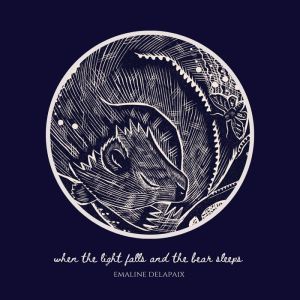
There’s something deeply ancient and sacred about winter, and no one captures that essence quite like Emaline Delapaix in her new single “When The Light Falls (And The Bear Sleeps).” Written during a bitterly cold, snow-cloaked week in her tiny Berlin apartment, the song is more than a winter lament—it’s a quiet anthem of surrender, ritual, and renewal. Listening to it feels like stepping into a snow-covered forest where the silence carries meaning, and time softens its grip.
I was immediately struck by Emaline’s voice—pure, haunting, and impossibly clear. It reminded me of Agnetha from ABBA: crystalline in tone, yet carrying an emotional weight that lingers. You can also hear traces of Kate Bush. There’s a steadiness in her delivery, like she’s channeling something older and wiser than herself. It’s the kind of voice that doesn’t just sing to you—it invites you to listen with your whole body.
This song has been a long time in the making. Emaline wrote it years ago while grappling with her health, yearning for simpler winters spent in rural Mecklenburg-Vorpommern, Germany, or in a tiny wooden cabin on an island in Western Canada. That nostalgia pulses through the lyrics and melody, but it’s not just longing for the past—it’s a yearning to make peace with winter itself. She sings:
“The cool it swallows up the earth, and lazy grey skies like blankets. Wrap us up, and give us time to reflect. So we can rest our bones and reset.”
This refrain feels like a whispered prayer, a gentle reminder that winter is not something to dread but to embrace. It’s a season of pause, of reflection. In a world obsessed with constant motion, this song dares to slow down and listen. And in doing so, it offers us all a rare kind of healing.
Emaline carried this song with her like a mantra for years, performing it live to find solace for herself and for others. But then life, in its unpredictable way, intervened. She was diagnosed with several autoimmune conditions, and music had to be set aside as she focused on treatment and recovery. For a time, her voice was silent. But winter teaches us patience, and like the earth waking in spring, Emaline eventually returned.
In late 2024, she found her perfect collaborator: Fieke Van Den Hurk, a gifted engineer and producer known for working with Scandinavian artists like Eivør, Myrkur, Heilung, and Nanna Barslev. At Dear World Studio in the Dutch countryside, the two women began shaping the sonic world of “When The Light Falls.” What emerged is a soundscape as textured and earthy as the song’s story.
Fieke’s moody accordion drifts like wind through trees. Shamanic drums and even the soft sweep of a tiny broom add layers of ritual and mysticism. And then there’s the haunting addition of Swedish nyckelharpa, played by Sophie Zaaijer, which roots the song in a medieval, almost otherworldly space. These elements don’t just decorate the song—they carry it, like ancestral spirits guiding us through the dark.
One of the most moving aspects of this track is its feminine power. Aside from a subtle mandolin contribution from Emaline’s partner Lukas, every note and nuance was shaped by women. And you can feel that energy: maternal, protective, fierce in its stillness. The song doesn’t just reflect winter—it becomes Mother Nature herself, asking us to listen, to slow down, to shed what no longer serves.
I was especially touched by the lyric:
> “Geese meditate in their airstream, moving south. Hundreds of miles away. While I’m mourning the heavy weight of life. When it’s time to let go. Piece by piece, let it go.”
That line hit me like a sigh I didn’t know I needed. In the flurry of daily life, it’s easy to forget the quiet rituals of letting go. Emaline reminds us that mourning and meditation can exist side by side, that even our sadness can find rhythm with the seasons.
As I listened, I found myself transported—to snow-covered landscapes, to candle-lit cabins, to places where time stretches and softens. But more than that, I was moved inward, into a deeper sense of stillness and gratitude for the slow cycles of life.
“When The Light Falls (And The Bear Sleeps)” isn’t just a song—it’s a seasonal rite, a sonic offering for anyone who’s ever felt overwhelmed by the dark and needed a reminder that rest, too, is holy. Emaline Delapaix has given us a winter hymn for the soul, steeped in tradition, born from struggle, and delivered with the kind of clarity that only comes from deep listening.
Do yourself a favor—wrap yourself in a blanket, light a candle, and press play. Let the bear sleep. Let the light fall. And give yourself permission to rest your bones.
When The Light Falls And The Bear Sleeps’
Emaline Delapaix: songwriting, vocals, acoustic guitar, arrangements Fieke Van Den Hurk: recording, mixing, production, accordion, percussion Sophie Zaaijer: violin, viola, cello, swedish nyckelharpa Lukas Creswell-Rost: mandolin Maria Triana: mastering Rebecca Perdue: album illustration C. Moss Collective: lyric video
In the glowing tapestry of contemporary Celtic music, Amelia Hogan’s voice is a thread of bright, burnished gold. With the release of her latest album, Burnished, the San Francisco-based vocalist, instrumentalist, and producer invites listeners into a sonic landscape that feels both deeply rooted and enchantingly otherworldly. A spirited contralto whose voice radiates both clarity and character, Hogan brings timeless songs and stories to life with a distinctive, perky lilt that is as expressive as it is technically impressive.
At its core, Burnished is a meditation on place—both physical and spiritual—and the threads that connect us to the living world. Drawing from a wide geographic and emotional palette, the 14-track album includes traditional songs, contemporary folk reinterpretations, and one original track that stands as a joyful tribute to Hogan’s California home. With arrangements as vibrant and textured as the landscapes she sings about, Hogan doesn’t just perform these songs; she embodies them.
Her voice—a sparkling force with uncommon buoyancy—is the star throughout. Contraltos are rare in Celtic music, and Hogan’s particular timbre adds a grounding warmth to the high lilt often associated with the genre. Whether singing the mystical “Blue is the Eye” or the melancholic “Wayfaring Stranger,” she delivers each line with a grace that never loses its earthy joy. There’s a lightness and lift to her contralto, one that doesn’t dwell in shadow, but rather moves through the music like sunlight through ancient trees.
The album opens with “Rolling in the Gold,” Hogan’s only original composition on the record. It’s an upbeat, American folk-tinged tune with strong Irish traditional roots, celebrating the subtle, lived beauty of California beyond its material riches. With the delicate interplay of Celtic harp, mandolin, bodhrán, and layered harmonies, the track serves as an opening invocation—a love song to place and belonging.
From there, Burnished weaves through a rich mosaic of traditions and tones. Highlights include “They Call the Wind Maria,” rearranged to emphasize the elemental spirit of the wind as something that might be bargained with—a haunting approach that amplifies the supernatural ache at the heart of the classic American folk ballad. Her delivery here is intimate, reverent, and distinctly otherworldly.
In “The Snow Hare,” a modern Scottish composition reflecting on climate change, Hogan’s voice takes on a fragile urgency. The track’s delicate arrangement—built from mandola and mandolin—leaves space for her voice to shimmer, almost ghostlike, across the frozen terrain of the narrative. The perky rise in her vocal phrasing keeps the song from collapsing under the weight of its message, offering instead a sense of hope through awareness.
Then there’s “Home by Bearna,” a sprightly traditional Irish song about navigating home safely through the perils of night—both mythical and mundane. Here, Hogan’s voice is lively and impish, embracing the song’s winking humor with a wink of her own. Her phrasing dances with the melody, supported by rollicking fiddle and guitar that make it easy to picture the windswept Irish hills.
In contrast, “Who Will Watch the Homeplace” closes the album on a tender, aching note. Sung a cappella, it’s a powerful reminder of Hogan’s vocal command. Without accompaniment, her voice—pure, resonant, and achingly human—becomes the instrument. The piece encapsulates what Burnished does so well: bringing emotion and history into present focus through musical craft and spiritual presence.
The production, handled by Hogan herself at Foxtail Sound in Dixon, CA, is elegantly restrained, allowing the voice and traditional instruments to shine. Collaborators including Marla Fibish, Christa Burch, Maureen Brennan, and John Weed add sonic depth without crowding the space. Instruments like the Celtic harp, flute, mandolin, and shruti box are layered with care, each track feeling as if it has room to breathe and shimmer.
Thematically, the album resonates with animist philosophy—inviting listeners to imagine the world around them as conscious and sentient. Hogan’s liner notes speak of “spirits of place,” and that animating belief is felt in every track. The songs aren’t just sung; they are offered as living connections between the listener and the broader, often unseen, world. There is both reverence and play in how she interprets songs from Gordon Bok, Karine Polwart, and Trevor Peacock, never straying into sentimentality but always anchoring her interpretations in emotional truth.
Amelia Hogan has long been celebrated for her dedication to the sean-nós tradition and her international touring work, including her acclaimed 2023 album Taking Flight, which charted high on the Folk Alliance International Chart. But Burnished feels like a particularly personal and transcendent achievement. It’s not just an album—it’s an ecosystem of stories, a ritual of remembrance and renewal.
In the ever-evolving landscape of Celtic and folk music, Amelia Hogan shines as a voice of both tradition and transformation. With Burnished, she offers us not only a beautifully produced and richly performed album, but a way of listening that opens the ear to the land and the unseen spirits within it. Her unique style, both grounded and ethereal, is a gift that carries these old songs into the future with grace, joy, and shimmering gold.
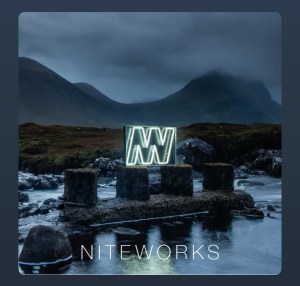
There’s a storm outside, and I am in the comfort of my bedroom listening to Niteworks. I got into their music after hearing Valtos. I love these new groups sprouting out. During the pandemic, I listened to many cold-wave and future-wave music with many electronic beats and unforgettable melodies. That explains why it was easy for me to warm up to these Celtic electronica sounds. It’s just right in the neighborhood.
If you are looking for something exciting in the Scottish music scene, then Niteworks is your introductory pick. They combine trance grooves with traditional Scottish music, giving you a fusion between the ancient and the futuristic. This is like what Enya would have envisioned when she wrote a theme for the space-age Celts in her first album.
The group is what I would describe as creating a landscape kind of music, totally at home with artists like Bjork, Brian Eno, and Clannad. Fans of Chicane would appreciate it as it is an intelligent type of dance music. The Gaelic songs are mesmerizing, with different vocalists serving as guest performers. Through this endeavor, Niteworks introduced us to other artists like Kathleen MacInnes and the rest. I will probably review each album I also plan with Valtos, but for now, I urge you to listen to all their songs and dance your mood away.

 Celtic Music Fan