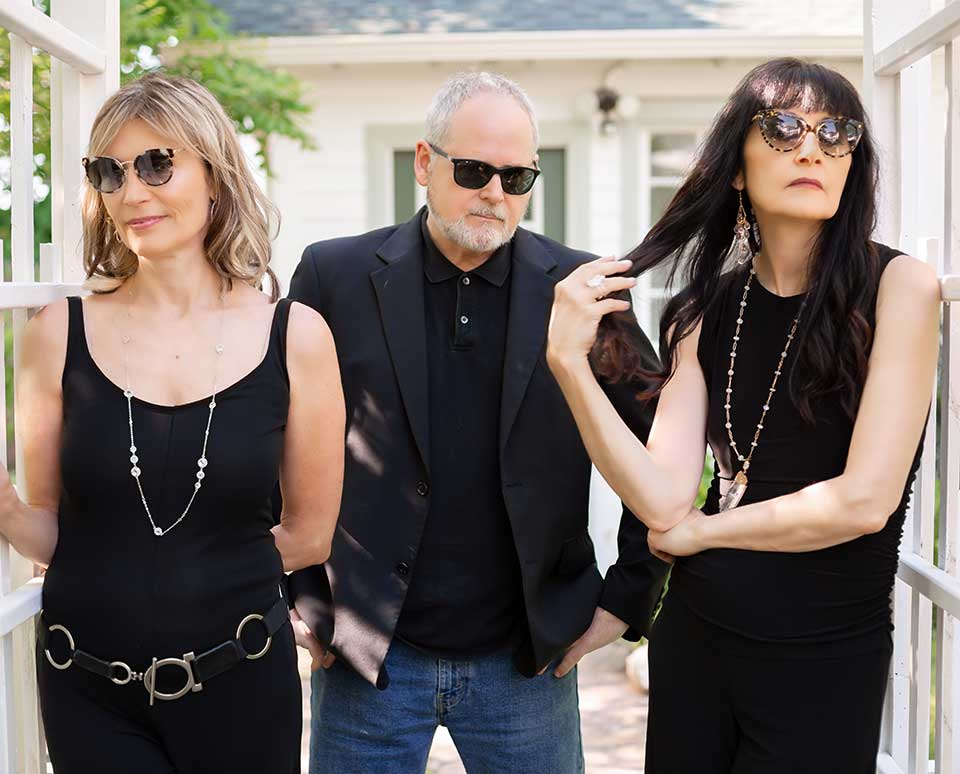
(Marina Belica, Emil Adler and Julie Flanders-photo courtesy of October Project)
This interview is a great opportunity for me to connect with the musical heroes of my youth and how they are now.
I remember the first time I picked up a copy of October Project in the early 90s. This one local record shop in my country used to sell all sorts of genres. I also listened to neoclassical, alternative rock, and ethereal music at the time. October Project appeared in song magazine pin-ups, and that’s why I was captivated. The reviews were also interesting. I probably wore the cassette tape off from repeated playbacks. A few years ago, somebody uploaded footage of their 1996 live concert where Marina Belica mentioned Jefferson Airplane as a reference among other eclectic bands. In this interview, the band also gives us insights into themselves as artists and how they are not just musicians but also friends and family members.
I have to mention that the late and great Anne Rice discovered(see comments section) their music through this blog.
Below are the questions with answers from the October Project
October Project approves all images.
***************
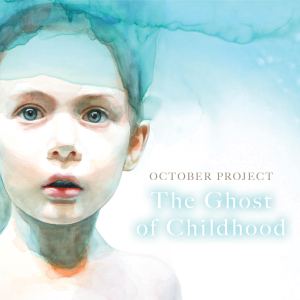
The Ghost of Childhood is a substantial release with 11 tracks that -I am sure-are crafted carefully (knowing the band’s history of coming out with extraordinary songs). How did you finally come to the decision of creating this album?
The album has been musically finished for some time, but releasing it has been a challenge, between life and COVID. We have been releasing it song-by-song, as SPOTIFY prefers in what is called a waterfall release. It’s happening now because we have so much other music to record and release and were so eager for the world to hear this album. Marina’s twins are graduating high school this year, so it left an opening for her to focus on the release.
Forgiveness, moving on, and healing are major themes of the new songs.
Yes, at the time the songs were written, these were major things we were bringing our hearts and minds to.
You guys met way back in your Yale days and I bet you were more of the “quiet and academic” crowd compared to your friends — is this correct assumption?
Actually hilariously incorrect, we were the opposite of that! We were socially dynamic and full of irrepressible energy and enthusiasm for life. We were often “Shhhh’Shd” for being loud and laughing too much (Marina and Julie). Emil was the most studious and academic of the band, but his personality was often compared to Robin Williams in college.
Were you (or not )the rock and roll type?
We were Bruce Springsteen superfans. After all, Julie and Emil are from JERSEY!
How have you changed since the band started, and what has stayed the same (about your music, its themes and you as bandmates)?
We have changed dramatically! Growing through our adult life together and raising children, becoming richer, clearer versions of ourselves. Our friendships with each other have deepened and become even more valued and valuable. We know each other so well – as friends, as family, as collaborators. It’s rare and amazing to stay connected with people this strongly and to share history and hopefully our future.
Do you still meet your old bandmates? Whatever happened to David Sabatino and Urbano Sanchez?
YES! We just saw Dave and played with him this month in a big, successful concert. Urbano would also have been there, but he had parent responsibilities that weekend and could not join us – but hopefully will in the future. Dave does not age – he looks as we remember him from our early days.
Can you walk us through the process of creating a song, from conception to recording?
It’s different in each project. Usually, at least some music comes first, then some lyrics, then back and forth through a pretty rigorous process of getting the lyrics and the music married and happy together. It’s a quite detail-oriented process in our case, and production, for Emil, is like an additional compositional process. He touches every molecule of a recording, arranging the elements (this time with co-producer Julian Coryell in quite a joyous process over several years) and then over quite an extended period of time in post-production – editing, refining, and layering parts and adding sweeteners.
Do you think poetry can make the world a better place?
Poetry has a tremendous capacity to “hold transformational space” as it opens understanding and invites the listener/reader to connect with their OWN understanding
of the human experience in all its light and shadow. Good poetry reveals us to ourselves by reflecting on life and its meanings and transducing them into something that offers new possibilities for how we feel.
You’ve made a lasting impact after the release of your first two albums on a major label. What do you think the impactwould have been if Sony/Epic made a stronger effort to promote them (or had social media tools to their advantage that we commonly use today, or the other way to put it: if you’d stayed with a major label, how do you think it may have changed your music, audience (because the sound of the 90s is different to what’s out now and you’d have adapted — ?).
The music business has changed tremendously since we started as a group. We have had to adjust, adapt, and be resilient and persistent to even exist. Gatekeepers like Spotify and other streaming platforms do not properly compensate, promote, or even respond to the musicians who give it value.
Spotify sees itself as a data-mining, data-selling business – a tech company, not a music company. Record labels today are very different than the 90’s – the change in how labels operated began to occur just as our second album (Falling Further In) came out on Epic. We’re certain our trajectory would have been different if Epic had not been going through such upheaval at the time we were working with them. Our second album was basically unsupported.
(I was thrilled when Falling Farther In was released because it cemented the October Project sound and the possibilities they can do with their unique sound).
We are incredibly proud of our success as independent artists. Not only have we continued to put work in the world while maintaining full-time jobs to support our lives, but we have helped other artists, collaborated extensively, and contributed to many causes.
Our audience is everything to us! We continue to make music because we love connecting with our listeners through music. We are very fortunate and blessed to have a worldwide, loyal following of people who pay attention to what we do and make us feel it’s worth it.
It is fascinating that October Project continues as a band even though other past members are busy or have ventured with other pursuits. Though other artists continue to generate albums almost every year (which I don’t bother to listen to anyway), they take the time to really make well-crafted songs that defy eras and expectations.
Remember to check out October Project’s latest album The Ghost of Childhood on Spotify. You can follow their YouTube channel and sign up for their newsletter here.
 Celtic Music Fan